
Antique Padded Benches
Antique padded benches bring centuries of upholstery and timber framing into a room, offering low seating or foot rests designed for comfort.
Antique Padded Benches
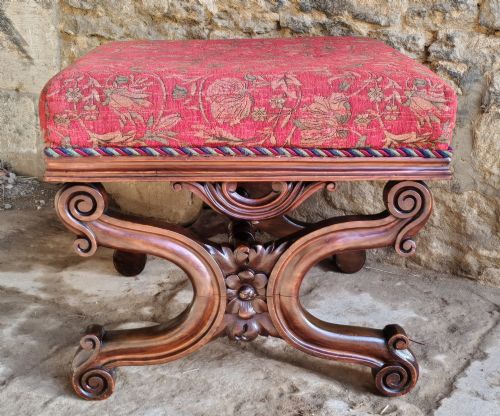
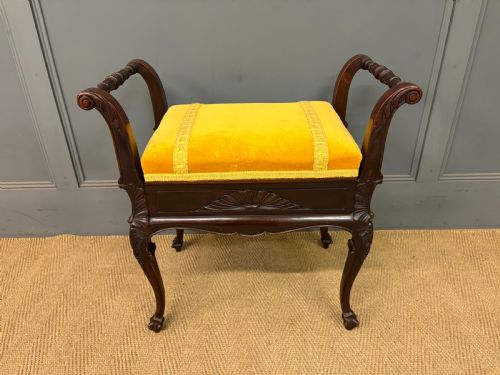
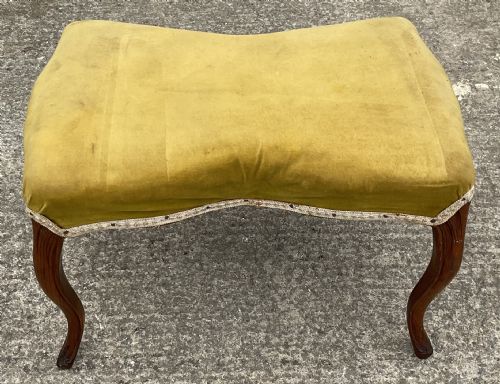
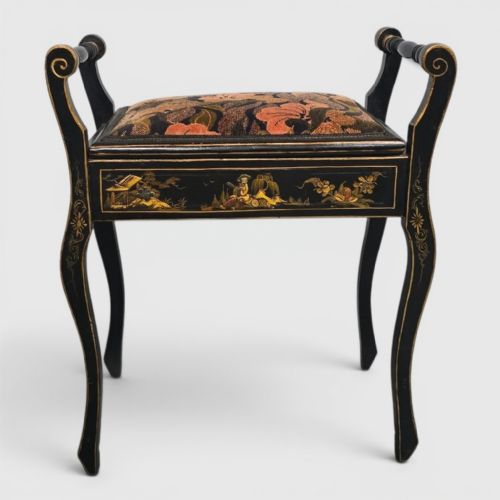
When you search for antique padded benches, you encounter a diverse selection of low seating, including footstools, window seats, piano stools, and brass club fenders. These pieces span from the late eighteenth century through the Victorian and Edwardian eras into the nineteen-thirties, reflecting shifts in domestic comfort and interior decoration.
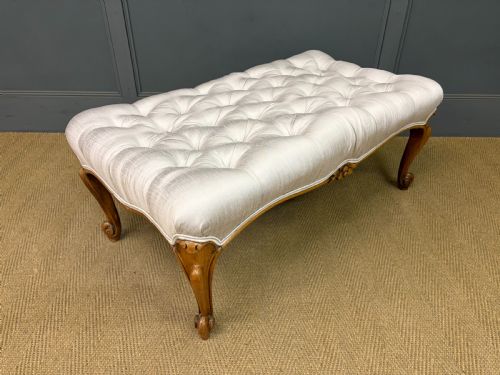
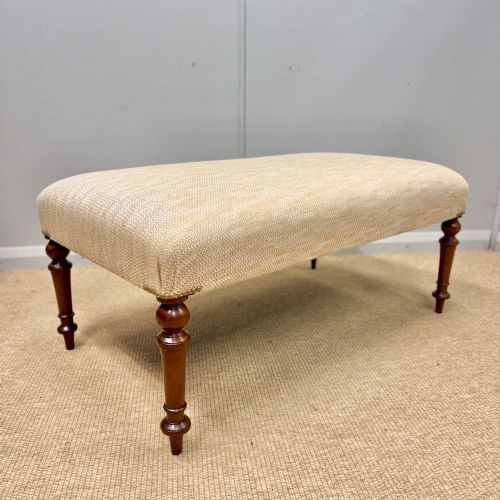
The nineteenth century yields the highest volume of examples on this page, dominated by Victorian walnut and mahogany frames alongside brass fire hearth seating. Forms range from compact dressing table stools to grand scale window seats and long buttoned benches built for salons and bedrooms.
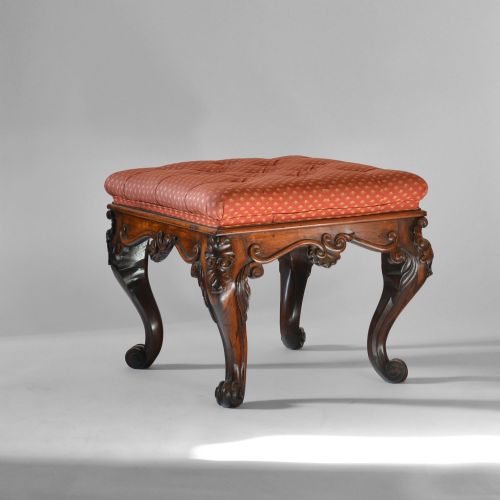
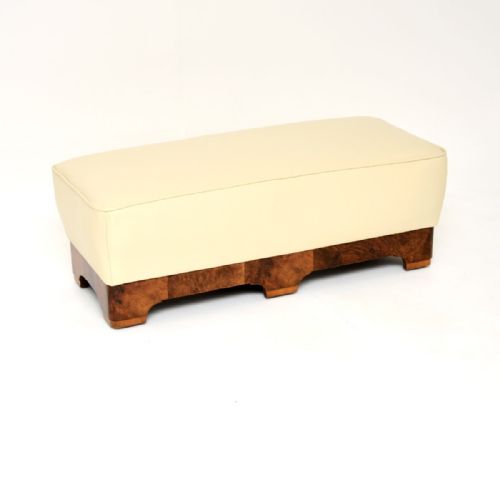
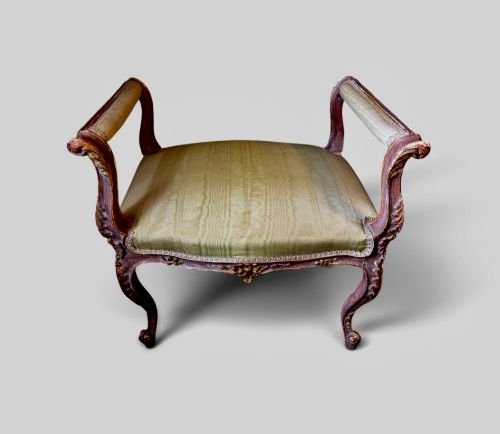
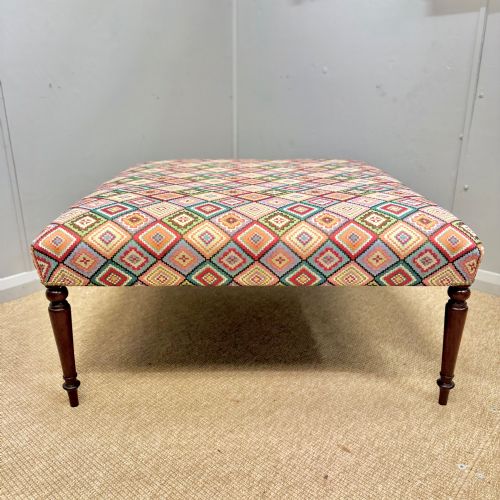
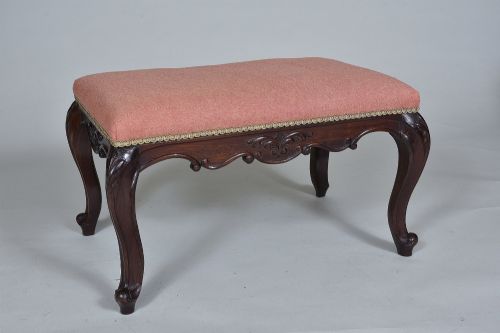
Regional and stylistic variations appear across the selection, featuring English country house sensibilities, Gothic oak, Rococo revival curves, and clean Art Deco walnut silhouettes. Many items retain period coverings like needlepoint or leather, while others present recent professional re-upholstery suited to contemporary rooms.
How they were made
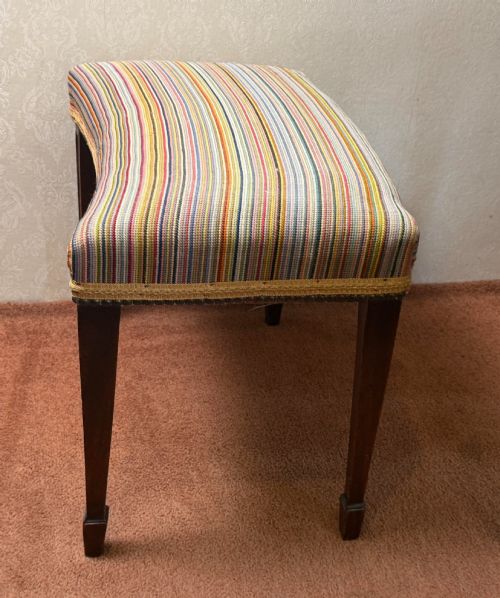
Cabinet makers utilised dense hardwoods such as mahogany, walnut, rosewood, and oak to construct sturdy internal frames, often shaping the timber into cabriole legs, square tapering supports, or twisted rope legs. Gilding, ebonising, and inlay work added decorative surface detail to specific window seats and dressing stools.
Comfort relied on traditional upholstery methods, binding stuffing within fabric, linen, leather, or textile covers, sometimes finished with distinctive buttoning or brass stud work. Brass components formed the structural basis for club fenders, paired with mature leather seats designed to withstand fireside use.
Materials span mahogany, walnut, oak, rosewood, brass, leather, and linen across pieces dated from the eighteenth to the twentieth century.
What varies in quality
The distinction between ordinary and superior pieces rests in the timber selection and the precision of the frame carving. Dense burr maple or finely figured walnut frames with clean joinery and robust cross stretchers represent the upper tier of craftsmanship.
Upholstery execution and material integrity further divide the range, distinguishing between tired original textiles, professional re-upholstery using high-end period fabrics, and basic modern replacements. The weight and casting quality of brass fittings on club fenders similarly mark the grade of the piece.
C. Hindley & Sons
The Antique Padded Benches Glossary
- Club fender
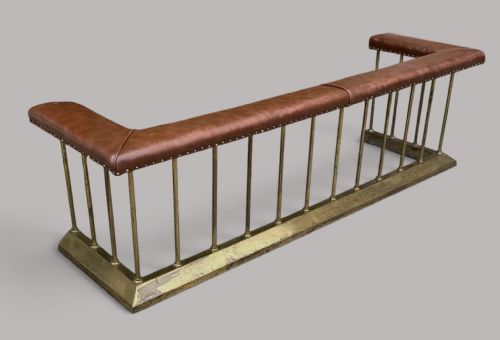
- A low fireside seat with a metal frame, usually brass, surrounding a hearth and topped with leather cushions. These fixtures allowed people to sit close to the fire while keeping drafts away.
- Window seat
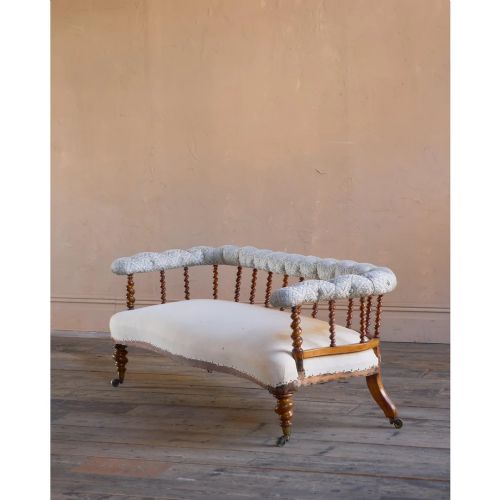
- A long, upholstered bench designed to fit within the recess of a window bay. They often feature armrests and sturdy wooden frames matching the period architecture.
- Cabriole leg
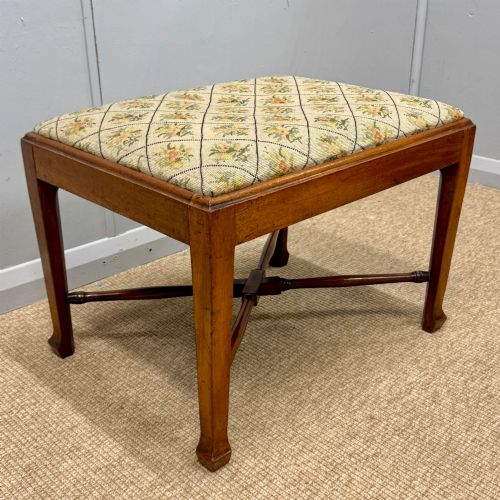
- A furniture leg that curves outward at the knee and tapers inward toward the foot, inspired by animal limbs. This form appears frequently on mid-nineteenth-century walnut stools.
- Cross stretcher
- A structural timber brace forming an "X" shape between the legs beneath a stool or bench. It adds stability to the lower frame and frequently incorporates a central finial.
- Giltwood
- Wood that has been coated with a thin layer of gold leaf or gold paint. It is commonly found on decorative nineteenth-century window seats and salon furniture.
Antique Padded Benches: Frequently Asked Questions
What is a club fender?
A club fender is a metal and leather fireside bench built around an open hearth. The design lets people sit directly over the hearth warmth without blocking the fire view.
Most examples utilise brass frames paired with cushioned leather tops, originating primarily from the Victorian and Edwardian periods for drawing rooms and libraries.
Where should I place a window seat?
Window seats suit low architectural alcoves, corridors, and bedroom ends where full-sized sofas would block light or passage. Their slender proportions provide useful occasional seating without overwhelming floor space.
Many nineteenth-century examples feature upholstered tops that coordinate with existing room textiles, functioning well beneath natural light sources.
How do I date a Victorian stool?
Dating relies on examining the timber species, leg geometry, and underframe construction methods. Victorian pieces frequently employ walnut or mahogany with heavy cabriole legs or turned supports.
Hardware such as brass castors and the style of upholstery stuffing offer further clues, distinguishing mid-nineteenth-century work from later Edwardian productions.
Are piano stools adjustable?
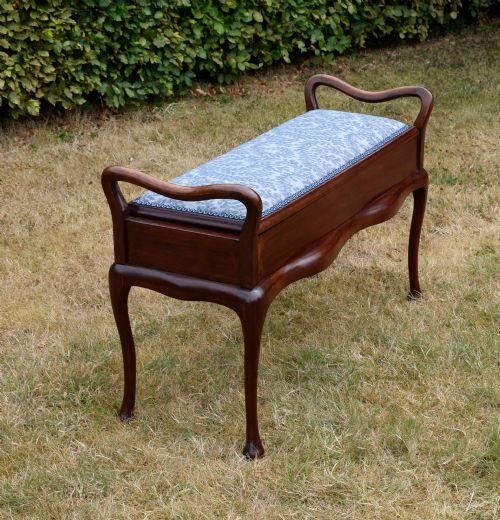
Certain period piano stools feature mechanical height adjustment mechanisms operated by revolving the seat top or using side handles. Others are fixed-height duet or single stools with stationary padded tops.
Checking the underframe reveals whether a revolving screw mechanism or a simple box frame houses the seating surface.
Can I use these benches daily?
These benches are constructed from solid hardwoods like mahogany and walnut, making them structurally sound for regular everyday seating. Robust joinery ensures they withstand standard household use.
Fragile decorative elements, such as giltwood finishes or delicate needlepoint textiles, require more mindful placement to preserve their condition over time.