

Antique Oval Center Table
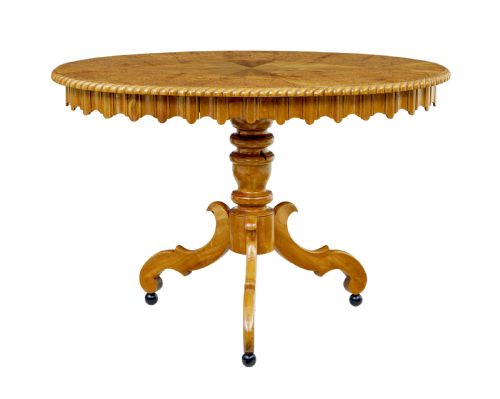
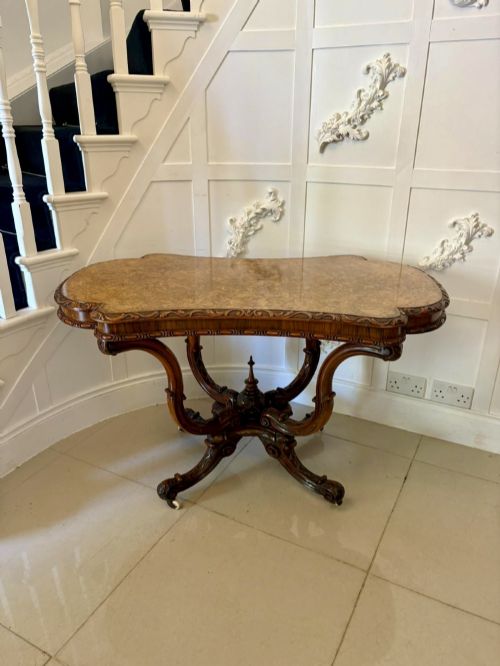
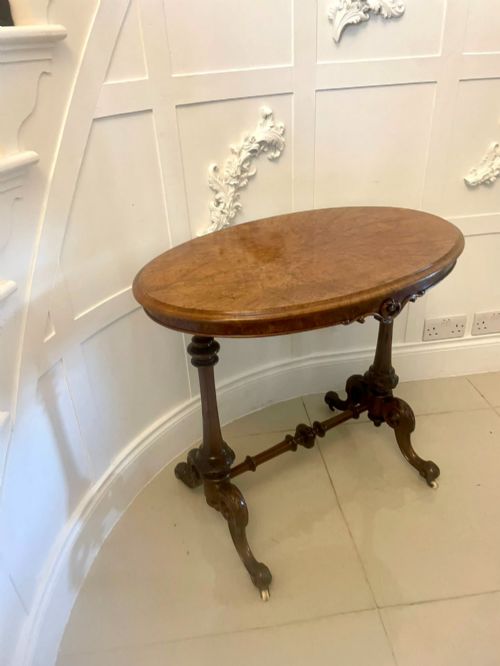
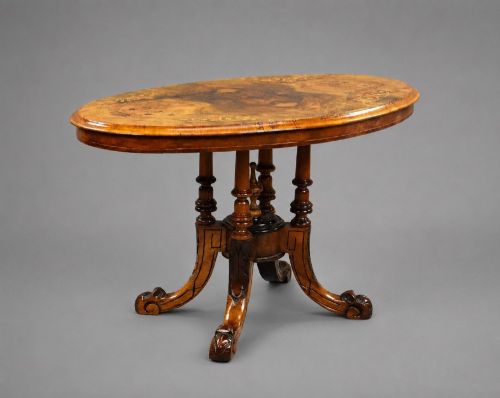
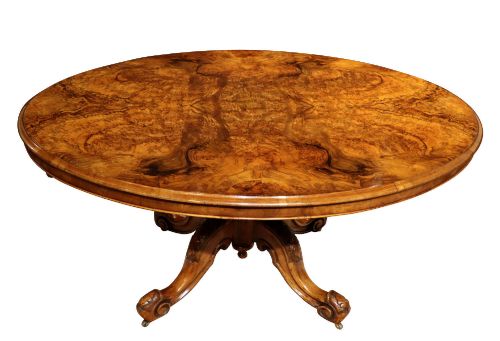
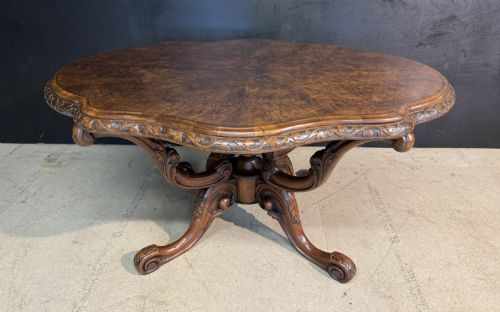
An antique oval centre table anchors a room with figured walnut or mahogany, offering a surface meant to stand free in the middle of a space.
Antique Oval Center Table
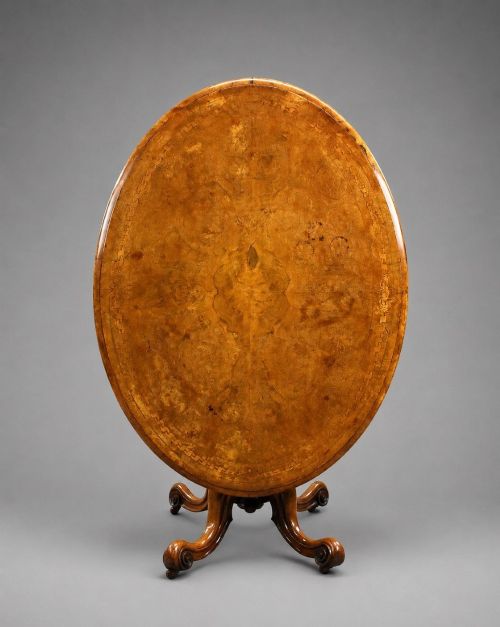
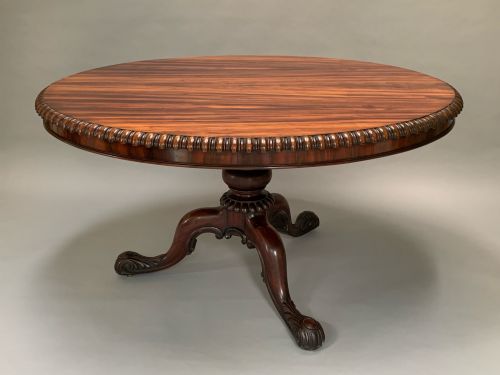
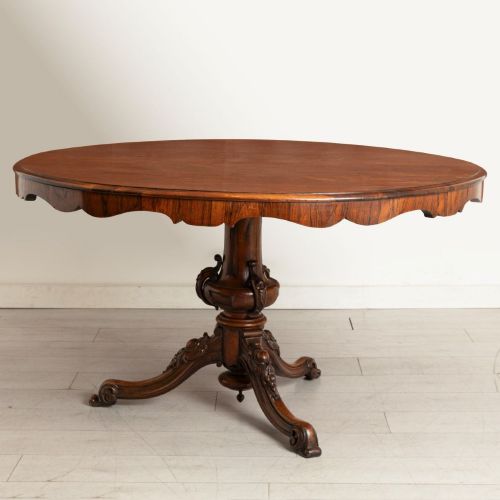
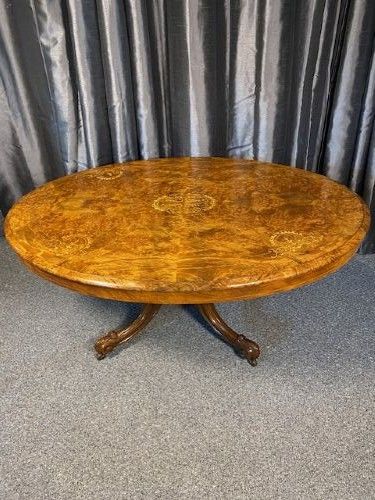
When you search for an antique oval centre table, you meet nineteenth-century forms designed to stand free in a room rather than against a wall. The examples listed here lean heavily toward Victorian burr walnut, alongside mahogany, rosewood, and occasional pieces from the eighteenth century.
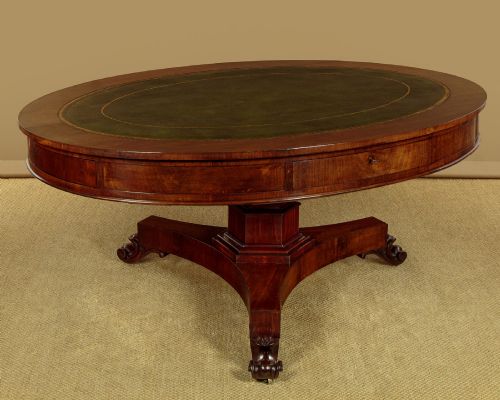
The varieties span large breakfast and dining tables with tilt mechanisms, library and writing tables fitted with leather inserts, and smaller lamp or coffee tables adapted from larger formats. Victorian and William IV pieces dominate the selection, accompanied by Regency, French Louis XVI, and later revival styles.
These tables served as social focal points in period drawing rooms and libraries, functioning equally for display, writing, or informal dining. Their curved oval tops soften the geometry of a reception room while providing generous surface area.
How they were made
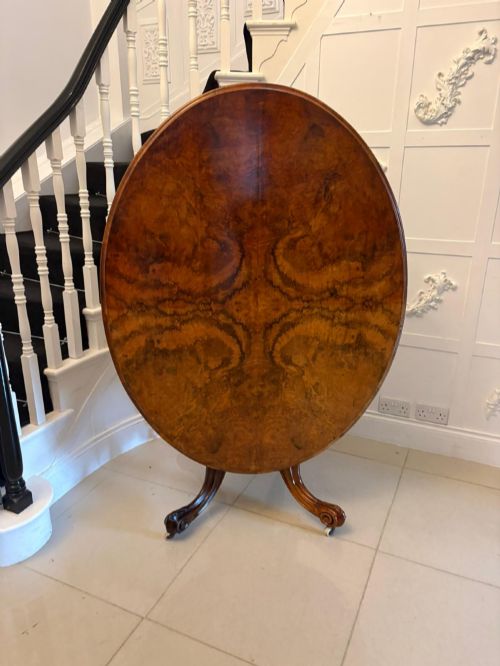
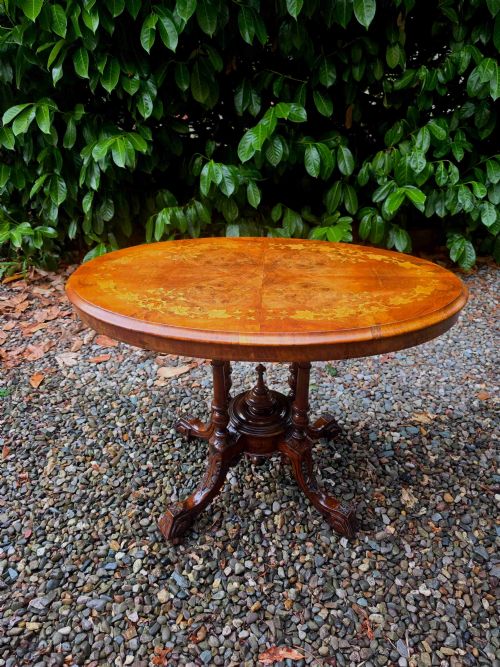
Cabinetmakers constructed these tables using solid foundational timbers like mahogany and walnut, faced with finely figured burr walnut veneers selected for their swirling grain patterns. Boxwood and brass inlaid details frequently accent the tops and borders.
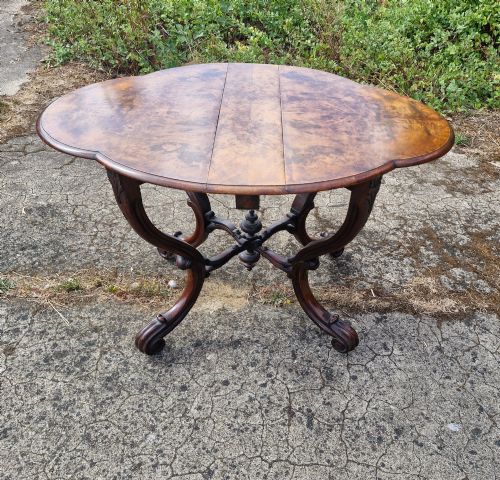
Pedestal bases incorporate solid carved timber turned on large lathes, often branching into tripod or quadrapod scroll feet, sometimes fitted with concealed castors for mobility. Tilt-top mechanisms rely on sturdy brass catches and blocks to secure the heavy top when horizontal.
The listings on this page span the eighteenth, nineteenth, and early twentieth centuries, featuring walnut, mahogany, rosewood, and amboyna.
What varies in quality
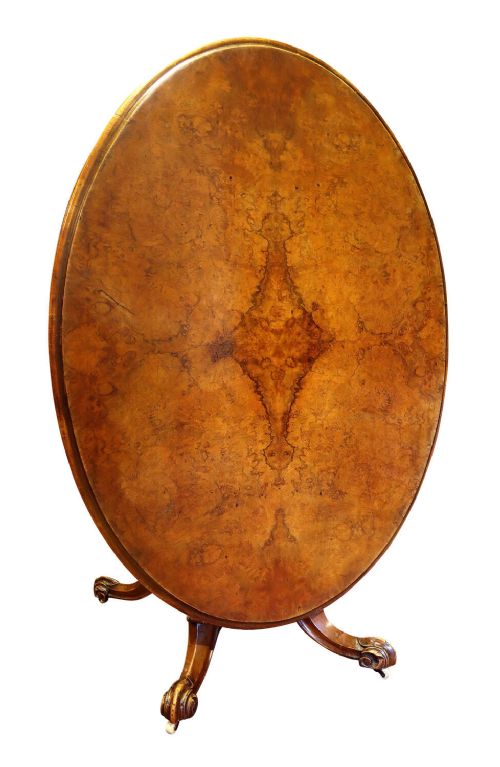
Quality reveals itself primarily in the choice and symmetry of the burr walnut veneer, where master cabinetmakers matched grain patterns across the entire oval surface. Heavy, deeply carved solid timber bases with crisp detailing distinguish superior workshops from simpler production pieces.
The integrity of the structural joinery under the tilt mechanism and the precision of boxwood or brass inlay determine the longevity and refinement of the table. Finer pieces demonstrate seamless edge banding and substantial weight in the central pillar.
Gillows·Holland & Sons
The Antique Oval Center Table Glossary
- Burr walnut
- A figured wood grain obtained from the excrescences or warts of walnut trees, highly prized for its intricate, swirling patterns on Victorian table tops.
- Loo table
- A large nineteenth-century round or oval table designed for playing the card game loo, frequently built with a tilt-top mechanism to save space when not in use.
- Tilt-top
- A hinged table top that pivots vertically on its central pedestal, allowing the piece to stand flat against a wall when not serving as a table.
- Quadrapod base
- A heavy central pedestal support branching downward into four carved legs or feet, commonly seen on larger Victorian breakfast and dining tables.
- Marquetry
- Decorative veneer work arranged in pictorial or geometric patterns using various coloured woods and botanical materials.
Antique Oval Center Table: Frequently Asked Questions
Can I use an antique oval centre table for daily dining?
Many nineteenth-century examples, particularly larger breakfast and dining tables, were built robustly enough for regular seating.
Their sturdy pedestals and generous oval dimensions accommodate multiple chairs comfortably, though polished wood surfaces require protection against heat and moisture.
What is a tilt-top mechanism used for?
The hinged mechanism allows the heavy table top to lock into a vertical position when not in use.
This practical nineteenth-century feature enabled large tables to be pushed aside against the perimeter of a drawing room to clear floor space.
How do I identify a Victorian burr walnut table?
Victorian burr walnut tables display dense, swirling grain patterns created by slicing through tree growths, frequently bordered by fine boxwood inlay.
They typically feature substantial turned pedestals, heavy carved bases, and rich dark patination developed over generations.
Where should I place a centre table in a room?
True centre tables are finished on all sides and designed to stand entirely freestanding in the middle of a room rather than against a wall.
They create a natural traffic flow around the perimeter and serve as a visual anchor beneath a central ceiling light or chandelier.