



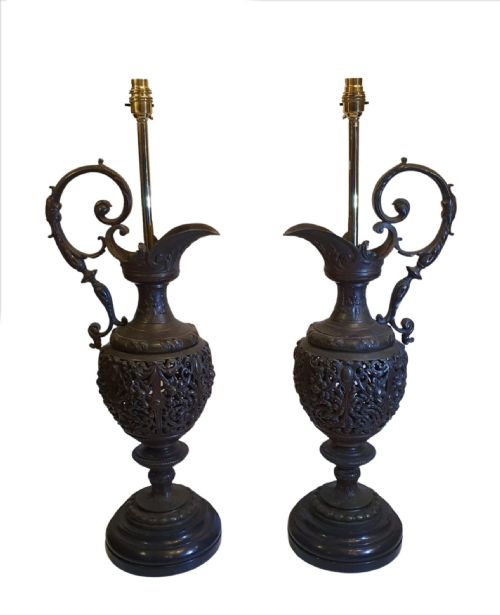

Antique Ornamental Ewer
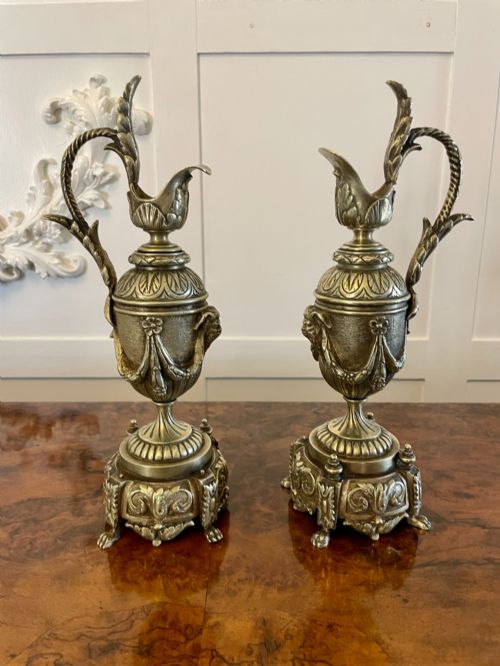
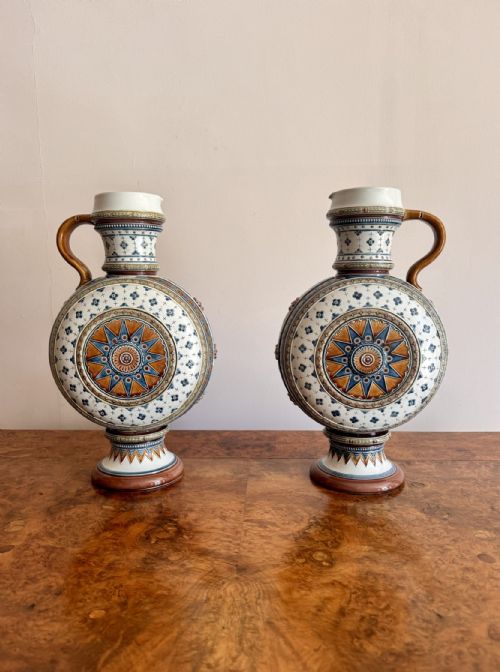
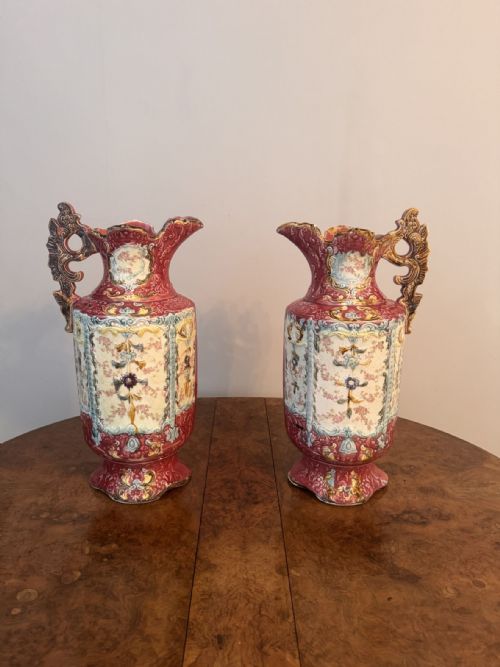
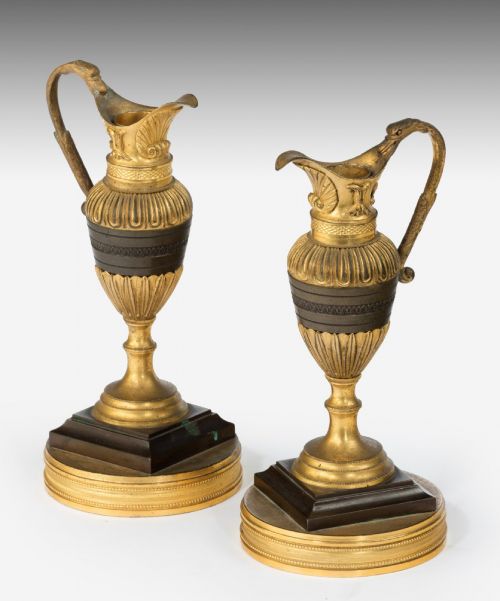
These antique ornamental ewers are decorative display vessels of bronze, porcelain and brass shaped by Victorian and revival tastes.
Antique Ornamental Ewer
An antique ornamental ewer is a decorative vessel derived from historical water jugs, shaped for display rather than service. These pieces span the Victorian era, the nineteenth century, and into the early twentieth century, taking forms such as paired mantel ornaments, converted table lamps, and pedestal vases.
The styles seen on this page draw heavily on past vocabularies, including Neoclassical, Renaissance Revival, Gothic, Rococo, and the Aesthetic Movement. Many examples originate from British potteries or continental workshops, reflecting the diverse output of nineteenth-century makers.
Buyers will encounter pairs as well as single pieces, often executed in porcelain, glazed earthenware, or cast metal. Their primary role in a room is visual, serving as dramatic focal points on tables, sideboards, or pedestals.
Materials and methods of manufacture
Makers utilised cast bronze, brass, and ormolu for metal ewers, often adding gilding to highlight raised surface details. These metals required skilled founding, chasing, and assembly to achieve sharp relief and stable bases.
Ceramic examples rely on porcelain and earthenware bodies, decorated with hand-painted motifs, raised gold work, and coloured glazes. Workshops like Royal Worcester, Coalport, and Vienna applied these complex ceramic techniques before firing.
Antique Ornamental Ewer Retail Price Guide 2026
Typical asking prices for ornamental ewer among the pieces listed under this phrase on Sellingantiques today, from the lower quarter to the upper quarter. They describe what is for sale here now, not the wider market.
Several Victorian ewers spent decades moonlighting as table lamps before finding their way back to pure ornament.
Distinctions in quality
The standard of a metal ewer rests on the crispness of its casting and the depth of its chasing, where sharper surface details separate finer work from softer production. Gilding quality also differs, with heavier gold applications retaining their lustre better than thin washes.
For ceramic pieces, the precision of the hand-painting and the complexity of the raised gold decoration determine the upper tiers of the range. Furthermore, balanced proportions in the handle, spout, and body distinguish master models from standard factory output.
The Antique Ornamental Ewer Glossary
- Ormolu
- Gilded bronze, often used for mounts and decorative trim on nineteenth-century objects. This technique involves applying a gold amalgam to bronze.
- Aesthetic Movement
- A late nineteenth-century style prioritising visual beauty over narrative content. It drew inspiration from Japanese art and nature.
- Neoclassical
- A revival style inspired by classical Greece and Rome, characterised by symmetry, clean lines, and classical motifs. It frequently appears in Victorian metalwork.
- Pedestal ewer
- A ewer raised on a distinct foot or plinth. This form elevates the vessel for display purposes.
Antique Ornamental Ewer: Frequently Asked Questions
What is an ornamental ewer?
An ornamental ewer is a decorative vessel modelled on historical water pitchers but intended solely for display. They were produced in various materials to ornament Victorian interiors.
These objects do not hold water functionally in most cases, acting instead as sculptural centrepieces or matched garniture sets.
Were these ewers used for water?
Most pieces listed are purely decorative objects rather than functional washstand items. Their elaborate materials and delicate gilding preclude practical service.
Victorian households placed them on mantelpieces, pedestals, or tables as indicators of taste and refinement.
How do I identify a Victorian ewer?
Victorian ewers often display revival styles such as Neoclassical, Renaissance, or Rococo ornamentation. Materials commonly include heavy bronze, porcelain, and brass.
Maker marks on the base of ceramic pieces or registration diamonds can help narrow down the exact period of manufacture.
Can I use ewer lamps safely?
Many ewers from the nineteenth century were later converted into table lamps to suit modern domestic lighting needs. This conversion often involves wiring run through the central axis of the vessel.
Buyers should have any vintage electrical conversion inspected by a qualified professional before regular use.