
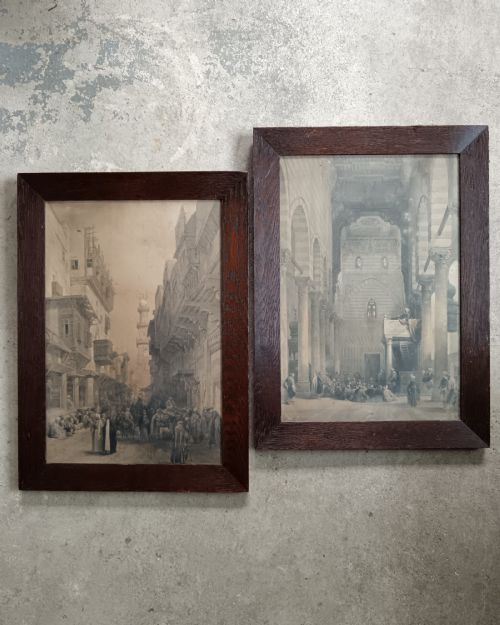


Antique Orientalist Lithograph
These antique orientalist lithograph plates bring nineteenth-century scenes of the Middle East and North Africa directly into modern interiors.
Antique Orientalist Lithograph
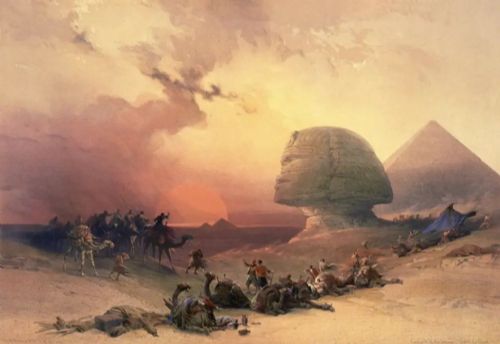
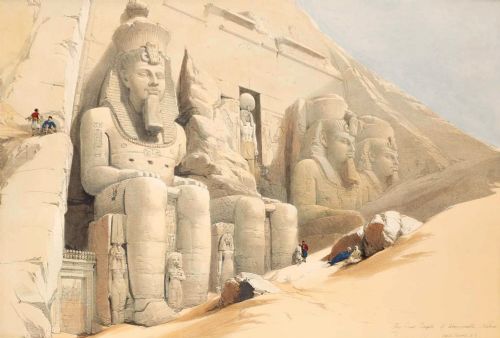
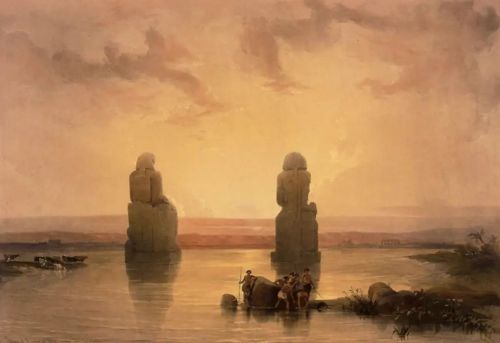
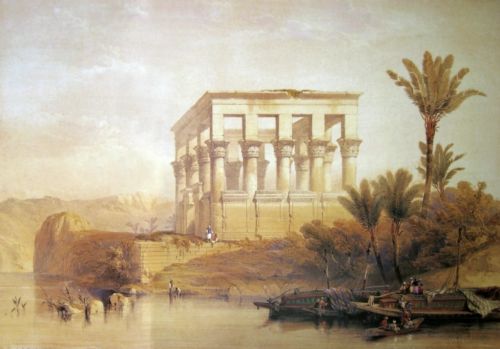
An antique orientalist lithograph captures architectural views and figures from the Middle East, primarily originating from the Victorian and nineteenth-century periods. These works translate travel sketches and paintings into printed plates using stone or metal matrices.
The selections available here include architectural studies of monuments at Aboo-Simbel, Philae, and Thebes alongside decorative tile designs from the Bosphorus. Framed prints and fine art prints dominate the offerings, often preserved in period wood or gilt frames.
Materials and production
Printers utilised inked lithographic stones to transfer detailed imagery onto paper sheets, frequently applying hand-colouring after the initial impression. This process allowed workshops to produce nuanced tonal gradations suitable for architectural draughtsmanship and figure studies.
Mounting materials in the current selection include glass, gilt wood, oak, and ebonised wood frames. Original framing methods protect the fragile paper surfaces from environmental exposure.
Listings span the Victorian, 19th Century, 1900, and Edwardian periods, featuring paper, ink, glass, gilt wood, oak, and ebonised wood.
Quality factors
Distinctions in quality rest upon the fidelity of the impression and the precision of any applied hand-colouring. Early folios printed under the direct supervision of the artist display sharper ink definition than later commercial reproductions.
The preservation of the original paper sheet and the survival of contemporary frames influence the overall character of each piece. Surviving historic framing adds contextual depth to nineteenth-century plates.
David Roberts·Louis Haghe·Otto Pilny
The Antique Orientalist Lithograph Glossary
- Lithograph
- A print made by drawing an image on limestone or a metal plate with a greasy medium so that ink adheres only to the drawn areas. This technique dominated nineteenth-century reproduction of fine art.
- Orientalism
- The representation of Middle Eastern and North African subjects by Western artists and writers. This style shaped European visual culture throughout the Victorian era.
- Folio
- A volume or collection of large sheets, often issued as a set of plates. These bound sets were frequently broken up over time for individual framing.
- Hand-coloured
- A print finished with watercolour or gouache applied by hand after the mechanical printing process. This adds individual variation to each plate.
Antique Orientalist Lithograph: Frequently Asked Questions
What is an orientalist lithograph?
An antique orientalist lithograph is a nineteenth-century printed image depicting landscapes, architecture, or daily life in regions such as Egypt and the Near East. These works translate original artist sketches into multiple plates for public distribution.
They serve as visual records of nineteenth-century exploration and romanticised perceptions of Eastern civilisations.
How should I frame these prints?
Original period frames, such as those made from gilt wood or ebonised wood, require careful handling to preserve their historic finishes. When framing loose sheets, conservation-grade materials prevent acidic degradation of the paper.
Keep framed works away from direct sunlight to protect coloured inks from fading over time.
Are these prints original to the nineteenth century?
The listings on this page originate from the Victorian and Edwardian periods, utilising nineteenth-century printing techniques on period paper. Many retain their original framing and publisher details.
Examination of the paper texture and ink application helps confirm the historic period of production.
Who created these orientalist scenes?
Many plates on this page derive from the travels and sketches of nineteenth-century artists who journeyed through Egypt and the Levant. Specialist lithographic printers then transferred these drawings onto stone matrices for publication.
Publishers often issued these plates in bound folios before collectors framed them individually.