





Antique Oriental Side Desk
An antique oriental side desk brings distinctive regional character and practical surface space to a room, drawing on centuries of craftsmanship from across Asia and European export traditions.
Antique Oriental Side Desk
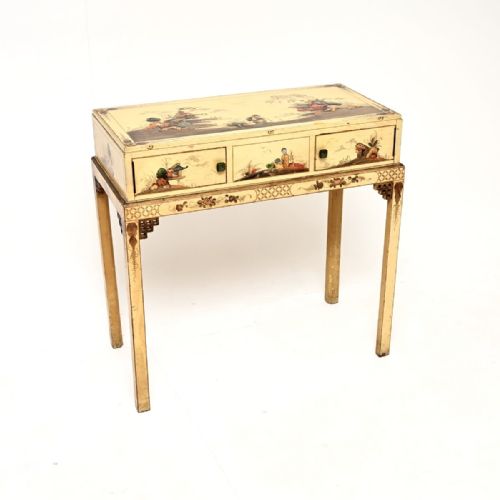
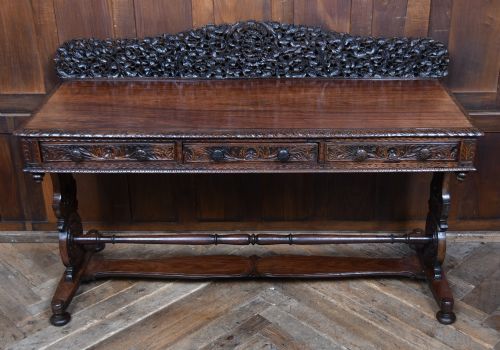
When you search for an antique oriental side desk, you encounter a varied selection of writing tables, console tables, work tables and lowboys originating from periods spanning the eighteenth, nineteenth and early twentieth centuries. These forms reflect both domestic traditions, such as elm side tables and altar tables, and international trade pieces designed for western interiors.
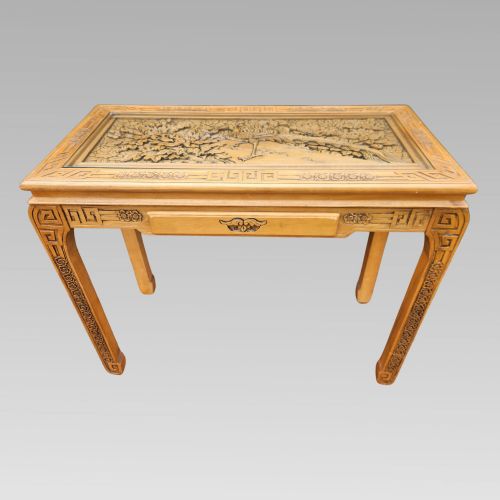
The objects listed under this description encompass diverse regional styles including Qing Dynasty designs, Chinese export work, Japanese hardwood furniture and Chinoiserie interpretations. You are most likely to meet elm and hardwood tables featuring simple lines or elaborate carving, alongside specialised writing desks suited for compact workspaces.
How these pieces were made
The construction relies heavily on native timbers such as elm, teak and dense oriental hardwoods, joined with traditional carpentry methods that allow timber to move naturally over time. Master cabinetmakers shaped these woods into structural frames for desks and tables, occasionally incorporating softer woods for internal components.
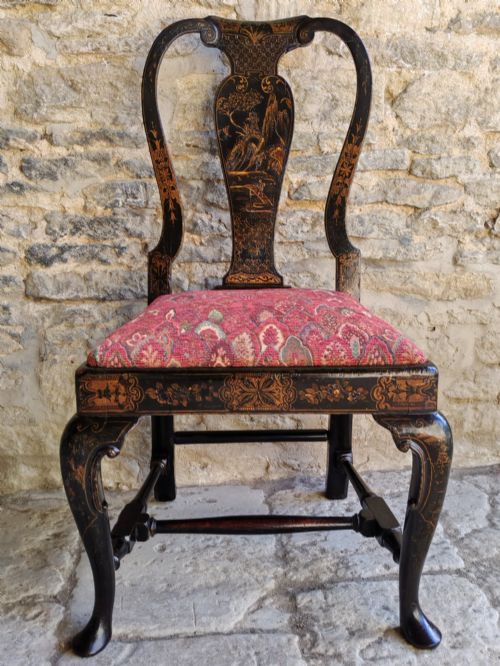
Surface decoration defines many of these pieces, utilising techniques including black and gilt lacquer, mother of pearl inlay, and painted finishes. Artisans applied layers of lacquer or delicate pigments to create durable, lustrous surfaces that frequently depicted traditional landscapes, figures or floral motifs.
Antique Oriental Side Desk Retail Price Guide 2026
Typical asking prices for oriental side desk among the pieces listed under this phrase on Sellingantiques today, from the lower quarter to the upper quarter. They describe what is for sale here now, not the wider market.
The listings feature pieces spanning the eighteenth, nineteenth, and early twentieth centuries, constructed from elm, hardwood, and lacquered wood.
What varies in quality
Quality in these desks and tables rests primarily on the integrity of the timber selection and the precision of the joinery. Superior examples demonstrate tight, stable joints and well-figured wood grain, whereas lesser pieces may show structural compromises or crude timber substitutes.
The refinement of surface embellishment also distinguishes finer items, seen in the depth and clarity of lacquerwork, inlay placement, and hand-carved details. Master execution displays crisp lines and enduring finish quality, while simpler or more heavily restored items lack this sharpness of detail.
The Antique Oriental Side Desk Glossary
- Chinoiserie
- European decorative style reflecting Chinese artistic influences, popular in furniture and lacquerwork during the eighteenth and nineteenth centuries.
- Elm
- A resilient hardwood commonly utilised in Chinese provincial and traditional furniture making for its strength and attractive grain patterns.
- Altar table
- A traditional Chinese table form characterised by a long rectangular top, often featuring upturned flanged ends or carved aprons.
- Lacquer
- A durable natural resin finish applied in multiple layers to wood surfaces, frequently decorated with gilt paint or inlay.
- Hardwood
- Dense, durable timber varieties such as teak and various Asian species favoured by cabinetmakers for structural stability and fine carving.
Antique Oriental Side Desk: Frequently Asked Questions
How do I use a side desk in a modern room?
These tables provide a compact surface for writing or displaying decorative objects, fitting easily into hallways, bedrooms or living spaces.
Their restrained proportions allow them to sit comfortably against walls or beside seating without dominating the room layout.
What is the difference between an altar table and a side table?
Altar tables typically feature longer rectangular proportions and sometimes distinctive flanged ends, originating from traditional domestic architecture.
Standard side tables offer simpler square or rectangular tops intended for general utility and placement against walls.
How do I care for antique lacquer surfaces?
Keep lacquer surfaces away from direct sunlight and excessive heat to prevent fading, drying and cracking of the delicate finish.
Dust gently with a soft, dry cloth and avoid chemical polishes or abrasive cleaners that can damage the underlying layers.
How are different periods identified?
Dating relies on observing construction methods, timber patination, and stylistic markers associated with specific eras like the Qing Dynasty or Meiji period.
Examining secondary woods, joinery wear, and decorative motifs helps confirm the chronological origin of each individual piece.