







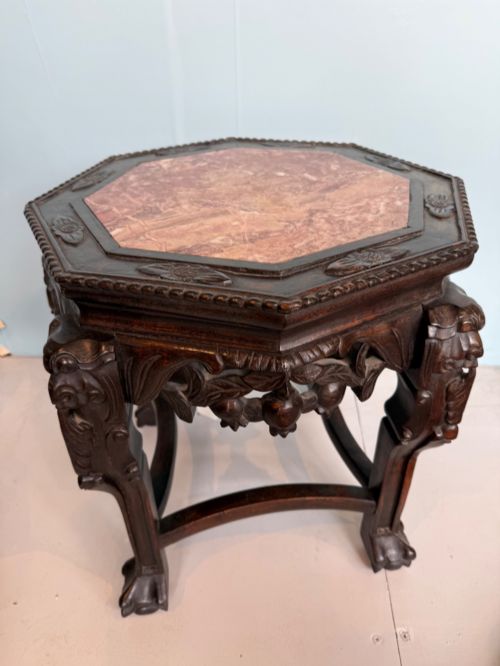
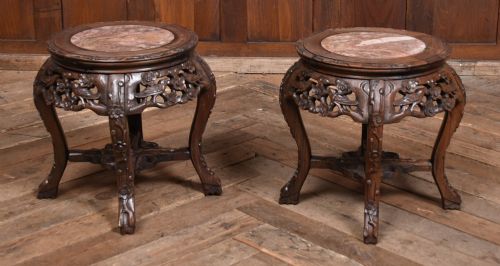

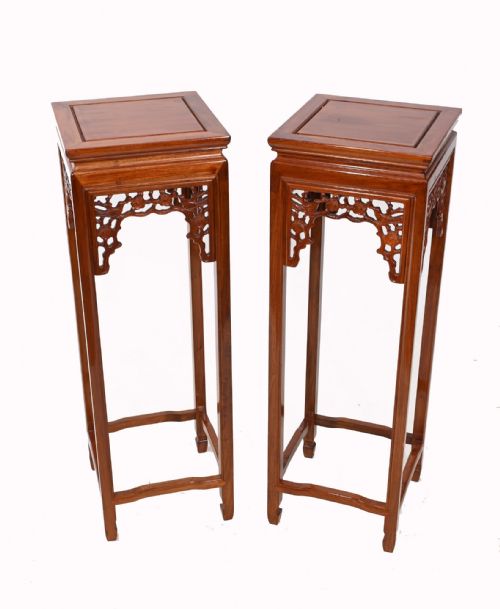


Antique Oriental Pedestals
These antique oriental pedestals are heavy hardwood, marble-topped and intricately carved supports that bring substance and regional craftsmanship to an interior.
Antique Oriental Pedestals
When searching for antique oriental pedestals, collectors encounter a diverse range of plant stands, jardiniere supports, torcheres and occasional tables originating from China, Japan, India and Burma. The pieces seen here span the eighteenth, nineteenth and early twentieth centuries, encompassing Victorian imports and items from the Meiji and Qing dynasties.
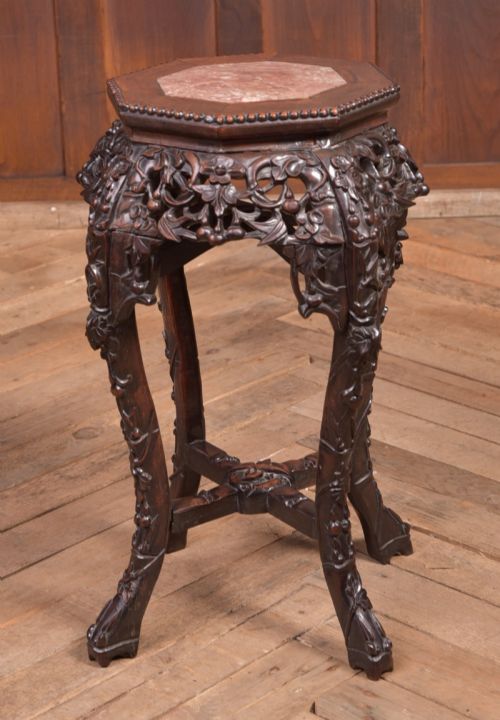
The most common forms on this page are circular or rectangular marble-topped hardwood stands designed to elevate planters, vases and lamps. Makers utilised dense timbers such as rosewood and padouk alongside ebonised wood and lacquer, shaping them with traditional joinery and deep carving.
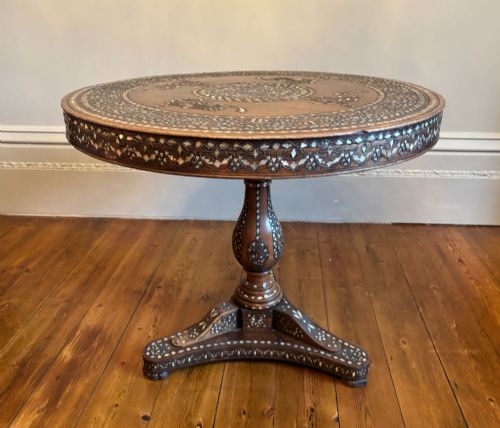
Beyond standard plant stands, the selection includes occasional tables with mother of pearl inlay, rootwood tables with quartz tops, and matched pairs of freestanding torcheres. These items reflect both traditional domestic use in Asian interiors and the Victorian appetite for Eastern export goods.
How they were made
Makers constructed these supports primarily from heavy exotic timbers including rosewood, padouk, teak and rootwood, often complemented by inset panels of smooth marble or quartz. These dense woods provided the structural stability required for tall plant stands and heavy stone inserts.
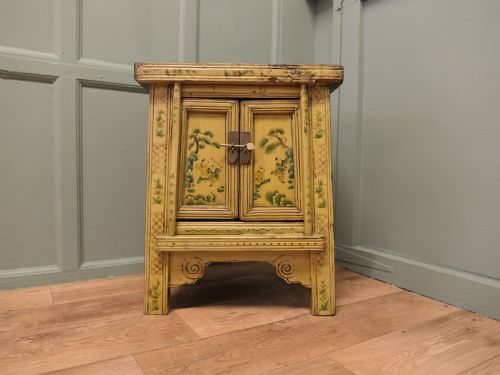
Surface ornamentation relied heavily on hand carving, deep relief work and traditional lacquer techniques, occasionally enhanced with mother of pearl inlay or polychrome paint. Joinery was executed to accommodate the natural movement of timber without mechanical fasteners.
Antique Oriental Pedestals Retail Price Guide 2026
Typical asking prices for oriental pedestals among the pieces listed under this phrase on Sellingantiques today, from the lower quarter to the upper quarter. They describe what is for sale here now, not the wider market.
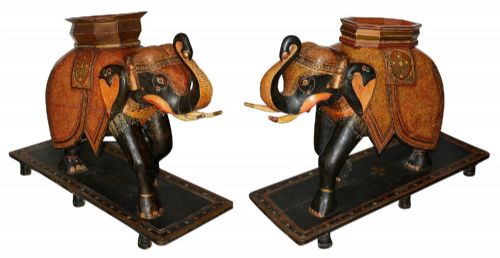
Several stands double as resting spots for carved wooden elephants, rootwood quartz tables, and figures of Buddhist immortals.
What varies in quality
The degree of refinement in the hand carving dictates much of the distinction between pieces, moving from stiff, repetitive patterns to deeply undercut, spirited floral or dragon motifs. Crispness of detail in the woodwork and the snug integration of marble or quartz tops reflect the skill of the original workshop.
Selection of timber also plays a role, with dense, evenly figured rosewood or padouk representing superior craftsmanship compared to plain utilitarian woods. The structural integrity of complex tiered joints and the preservation of original surface finishes determine the overall standard of a piece.
Liberty of London
The Antique Oriental Pedestals Glossary
- Jardiniere stand
- A tall table or pedestal specifically built to support a heavy ceramic plant pot or flower bowl. These often incorporate water-resistant marble or stone tops.
- Torchere
- A tall ornamental stand originally designed to hold a candelabrum or lamp. In Far Eastern pieces, these take the form of heavily carved wooden columns.
- Padouk
- A heavy, durable tropical hardwood with a reddish hue used extensively for fine Chinese furniture. It polishes to a deep lustre and resists warping.
- Meiji period
- The era in Japanese history spanning from 1868 to 1912, noted for intricate metalwork, carved hardwoods and ceramics produced for both domestic and export markets.
- Chinoiserie
- European interpretation and imitation of Chinese artistic traditions, though original export pieces often display authentic regional motifs executed for Western buyers.
Antique Oriental Pedestals: Frequently Asked Questions
What were antique oriental pedestals used for?
These pieces served primarily as elevated platforms for heavy decorative objects, including porcelain vases, bronze lamps, and potted plants. Their height allowed interior displays to command attention within a room.
In both Asian and Western Victorian homes, they functioned as focal points for sculptural items or natural specimens, protecting fine flooring and furniture surfaces while adding vertical interest to interior layouts.
How do I identify a Chinese Qing dynasty stand?
Qing dynasty stands typically feature dense native hardwoods like padouk or rosewood, combined with inset marble tops and deeply carved floral or dragon motifs. The joinery is often complex and executed without visible metal fasteners.
Examine the weight of the timber and the depth of the hand carving, as earlier export pieces display a robust construction and tactile surface texture characteristic of traditional workshops before mass production.
How do I live with a marble top stand?
Marble top stands require minimal daily maintenance beyond dusting with a soft cloth. Because the stone insert is naturally cool and hard, it provides a stable, heat-resistant surface for lamps and ceramic planters.
Position the stand away from direct, harsh heat sources and sudden temperature shifts to protect the underlying hardwood frame and any delicate lacquer or inlay work from drying out.