




Antique Oriental Gong
An antique oriental gong brings a resonant acoustic presence and striking craftsmanship to any interior, blending exotic resonance with period decorative arts.
Antique Oriental Gong
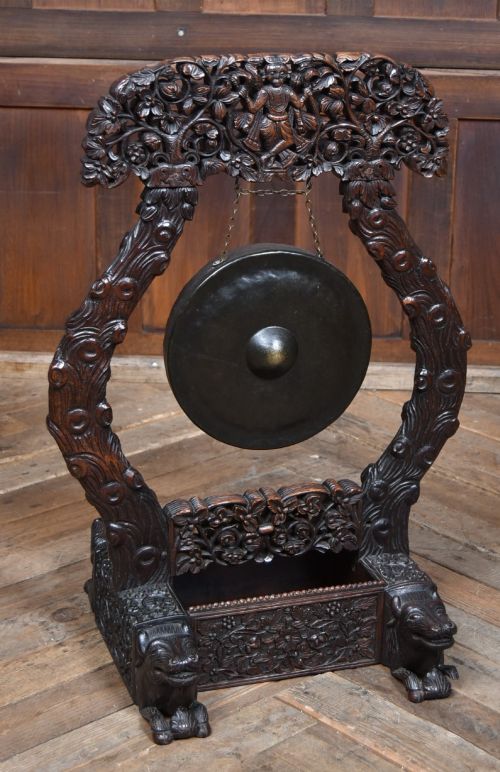
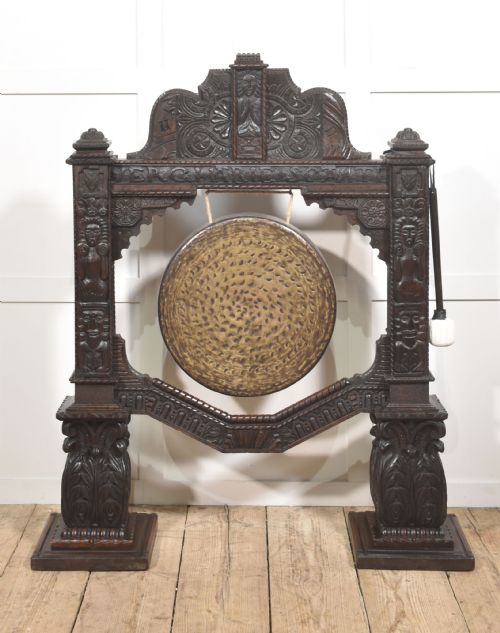
An antique oriental gong comprises a suspended resonant metal disc or bell paired with a decorative wooden or bamboo support frame. When buyers search for an antique oriental gong, they generally encounter dinner gongs, table gongs, and temple bells from the nineteenth and early twentieth centuries.
The forms span dinner gongs designed for country houses alongside smaller table gongs and temple bells. Most examples date from the nineteenth century through the Edwardian era, reflecting British taste for imported Asian aesthetics.
The cultural styles on this page encompass Chinese Export, Anglo-Indian, Chinoiserie, Japonisme, and Qing Dynasty influences. Frames incorporate carved hardwood, teak, oak, and bamboo, frequently housing bronze or brass bells and gongs.
Materials and construction
The metallic components rely on cast bronze and brass to produce clear, sustained musical tones. Workshops cast and hammer these metals to achieve the desired resonance and acoustic properties.
Supporting structures utilise carved hardwood, teak, oak, and bamboo. Artisans carved intricate motifs such as dragons and elephants into the wood, combining structural framing with decorative sculptural relief.
Materials documented across the page include brass, bronze, hardwood, carved hardwood, teak, glass, oak, and cord.
Quality factors in gongs
Quality rests upon the depth of the metal casting and the clarity of the musical tone produced when struck. Superior pieces combine substantial bronze or brass chimes with well-proportioned frames that permit free vibration.
The artistic merit of the carved hardwood or bamboo stand differentiates standard examples from finer ones. Crisp, deep relief carving on teak and oak frames demonstrates superior craftsmanship compared to simpler turned supports.
The Antique Oriental Gong Glossary
- Dinner Gong
- A large resonant disc suspended in a frame, historically utilised in country houses to summon guests to meals. These instruments combine utility with decorative presence.
- Table Gong
- A smaller scaled version of a hanging chime designed for placement on furniture surfaces. They retain the acoustic properties of larger gongs in a compact format.
- Japonisme
- A Western artistic movement inspired by Japanese art and design during the late nineteenth century. This aesthetic influenced the framing and decorative details of imported gongs.
- Chinoiserie
- European artistic styles reflecting Chinese motifs and decorative techniques. Makers applied these interpretations to wooden stands and accompanying furniture.
- Lithophone
- A musical instrument consisting of a piece of rock or metal struck to produce melodic tones. Certain cast bronze forms function in this manner.
Antique Oriental Gong: Frequently Asked Questions
How do you strike a dinner gong?
Dinner gongs are sounded using a padded mallet striking the centre of the bronze or brass disc. A measured tap produces a rich, resonant tone without straining the metal or the suspension cord.
Care should be taken to use appropriate beaters that do not scratch the surface of the chime.
Where were table gongs displayed?
Table gongs typically sat upon sideboards, hall tables, or desks in domestic interiors. They served both as decorative objects and practical noisemakers within the home.
Their compact size allowed them to fit easily into various reception rooms.
What woods were used for frames?
Frames utilised hardwoods including teak and oak, alongside flexible bamboo and ebonised timber. Artisans carved these materials to complement the metal chimes.
Many incorporated oriental motifs such as dragons or elephants into the woodwork.
How do you date an antique gong?
Dating relies upon stylistic markers, materials, and construction techniques evident in the frame and metalwork. Pieces from the Victorian and Edwardian periods often show specific aesthetic influences like Japonisme or Chinoiserie.
Hardware and cordage can also provide clues to the period of manufacture.