




Antique Optics
Antique optics bring precision glass and brass together, offering a tangible connection to historical exploration and scientific study.
Antique Optics
When you search for antique optics, you encounter a specialised category encompassing scientific instruments, telescopes, magnifying glasses, and associated desk accessories. These items span from the Georgian period through the Victorian and Edwardian eras, reflecting centuries of optical development.
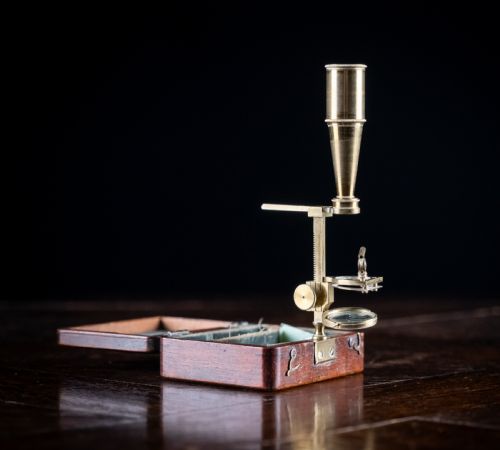
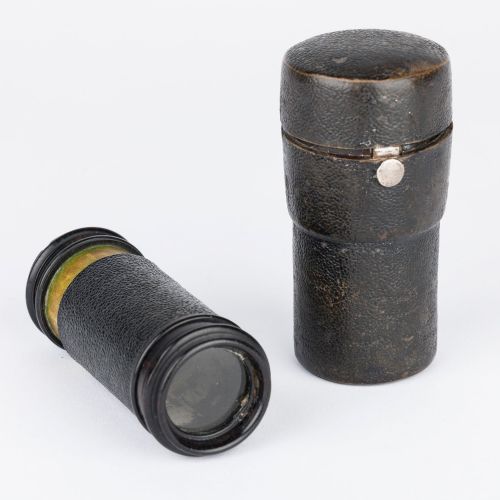
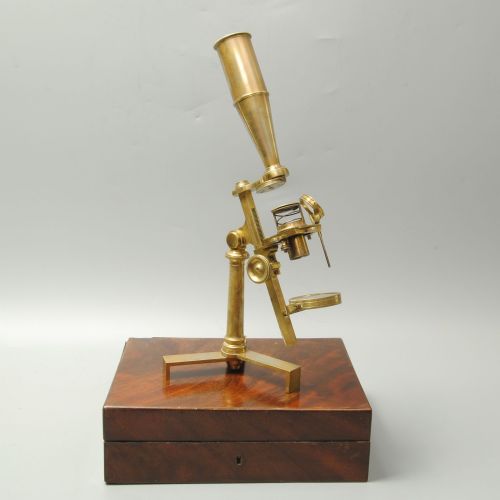
The pieces on this page most commonly include brass pocket spyglasses, library telescopes, field microscopes, and magnifying lenses. Many retain their original leather or mahogany cases, preserving their functional integrity and historical context.
Materials and Construction
Maker workshops primarily utilised heavy brass for structural components, tubes, and stands, combined with optical glass lenses ground to precise curvatures. Brass elements often received a polished or lacquered finish.
Auxiliary materials such as mahogany, bone, leather, velvet, and enamel appear in protective cases, handles, and decorative mountings. Fine instruments incorporate precision threading and sliding draw tubes to allow smooth focal adjustment.
Antique Optics Retail Price Guide 2026
Typical asking prices for optics among the pieces listed under this phrase on Sellingantiques today, from the lower quarter to the upper quarter. They describe what is for sale here now, not the wider market.
One nineteenth-century optical walking stick cleverly conceals a functional bone telescope within its shaft for discreet observation during strolls.
Distinctions in Quality
Quality in these instruments rests upon the clarity of the glass and the precision of the mechanical assembly. Superior examples maintain smooth movement in draw tubes and focusing screws without excessive play or looseness.
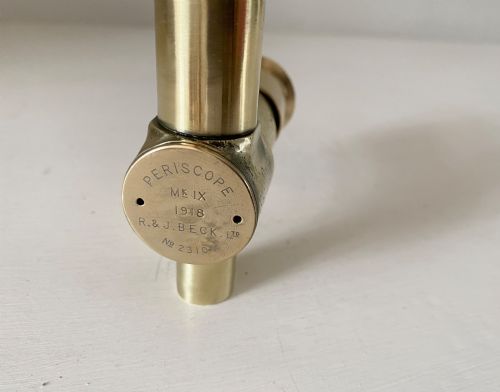
Maker attribution elevates a piece significantly, with signed instruments from established opticians demonstrating finer engraving, sturdier brass casting, and superior optical performance compared to unsigned workshop variants.
R & J Beck Ltd·Cary London·M Pillischer·Clarkson London·Ross of London·Matthew Berge London·John Gilbert·WF Stanley
The Antique Optics Glossary
- Achromatic lens
- An optical lens designed to reduce chromatic and spherical aberration by combining two types of glass with different dispersive properties. This innovation significantly improved image clarity in telescopes and microscopes.
- Bullseye lens
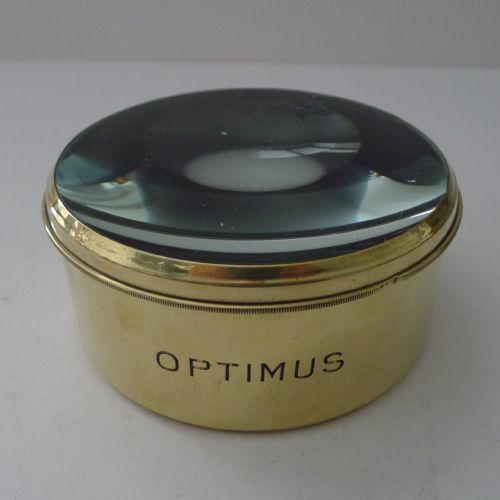
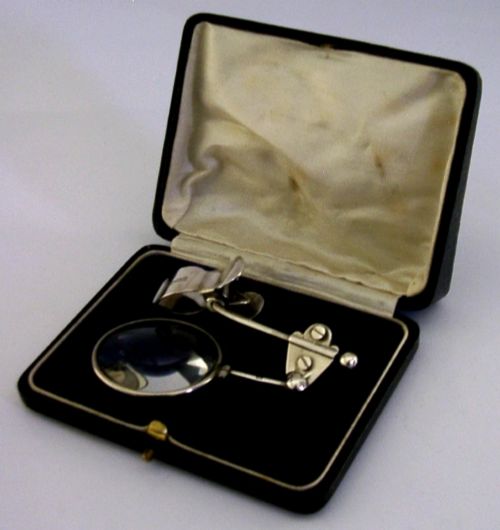
- A thick, plano-convex magnifying lens with a strongly curved outer surface used to concentrate light or enlarge text. They appear mounted on pivoting brass stands for desk use.
- Draw tube
- One of several sliding cylindrical metal sections that telescope into each other to alter the focal length of a spyglass. Smooth engagement of these tubes indicates careful machining.
- Gregorian telescope
- A reflective telescope design using a concave primary mirror and a small secondary mirror to direct light back through a central aperture in the main mirror. This configuration produces an upright image.
- Microscope
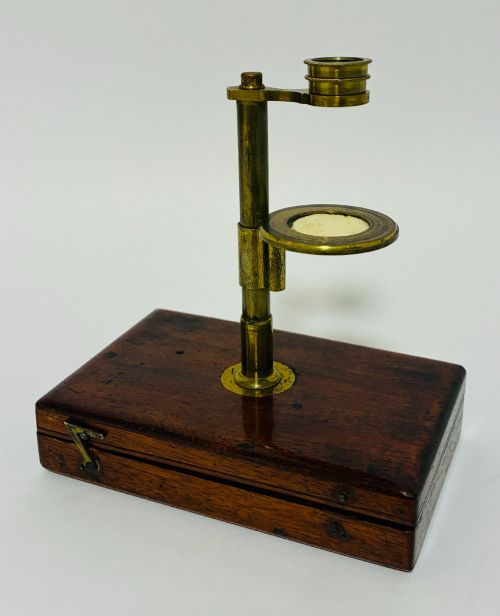
- An optical instrument used for viewing objects too small to be seen by the naked eye, appearing here in portable pocket, botanical, drum, and compound forms.
Antique Optics: Frequently Asked Questions
How do I clean brass optics?
Dust brass components gently with a soft dry cloth to preserve the aged patina. Avoid commercial metal polishes, which strip historical finishes and remove engraved maker signatures.
Keep glass lenses clean using a dedicated optical microfibre cloth without liquid cleaners, unless grime necessitates a specialised lens solution applied sparingly.
Can I use antique telescopes today?
Most antique telescopes function adequately for terrestrial viewing when lenses remain clean and aligned. Expect a narrower field of view and lower light transmission compared to modern coated optics.
Handle draw tubes carefully during extension and retraction to prevent binding or scratching the brass surfaces.
How do I identify the maker?
Makers typically engraved their names, firm titles, and addresses directly onto the final draw tube of a telescope or the stage plate of a microscope. Case interiors sometimes retain paper trade labels identifying the retailer.
Compare specific script styles, serial numbers, and mounting designs against known historical trade records to narrow down the production decade.
Why do some items have original cases?
Instruments requiring delicate alignment and glass components relied on fitted wooden boxes lined with velvet or leather for safe transport in the field. These fitted enclosures protected brass fittings from dents and kept lenses free from dust.
Finding an instrument in its matching original case adds substantial context and preserves the portability intended by the original maker.