


Antique Opal Pin
These antique opal pin pieces combine fiery stones with precious metals, offering collectors a wearable piece of history.
Antique Opal Pin
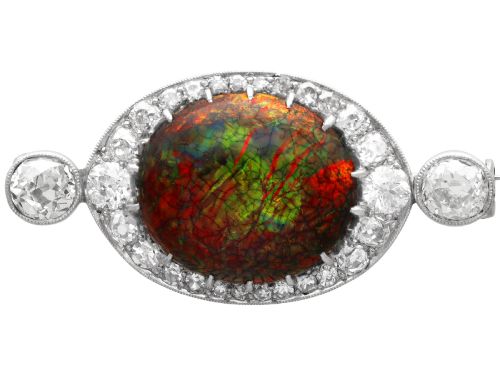
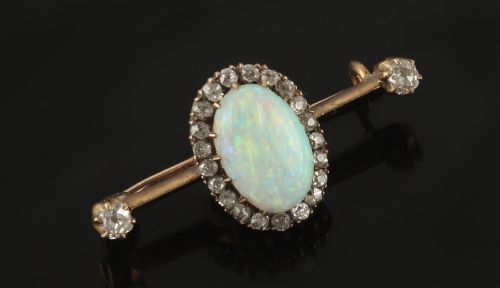
An antique opal pin brings together a central play of colour with secure metalwork, appearing primarily as bar brooches, cluster brooches, and convertible pendant brooches. When searching for an antique opal pin, buyers encounter pieces fashioned during the Victorian, Edwardian, and Art Nouveau periods.
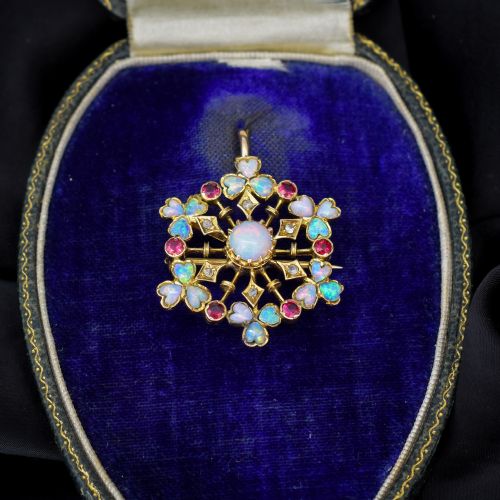
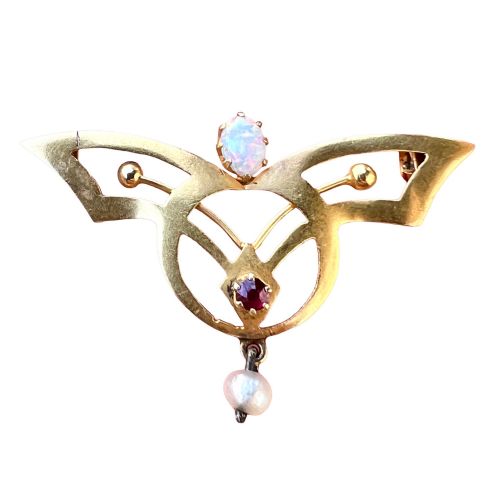
The surviving examples range from delicate stick pins to substantial flower and butterfly motifs. Makers utilised both yellow gold and white gold settings to frame natural opals, frequently accompanied by diamonds, rubies, or pearls.
Victorian and Edwardian workshops produced the majority of these jewels, though mid-century vintage variations also emerge. Each configuration serves to showcase the shifting spectral hues characteristic of genuine opals.
How they were made
Craftsmen shaped these items using 9ct gold, 15ct yellow gold, 18ct gold, and 18ct white gold, forming slender bars and intricate cluster frames. Stones were meticulously set by hand, securing fragile opals alongside accent diamonds, rubies, and pearls.
Workshops employed casting and wire-working techniques to construct secure pin mechanisms and pendant loops. The integration of closed or open settings depended entirely on the gemstone dimensions and the prevailing style of the decade.
Butterflies made of diamonds and multi-gem settings occasionally land on these pins, ensuring your knitwear is permanently guarded by a sparkling insect.
What varies in quality
Quality rests in the vibrancy of the opal's spectral play and the integrity of the surrounding metalwork. Superior specimens display strong, shifting flashes across the stone surface rather than flat, dull tones.
The subtlety of gemstone pairing also distinguishes finer examples, where supporting diamonds and rubies complement the central opal without overpowering the design. Original boxes and intact assay marks further elevate the standing of a piece.
The Antique Opal Pin Glossary
- Bar brooch
- A slender horizontal metal rod featuring a central decorative cluster or stone. This format was exceptionally popular during the late nineteenth and early twentieth centuries.
- Fire opal
- A transparent to translucent opal possessing bright orange, red, or yellow body colour. These stones often show distinctive warmth without standard multi-coloured flash.
- Assay mark
- A stamp indicating the purity of the precious metal and the testing office origin. Chester assay offices, for instance, stamped pieces to guarantee gold standards.
- Cluster brooch
- An arrangement of gemstones tightly grouped around a prominent central stone. This configuration maximises visual impact and light reflection.
- Pendant brooch
- A convertible jewel equipped with both a pin fitting and a hidden loop. This allows the owner to wear the item pinned to clothing or suspended from a chain.
Antique Opal Pin: Frequently Asked Questions
How do I wear an antique opal pin safely?
Secure the safety catch firmly when fastening the pin to thick fabrics like wool or velvet. Using a proper backing guard prevents the pin from slipping.
Store the piece flat in a dedicated box away from direct sunlight and sudden temperature shifts. Opals contain moisture that requires stable environmental conditions to prevent drying out.
Are these pins made of solid gold?
The metals utilised in these pieces typically include 9ct rose gold, 9ct yellow gold, 15ct yellow gold, 18ct gold, and 18ct white gold. Hallmarks stamped into the metal indicate the exact gold standard.
Solid construction ensures durability for daily wear, distinguishing them from plated alternatives. Checking the reverse side reveals the original assay stamps where present.
What periods do these pieces come from?
The available selection spans the Victorian, Edwardian, and Art Nouveau eras, extending into mid-century vintage pieces from the nineteen-fifties. Victorian designs often incorporate romantic motifs like hearts and clover leaves.
Edwardian and Art Nouveau creations favour flowing organic lines and lighter white gold or platinum-topped settings. Each era imparts distinct stylistic markers to the mountings.
Can these brooches be worn as pendants?
Many examples function as convertible pendant brooches featuring an integrated or folding loop on the reverse. This dual purpose allows the owner to alternate between pinning the jewel and hanging it from a chain.
Examining the back of the piece reveals whether a hidden bale is present. This versatility made them valuable additions to historical wardrobes.