
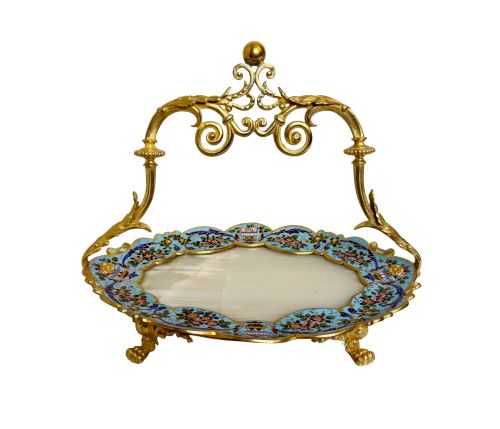


Antique Onyx Tray
An antique onyx tray brings together banded stone and rich metalwork, offering a refined resting place for desk accessories and small treasures.
Antique Onyx Tray
An antique onyx tray combines polished natural stone with decorative metal mounts, serving as a sophisticated surface for writing instruments or decorative items. When you search for an antique onyx tray, you encounter pieces ranging from Victorian desk accessories to refined Art Deco examples.
The selections span various periods including the nineteenth century, Edwardian era, and the nineteen-twenties. Forms vary from simple pin trays and inkstands to elaborate centrepiece trays adorned with enamel and gilt work.
Materials and construction
Maker's workshops combined solid onyx with metals such as brass, bronze, ormolu, and gilt bronze to build sturdy and weighty trays. Artisans frequently integrated champleve enamel panels or inlaid lapis lazuli into the stone base.
Many items incorporate detailed cold painted bronze figures or mounts, particularly in Austrian and French pieces from the late nineteenth and early twentieth centuries.
A mallard duck and a bronze tiger occasionally keep watch over the desk trays, proving that desk accessories enjoyed a touch of wildlife.
Judging quality and craftsmanship
Superior examples display crisp casting in the ormolu and bronze mounts alongside precision in the stone cutting and polishing. The integration between the heavy onyx base and the metal fittings indicates the level of original workshop care.
Finer trays often feature additional decorative elements like champleve enamel or inlaid semi-precious stones such as lapis lazuli, elevating a simple utility piece into an intricate decorative object.
Asprey Of London·Ferdinand Preiss·Josef Lorenzl
The Antique Onyx Tray Glossary
- Onyx
- A banded variety of chalcedony used extensively for the bases and bodies of decorative desk items. Its natural patterning ensures that each tray possesses unique visual movement.
- Ormolu
- Gilt bronze mounts applied to furniture, clocks, and trays during the eighteenth and nineteenth centuries. The technique involves applying a gold amalgam to a bronze base.
- Champleve enamel
- A method where troughs are carved into the metal surface and filled with vitreous enamel before firing. These vibrant sections create colourful contrast against the surrounding bronze and stone.
- Cold painted bronze
- A process where bronze sculptures are painted with oil-based colours rather than subjected to high-temperature kiln firing. This finish appears frequently on animal and figural studies mounted upon stone bases.
Antique Onyx Tray: Frequently Asked Questions
What is an antique onyx tray used for?
These trays served historically on writing desks to hold inkwells, pens, and correspondence. Today, they function well as decorative display pieces or small receptacles for everyday accessories.
Their substantial weight and decorative metal mounts make them stable and visually striking additions to a tabletop.
How do I date an antique onyx tray?
Dating relies on the stylistic characteristics of the metal mounts and the manufacturing techniques used in the piece. Victorian and Edwardian examples often feature ornate ormolu or champleve enamel, while later pieces adopt clean geometric lines.
Examining the fixings, bronze casting quality, and overall design helps place the piece within periods from the nineteenth century through the Art Deco era.
How should I clean an antique onyx tray?
Maintenance requires gentle dusting with a soft, dry cloth to protect the polished stone surface. Avoid harsh chemical cleaners or excessive moisture, which can damage exposed metalwork and enamel.
Metal mounts benefit from careful attention with a dry brush to remove dust from crevices without touching the surrounding stone.
Are onyx trays fragile?
While onyx is a durable stone, these trays can be heavy and require careful placement on stable surfaces. The attached bronze or brass mounts and enamel details also need protection from sharp impacts.
Lifting the tray by its stone base rather than relying solely on decorative metal handles ensures safe handling.