


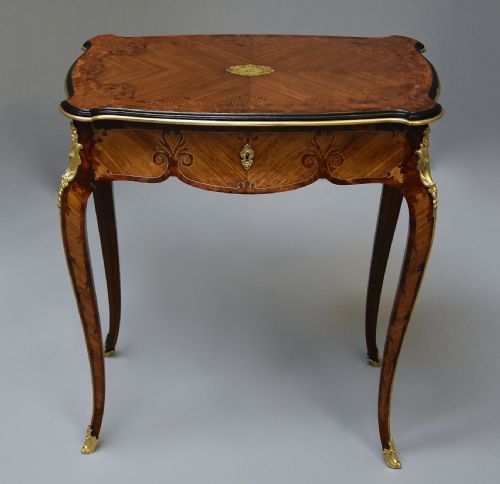
Antique Occasional Sewing Table
An antique occasional sewing table brings domestic craft into the principal rooms, combining a compact writing or needlework surface with internal storage.
Antique Occasional Sewing Table
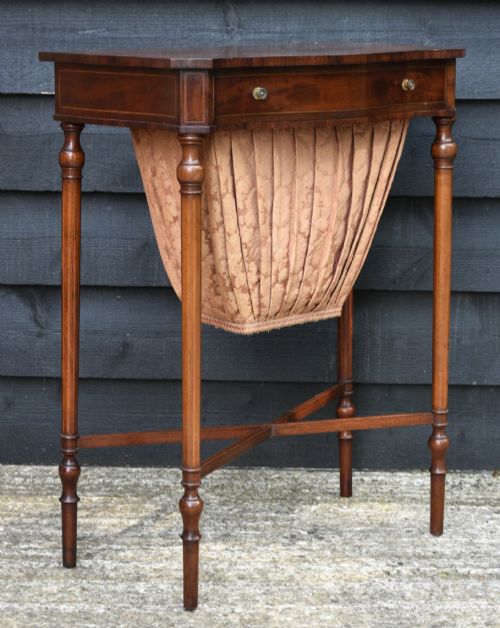
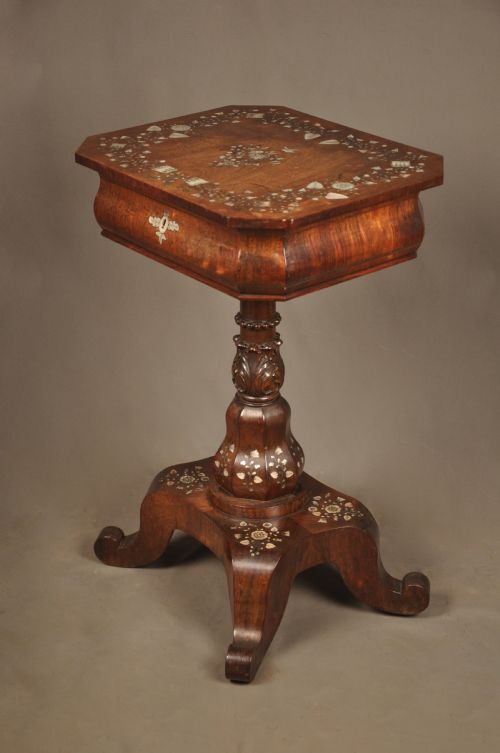
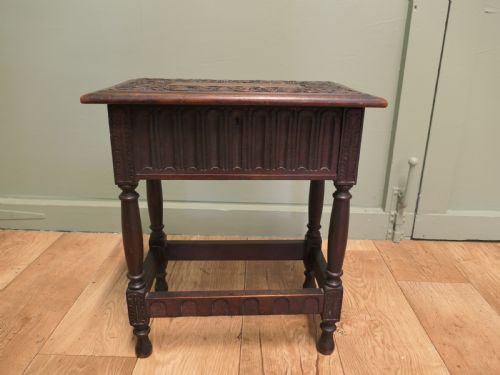
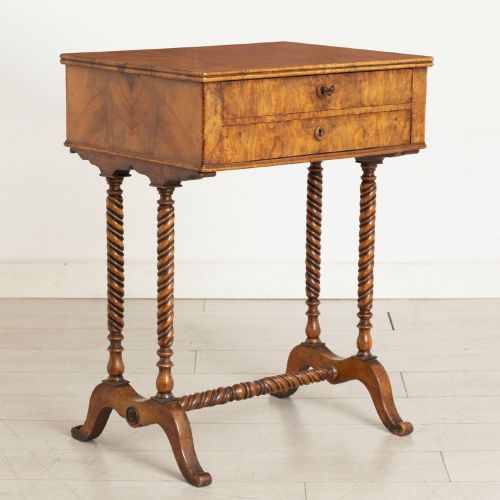
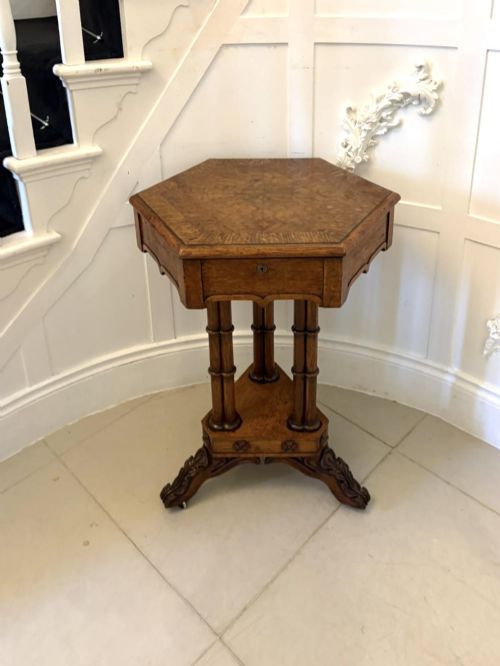
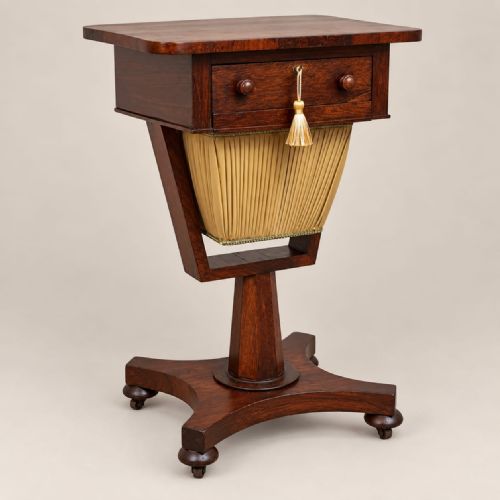
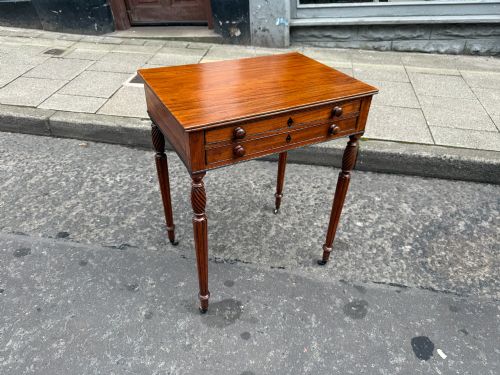
When you search for an antique occasional sewing table, you look at multi-functional pieces designed for light domestic tasks, needlework, and correspondence in the parlour or drawing room. The pieces recorded here span from the Georgian and Regency eras through the Victorian period and into the Edwardian age, taking the form of work tables, drop-leaf tables, pedestal pieces, and games combinations. Walnut, mahogany, and rosewood dominate the surviving forms, frequently housing fitted compartments or fabric bags beneath the top.
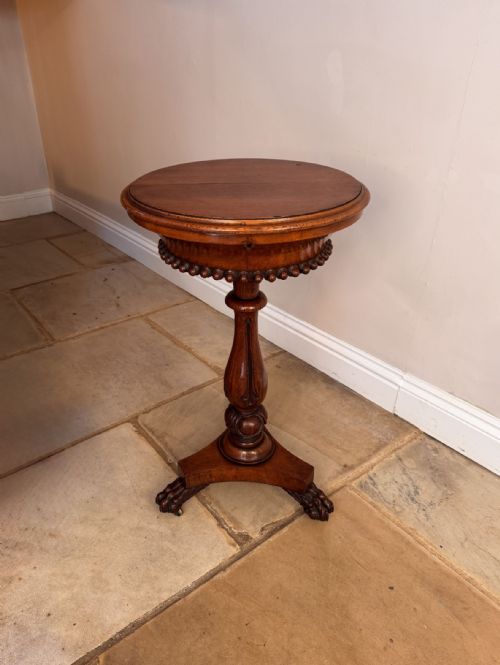
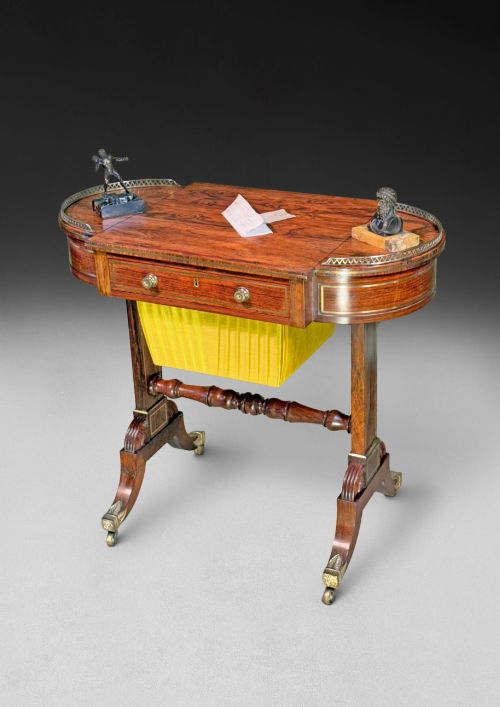
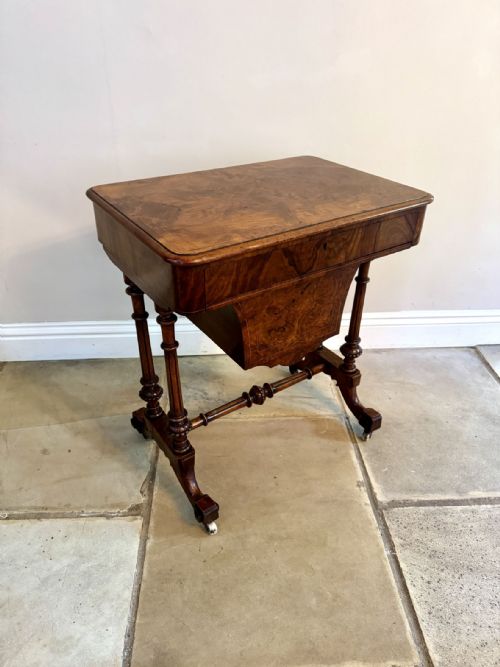
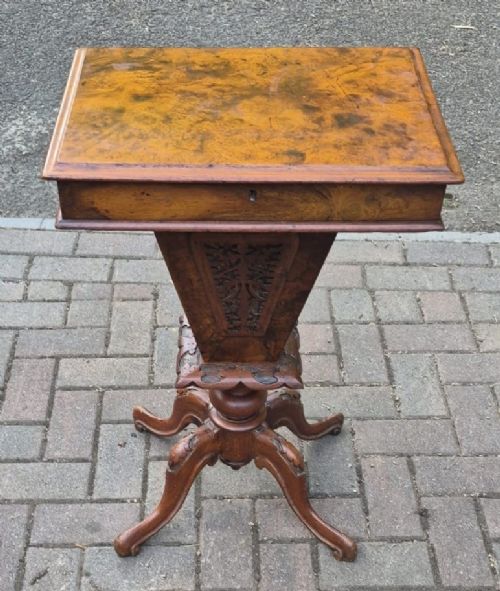
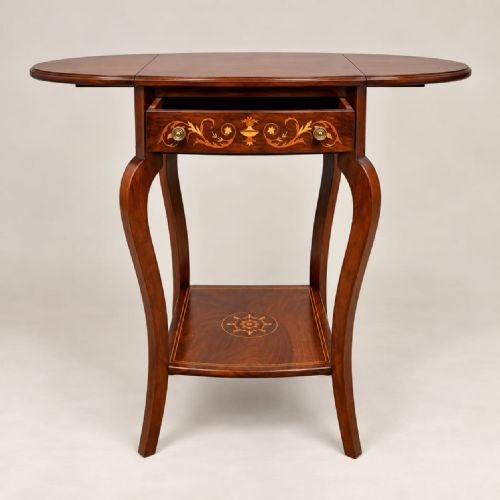
Victorian walnut and rosewood versions appear most frequently on this page, often featuring turned pedestals, inlaid marquetry, or drop leaves. Regency examples in mahogany and satinwood display clean architectural lines, sometimes incorporating penwork or Chinoiserie decoration. Earlier Georgian and Sheraton iterations present refined light woods with octagonal tops or delicate drop-leaf arrangements.
Materials and construction methods
Cabinetmakers constructed these tables using dense hardwoods such as mahogany, rosewood, and walnut, frequently applying figured veneers like burr walnut, curl mahogany, and satinwood to the primary display surfaces. Secondary timbers provide structural stability to the internal framework and the sliding wells or drawers beneath the top. Marquetry inlay, boxwood stringing, and penwork surface decoration add visual texture to the more elaborate Regency and Victorian specimens.
Specialised mechanisms define the category, including drop leaves supported by swing brackets, pedestal columns with carved tripod or platform bases, and intricate internal fitted compartments for sewing implements. Brass handles, lion mask mounts, and fitted drop bags of fabric integrate utility with decorative polish. Joinery relies on traditional dovetailed drawers and secure tenon joints to withstand daily domestic service.
Current listings feature pieces spanning the Georgian, Regency, William IV, Victorian, and Edwardian periods, constructed primarily in mahogany, rosewood, and walnut.
Distinctions in quality and execution
The degree of refinement in the timber selection and veneer matching dictates the standing of an individual piece, where figured burr walnut or master-cut satinwood elevates a simple occasional table into a notable specimen. Superior examples display continuous grain patterns across drop leaves and drawer fronts, alongside crisp, hand-carved details on pedestal bases and pillar supports rather than cast composition ornament.
Internal complexity and the integrity of the fitted interior further separate workshop tiers. A well-executed table maintains smoothly operating drawers and well-organised compartments for thread and implements, retaining original brass hardware, working locks, and intact fabric linings where applicable.
The Antique Occasional Sewing Table Glossary
- Work table
- A small domestic table fitted with drawers and internal compartments designed for sewing, needlework, and light correspondence.
- Drop leaf
- A hinged flap on the side of a table that folds down to save space or lifts up to extend the surface area.
- Marquetry
- Decorative patterns formed by the insertion of contrasting veneers into a wood ground to create pictorial or geometric designs.
- Pedestal table
- A freestanding table supported by a central pillar rising from a stable base rather than four corner legs.
- Penwork
- A decorative technique using fine ink lines on a prepared wood surface to simulate elaborate inlay or oriental motifs.
Antique Occasional Sewing Table: Frequently Asked Questions
What is an antique sewing table used for?
These tables served domestic purposes in reception rooms, providing a stable surface for needlework, embroidery, and letter writing. The integrated drawers and fabric bags kept materials close at hand while maintaining a tidy parlour appearance.
Today, owners utilise them as bedside tables, lamp stands, or compact occasional surfaces in smaller living spaces, relying on the internal compartments for modern odds and ends.
How do I date an antique work table?
Dating relies upon stylistic markers, timber choices, and structural joinery observed across different design eras. Georgian and Regency pieces favour mahogany and satinwood with rectilinear or octagonal proportions, while Victorian iterations often showcase burr walnut, rosewood, and heavier carved pedestal bases.
Later Edwardian versions return to lighter inlays and simpler proportions, reflecting the revival of Sheraton and neoclassical tastes at the turn of the twentieth century.
What woods were used for sewing tables?
Cabinetmakers selected durable and decorative hardwoods suited to fine polishing and veneer work. Mahogany and rosewood form the backbone of Georgian and Regency production, while walnut and burr walnut dominate Victorian examples.
Satinwood and pine appear in specific regional or decorative contexts, often accented with boxwood stringing, marquetry, or contrasting ebony details.
Are sewing tables and work tables the same thing?
The terms are largely interchangeable within antique furniture classification, as both describe compact tables equipped with storage for needlework and domestic crafts. Period trade catalogues frequently listed them under either designation depending on the specific cataloguer or maker.
Some variations incorporate games boards for chess or backgammon alongside the sewing compartments, expanding the functional repertoire of the piece.