

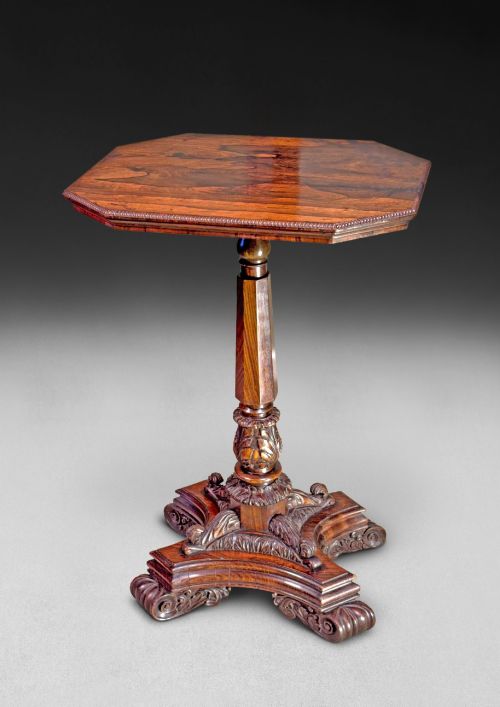
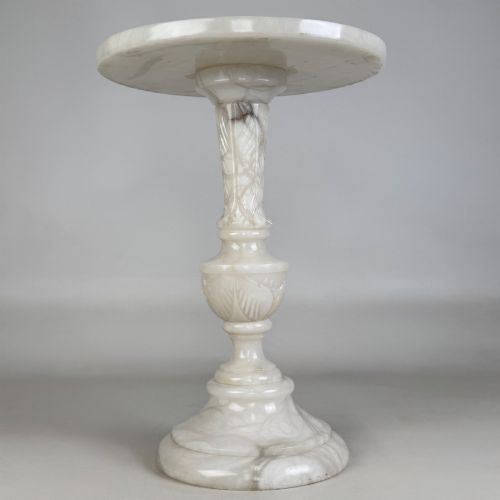
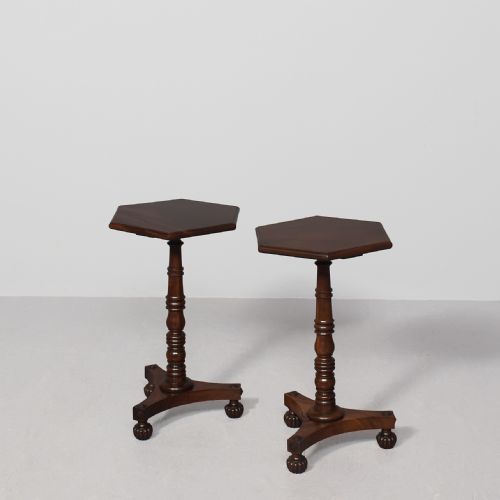
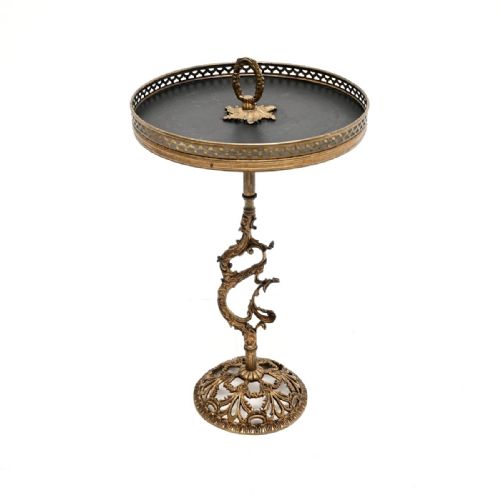
Antique Occasional Drinks Table
An antique occasional drinks table brings small-scale hospitality to a room, offering a convenient surface for glasses and bottles.
Antique Occasional Drinks Table
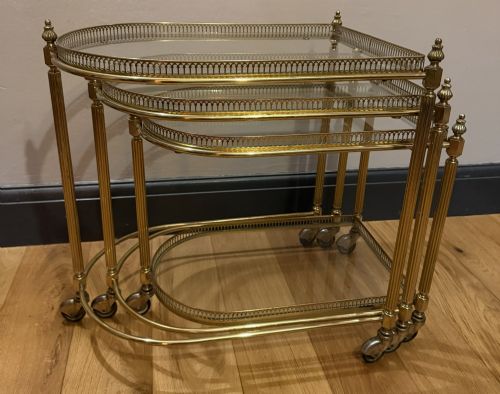
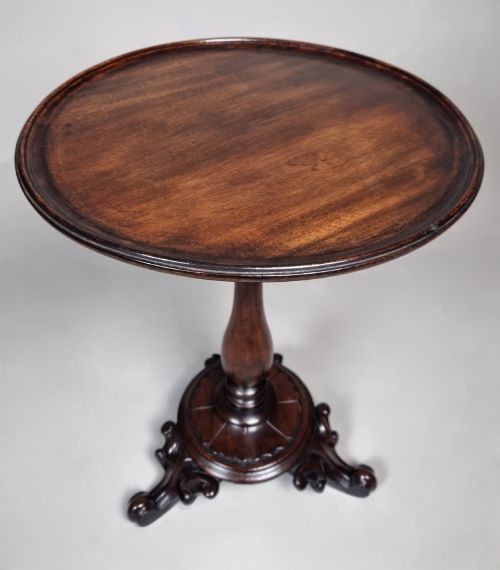
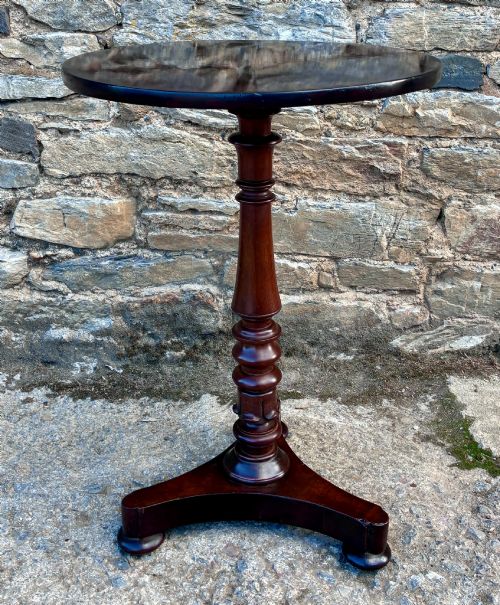
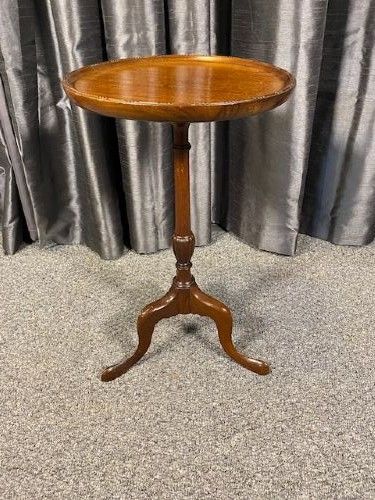
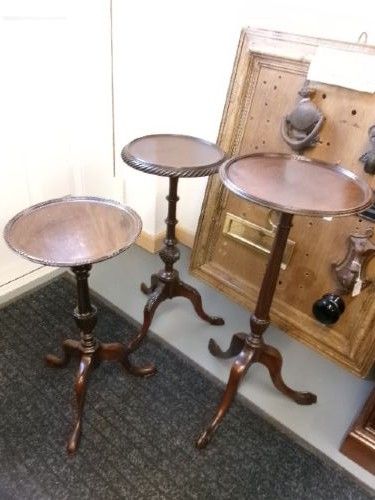
An antique occasional drinks table serves as a compact surface for glasses, decanters, and cups, moving easily around a room as needed. These pieces take several distinct forms, including wine tables with pillar supports, low coffee tables, and side tables designed for parlours and drawing rooms.
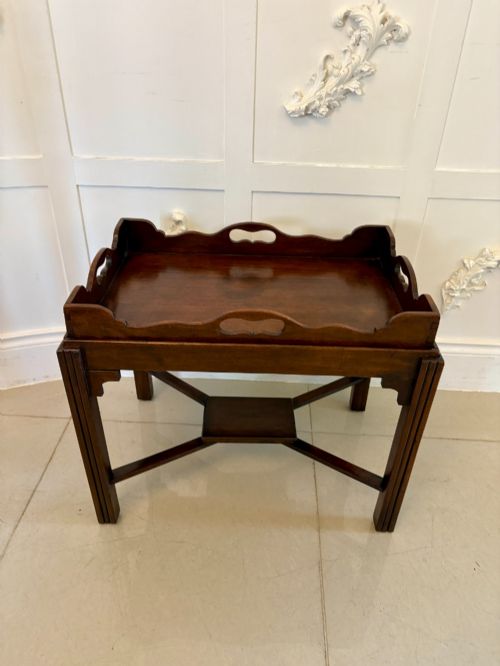
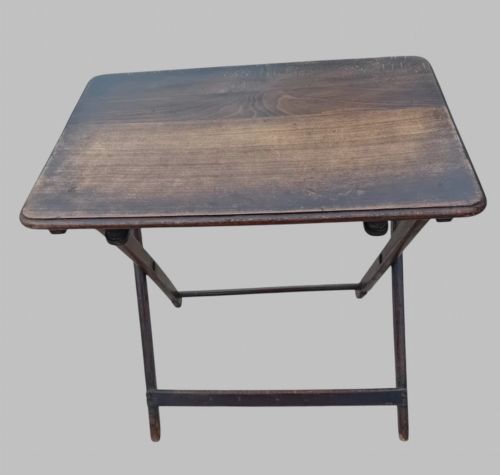
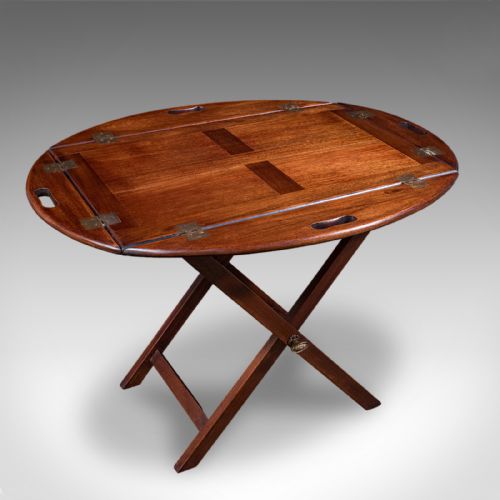
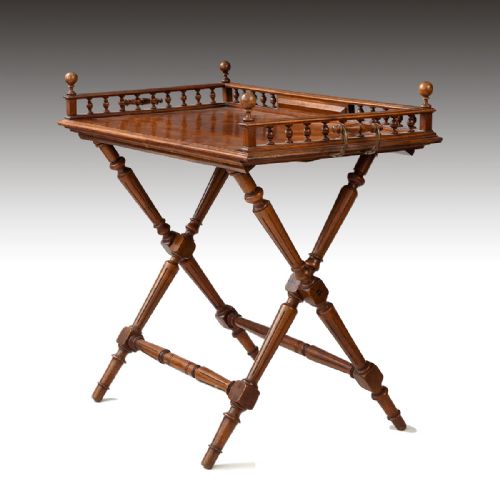
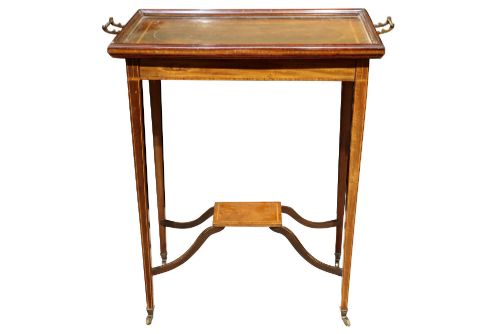
Butler trays and tray tables form a large part of the selection, featuring removable wooden trays resting on folding or fixed stands. These tray-top designs often incorporate brass handles and raised edges to secure glassware during service.
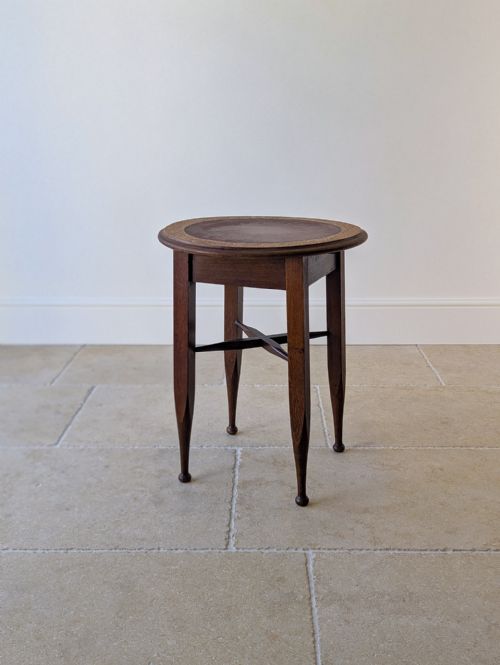
The versions most commonly met on this page date from the Edwardian period and the nineteenth century, constructed in mahogany, walnut, or oak. Stylistic influences range from plain Georgian proportions to Arts and Crafts simplicity and Art Deco walnut veneers.
Materials and Construction
Cabinetmakers utilised dense timbers such as mahogany, walnut, and oak to build these tables, frequently selecting figured veneers for table tops and satinwood for delicate inlay work. Solid hardwoods provide the structural integrity required for pillar wine tables and folding stands.
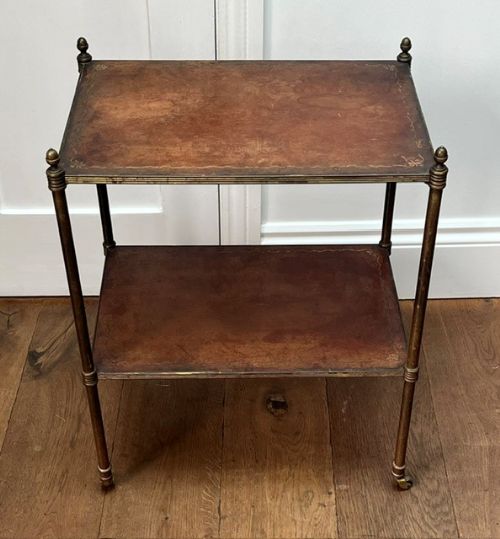
Surface decoration relies on traditional techniques including brass binding, tooled leather inserts, and hand-cut joinery. Trays often feature raised gallery edges shaped from solid timber or assembled with dovetail joints.
Antique Occasional Drinks Table Retail Price Guide 2026
Typical asking prices for occasional drinks table among the pieces listed under this phrase on Sellingantiques today, from the lower quarter to the upper quarter. They describe what is for sale here now, not the wider market.
Listings feature woods such as mahogany, walnut, oak, satinwood, and yew, spanning the eighteenth, nineteenth, and early twentieth centuries.
Evaluating the Pieces
Quality rests upon the selection of timber and the precision of the joinery rather than ornate decoration alone. Superior examples display carefully matched grain patterns on table tops and solid, well-fitted hinges on folding tray stands.
Proportion and stability separate standard utility pieces from finer creations. A well-balanced wine table stands firmly on its tripod base without wobble, and a butler tray fits securely onto its original support stand.
Waring and Gillow·Mallett of London
The Antique Occasional Drinks Table Glossary
- Butler tray
- A portable rectangular wooden tray with hinged or cutout sides designed for carrying bottles and glasses. When placed on a folding stand, it functions as a temporary drinks table.
- Wine table
- A small, single-pillar occasional table with a circular top, traditionally used for holding an individual glass and bottle of wine. These typically feature tripod legs.
- Tray top
- A table top bordered by a raised wooden gallery or rim to prevent items from sliding off during service. This feature frequently includes integrated brass handles.
- Tilt top
- A table mechanism allowing the wooden top to pivot vertically when not in use, enabling compact storage against a wall.
- Campaign style
- Portable furniture designed for travel, characterised by folding stands, knock-down frames, and recessed brass carrying handles.
Antique Occasional Drinks Table: Frequently Asked Questions
How were butler trays used?
Butler trays served as portable surfaces for carrying tea, wine, or spirits from the kitchens to the drawing room or parlour. Servants placed the removable wooden tray onto a folding wooden stand to create an instant serving station.
Once the gathering ended, the tray lifted off the base and folded flat for compact storage. This dual functionality made them essential items in large country houses and smaller town residences alike.
Where should I place a wine table?
A wine table fits easily beside an armchair, sofa, or in the corner of a room due to its small circular top and slender pillar base. Their compact footprint allows them to occupy spaces where standard coffee tables cannot fit.
They provide a convenient surface for a single glass, a small lamp, or a book without crowding the room. Their lightweight construction also permits easy relocation during social gatherings.
How do I date an occasional table?
Dating relies on examining the timber species, construction methods, and stylistic details present in the piece. Georgian and eighteenth-century examples tend to show solid mahogany construction with simpler turned pillars, while Edwardian versions frequently incorporate satinwood inlay and Sheraton Revival motifs.
Hardware such as brass hinges, handles, and castors also provides chronological clues. Original stands and patination built up over decades help confirm the period of manufacture.
Are these tables sturdy enough for daily use?
Most antique occasional tables provide ample stability for holding drinks, books, and small decorative items during everyday living. Solid hardwood frames and traditional joinery ensure they withstand regular movement around the home.
Heavier items should be kept to larger side tables, while pillar wine tables and folding stands suit lighter service use. Placing them away from direct heat sources helps preserve the timber and joints over time.