
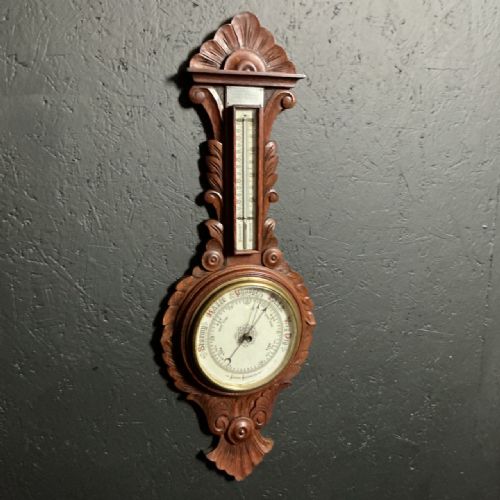
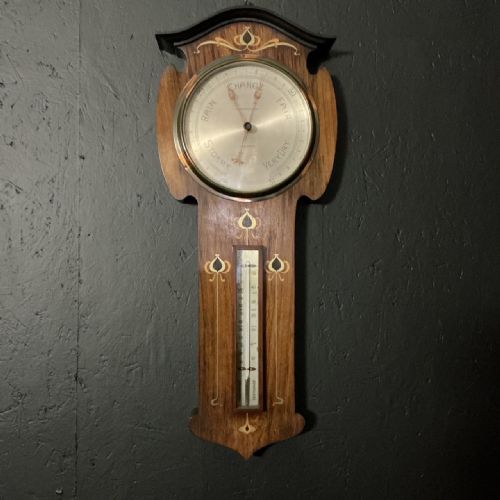


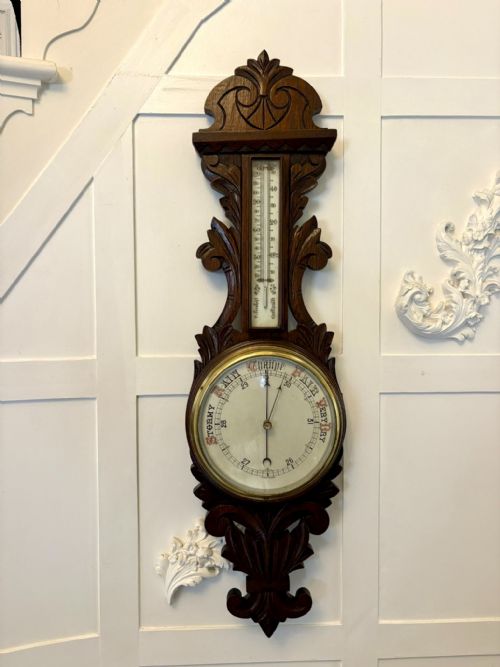


Antique Oak Weather Glass
These antique oak weather glass pieces bring scientific precision into the home through carved timber frames and glass dials.
Antique Oak Weather Glass
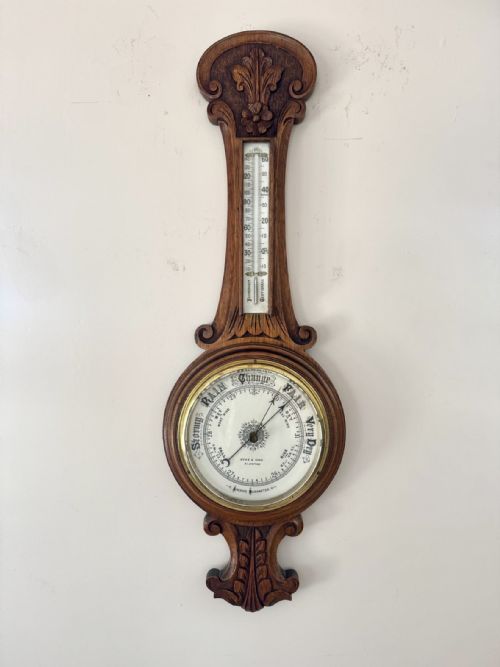
When you search for an antique oak weather glass, you encounter wall-mounted barometers, stick barometers, and mechanical barographs housed in solid timber cases. The pieces on this page span the Victorian and Edwardian eras, emerging from periods when domestic forecasting relied upon mercury, aneroid movements, or recording drums.
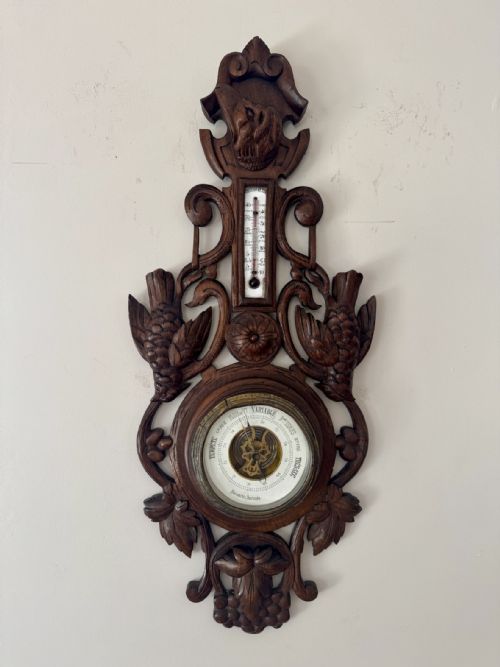
Most examples you meet are aneroid barometers featuring carved oak cases, often displaying floral motifs, geometric designs, or Black Forest animal carvings alongside thermometer scales. Stick barometers and multi-glass barographs also appear, utilising brass fittings, bevelled glass, and ceramic dials to present atmospheric changes.
These scientific instruments served a domestic function in farmhouses, libraries, and hallways, combining practical meteorological tracking with decorative woodwork. The selection available combines utilitarian weather tracking from the nineteenth and early twentieth centuries with distinctive regional carving styles.
Markers of Quality
The distinction between standard production and superior work lies in the depth and clarity of the carved oak case and the reputation of the instrument maker inscribed upon the dial. Elaborate carving depicting birds or regional foliage, combined with signed movements from makers such as Negretti and Zambra, elevates a piece.
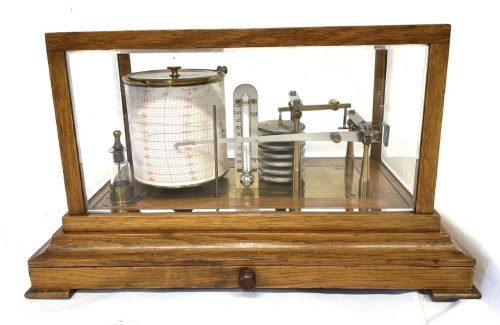
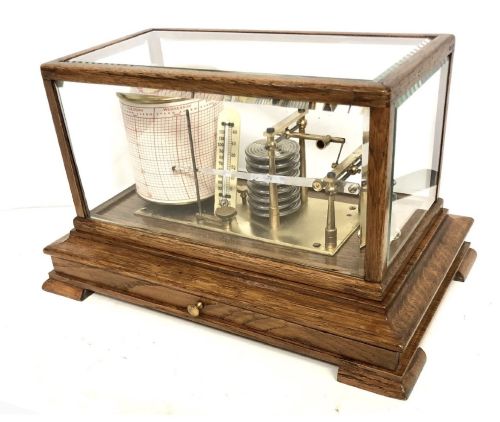
Internal complexity also dictates the tier of the instrument, moving from basic aneroid dials to multi-glass barographs equipped with chart drawers, thermometers, and heavy bevelled glass cases. Original paper charts, intact mercury columns, and crisp ceramic dials preserve the integrity of the piece.
Materials appearing across these entries include solid oak, brass fittings, ceramic dials, bevelled glass, and paper recording charts.
Hyde & Sons Sleaford·Negretti & Zambra·W Watson & Sons·Short & Mason·J Hughes London·James Pitkin London·J Hicks of London
The Antique Oak Weather Glass Glossary
- Aneroid Barometer
- An instrument that measures atmospheric pressure without liquids by using a flexible metal box. Changes in pressure cause the box to expand or contract, moving a pointer across a dial.
- Barograph
- A recording barometer that draws a continuous graph of atmospheric pressure onto a rotating paper chart. These instruments are typically housed in oak cases with multiple glass panels.
- Stick Barometer
- A tall, narrow barometer containing a vertical glass tube filled with mercury. This traditional design allows direct observation of barometric height.
- Admiral Fitzroy Barometer
- A weather glass pattern developed in the nineteenth century featuring storm warnings and specialised scales. These instruments often combine a mercury tube with a thermometer and descriptive remarks.
- Bevelled Glass
- Glass pane edges cut and polished at an angle to catch the light. This decorative treatment is standard on higher quality instrument cases.
Antique Oak Weather Glass: Frequently Asked Questions
How do I read an aneroid barometer?
Read the main pointer to see the current barometric pressure indicated on the dial face. Tap the glass gently to settle the mechanism before taking your reading.
Compare this position to the secondary marker needle set by hand earlier to determine whether the pressure is rising or falling.
Where should I hang a wall barometer?
Hang your barometer on an interior wall away from direct sunlight, radiators, and draughty doors. Rapid temperature changes affect the internal metal components and alter readings.
A stable indoor environment ensures the mechanical movement remains accurate and preserves the condition of the oak case.
How do I change a barograph chart?
Open the glass case and lift the pen arm gently away from the rotating brass drum. Remove the used paper chart and secure a fresh one around the cylinder.
Wind the clockwork mechanism carefully, lower the pen back onto the paper, and ensure the ink flows freely before closing the case.