

Antique Oak Server Base
An antique oak server base is a sturdy low storage piece built to hold dining items, giving rooms a grounded and practical surface.
Antique Oak Server Base
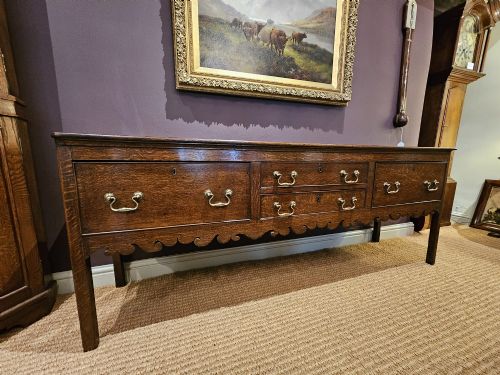
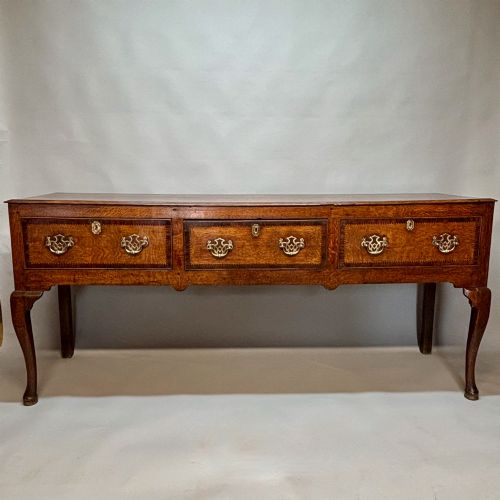
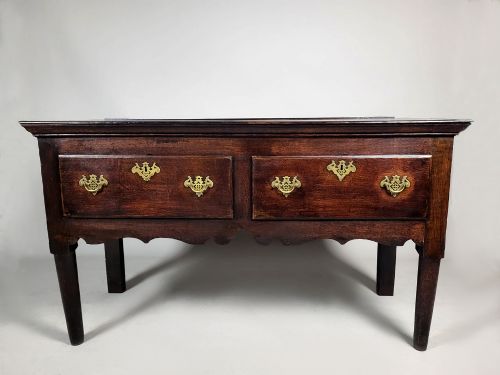
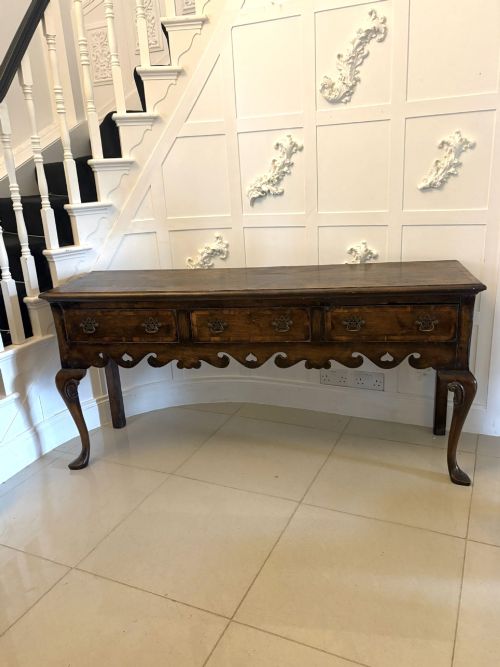
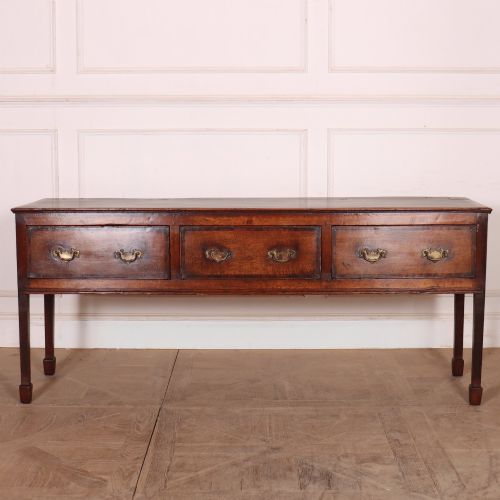
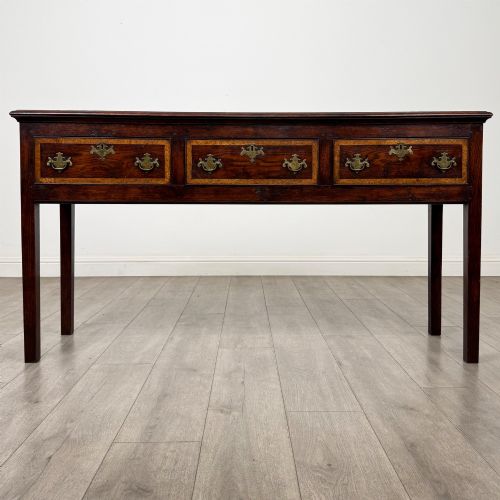
An antique oak server base provides a long surface for food preparation and serving while offering concealed or open storage below. These pieces appear as low sideboards, dresser bases, and serving tables that sit comfortably against dining room or hallway walls.
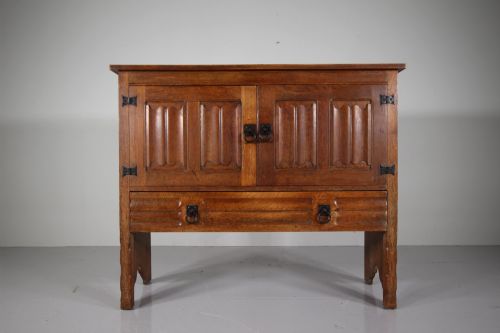
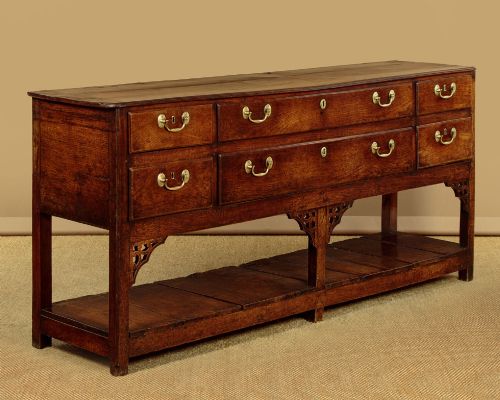
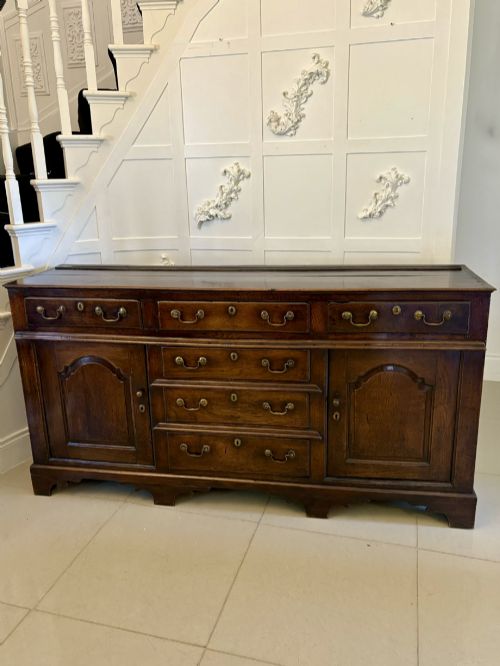
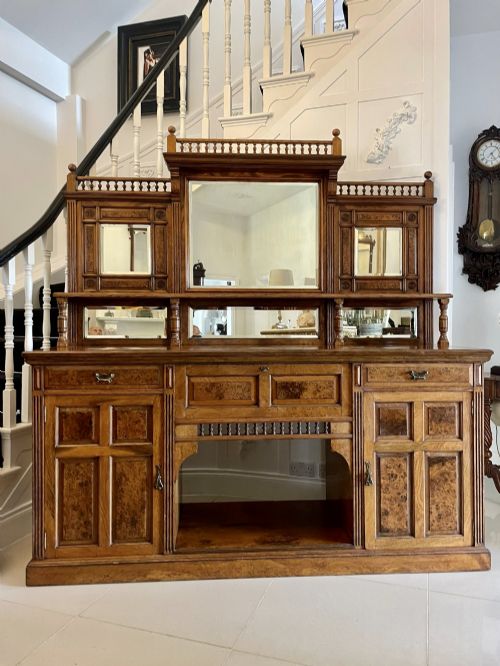
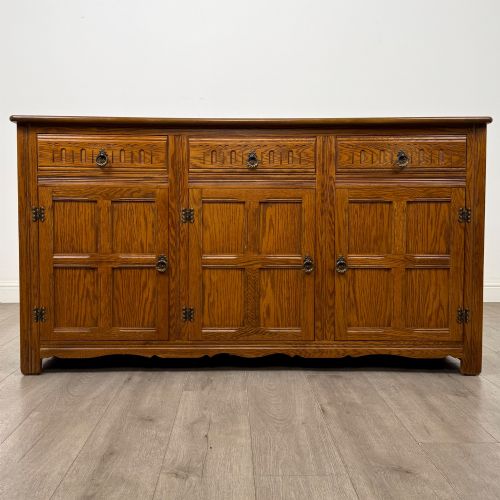
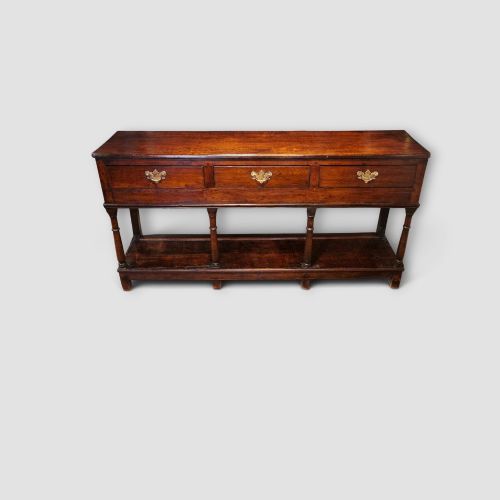
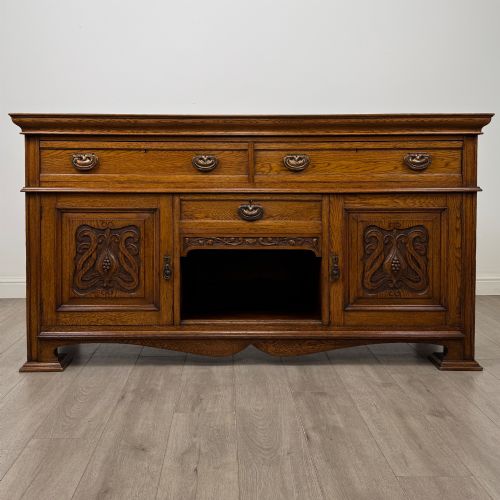
The inventory on this page draws heavily from the eighteenth and nineteenth centuries, alongside Edwardian and later revivals. Buyers frequently encounter low open potboards, multi-drawer facades, and cupboard doors shaped by regional English cabinetmakers.
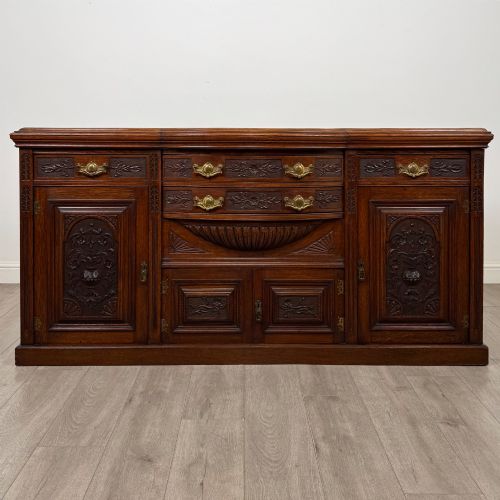
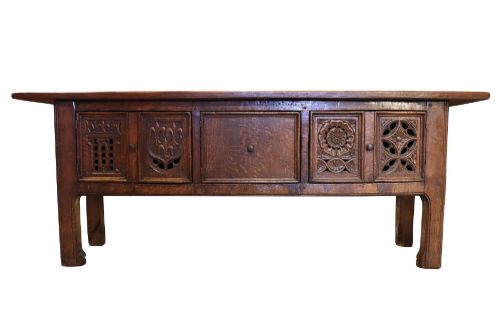
Makers constructed these sturdy tables to endure daily kitchen and dining use, resulting in heavy timber frames that hold their shape over centuries. Surviving examples reflect straightforward utility combined with regional decorative carving or plain geometric mouldings.
How they were made
Joiners built these frames predominantly from solid oak, sometimes combining secondary woods like fruitwood or elm in drawer linings and interior framing. Iron and brass hardware, including drop handles and butterfly hinges, secure the moving parts.
Cabinetmakers utilised pegged mortise and tenon joints to connect the heavy planks without relying on modern fasteners. Surfaces show hand planing, simple scratch moulding, and occasional carved panels reflecting Jacobean or Gothic revivals.
Housemaids once relied on these sturdy oak cupboards to store heavy linen and polishing supplies away from damp scullery floors.
What varies in quality
The thickness of the top boards and the depth of the timber grain dictate the structural presence of the piece. Superior examples display boards selected for strong medullary rays, while lesser pieces utilise thinner timber or replacement tops.
Carving depth and hand execution separate standard utilitarian output from finer regional workshops. Crisp mouldings, original brass hardware, and tightly fitted drawer construction indicate higher workshop standards.
The Antique Oak Server Base Glossary
- Potboard
- An open lower shelf built into the base of a dresser for storing heavy pots and dishes. This lower tier provides stability to the vertical legs.
- Dresser base
- The lower section of a kitchen dresser functioning independently as a sideboard or serving table. These units usually contain rows of drawers above cupboards.
- Geometric moulded
- Raised wooden mouldings applied to drawer fronts in repeating symmetrical patterns. This technique adds texture to otherwise plain surfaces.
- Fruitwood
- Dense hardwood harvested from fruit trees and used alongside oak for contrast or structural linings. Cabinetmakers valued it for its fine grain.
- Jacobean Revival
- A nineteenth-century design movement copying seventeenth-century motifs such as heavy turned legs and strapwork carving. Pieces in this style replicate earlier robust proportions.
Antique Oak Server Base: Frequently Asked Questions
What is a server base?
A server base is a low wooden table or sideboard designed to hold serving dishes and dining accessories. These pieces typically feature a flat top surface with drawers or cupboards underneath.
Historically, they stood in dining rooms or kitchens to assist with meal preparation and service. Today, buyers use them as sideboards in living spaces or hallways.
How do I date an oak base?
Dating relies on examining construction marks, timber selection, and hardware styles. Hand-planed surfaces, pegged joints, and oak timber indicate earlier production periods.
Later revival pieces often display machine sawing marks and standardised screw fixings. Style influences like Gothic or Jacobean revivals also point to nineteenth-century manufacture.
Are potboards original?
Potboards serve as lower lower shelves built into dresser bases to stabilize the legs and store heavy items. Many eighteenth-century and nineteenth-century examples retain their original lower boards.
Inspect the connection points where the shelf meets the legs to check for later replacements. Original boards show matching wear patterns and wood shrinkage consistent with the rest of the frame.
Where were these pieces made?
Regional cabinetmakers across England produced these server bases for local domestic use. Distinct styles often developed in specific counties like Lancashire or Shropshire.
Makers utilised local timber supplies, resulting in variations in wood grain and construction weight. French provincial workshops also produced similar fruitwood and oak utility cupboards.
How do I care for oak?
Maintain oak surfaces by dusting regularly with a dry cloth and avoiding excessive moisture. Natural wax applications help nourish the timber and protect the finish.
Keep these heavy pieces away from direct heat sources and strong sunlight to prevent wood splitting. Proper placement ensures the antique joints remain stable over time.