



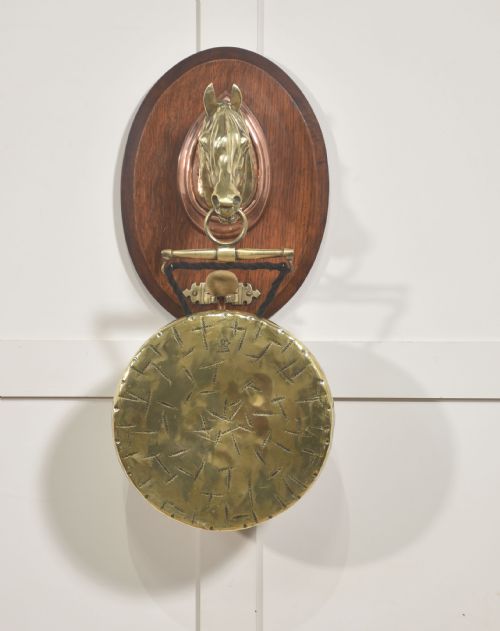


Antique Oak Gong
An antique oak gong brings resonant tone and presence into a hallway or dining room, built from sturdy timber and polished metal.
Antique Oak Gong
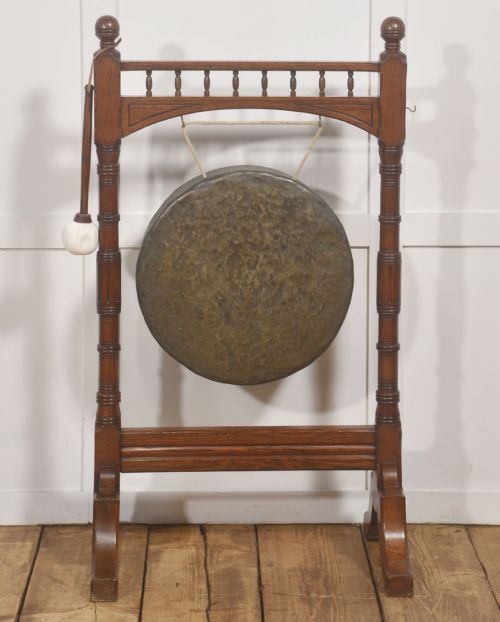
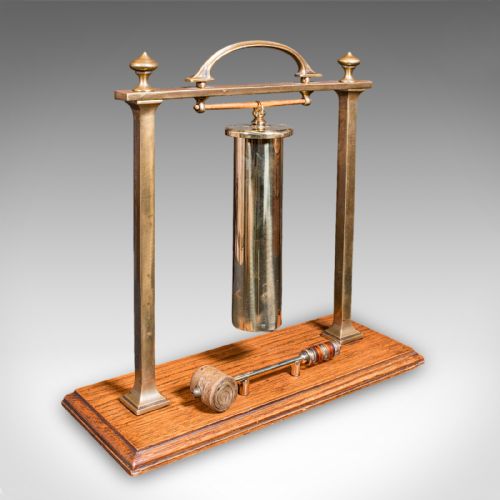
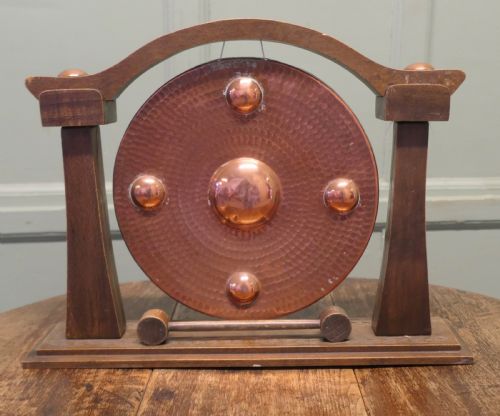
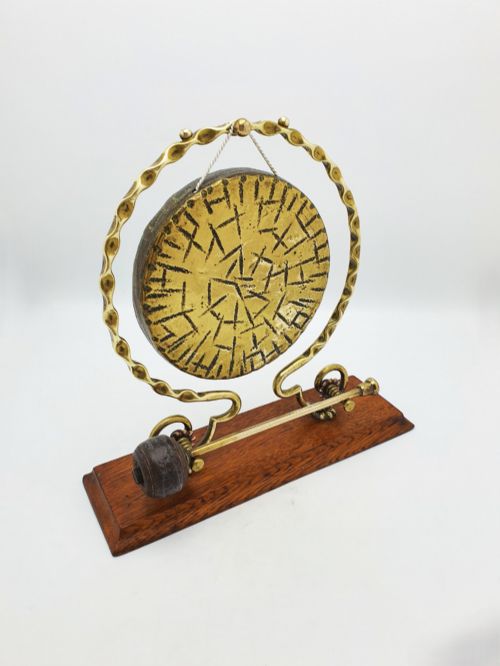
An antique oak gong combines a sonorous metal disc or bell with a wooden frame, serving as a traditional call to meals or entrance marker. You will most frequently encounter table models and wall-hanging versions originating from the Victorian and Edwardian eras.
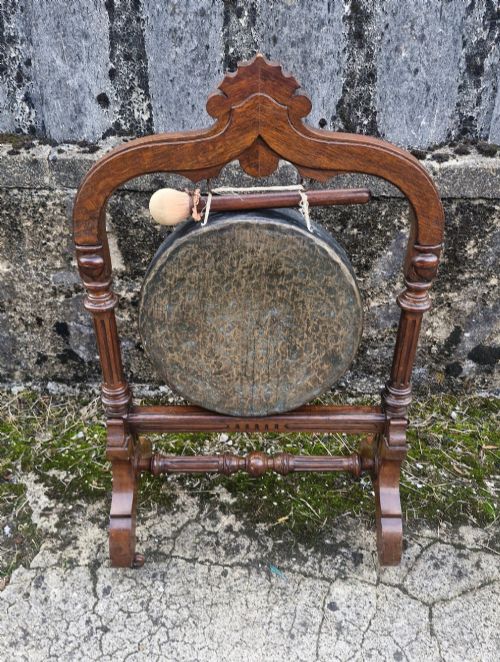
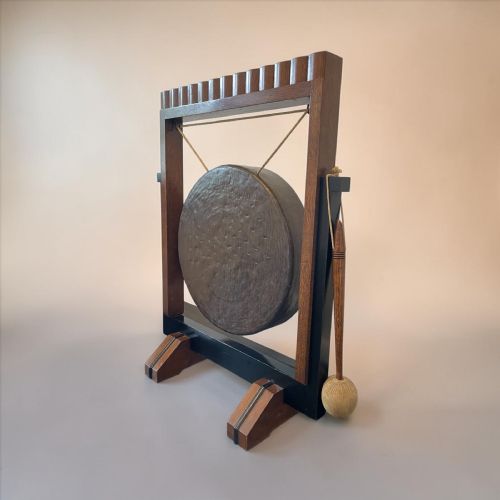
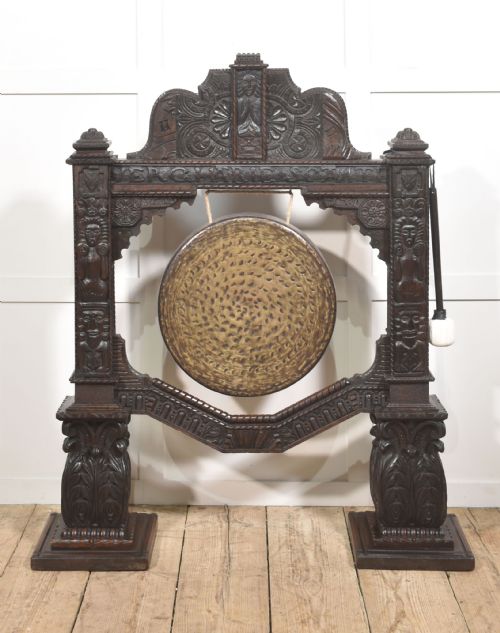
The styles span simple rustic frames to elaborate Gothic Revival designs, alongside Arts and Crafts interpretations and occasional equestrian motifs. These pieces reflect domestic rituals of the nineteenth and early twentieth centuries, functioning as both practical instruments and striking decorative furniture.
Materials and construction
The primary structure relies on solid oak, shaped into carved brackets, wall panels, or sturdy table bases, sometimes augmented by horn or leather details. Suspended elements utilise brass, copper, or silver plate to produce clear, echoing tones when struck.
Cords and felt are employed to hang the metal plates securely from their wooden supports without dampening the vibration. Striking mallets often feature turned wooden handles paired with leather or felt-covered heads.
Antique Oak Gong Retail Price Guide 2026
Typical asking prices for oak gong among the pieces listed under this phrase on Sellingantiques today, from the lower quarter to the upper quarter. They describe what is for sale here now, not the wider market.
Some models incorporate cow horn alongside polished oak, proving the Victorians turned almost anything into a domestic dinner summons.
Judging standard and execution
Quality rests upon the depth of the timber carving and the resonance of the metal gong itself, with superior examples offering a rich, sustained chime. The integrity of the joint work and the balance of the supporting frame determine the durability of the piece.
Finishing touches, such as engraved brass plates, horse head mounts, or specialised suspension cordage, elevate finer domestic models above plain utilitarian versions.
The Antique Oak Gong Glossary
- Gong
- A percussion instrument consisting of a flat or shaped metal disc that vibrates to produce a resonant note when struck with a mallet.
- Striker
- A handheld mallet designed with a padded or hard head to hit the metal plate.
- Gothic Revival
- An architectural and decorative style drawing inspiration from medieval forms, often seen in pointed arches and heavy carved tracery.
- Arts and Crafts
- A design movement prioritising traditional craftsmanship and honest materials over mass production.
Antique Oak Gong: Frequently Asked Questions
How do you clean an antique oak gong?
Dust the timber frame regularly with a dry cloth and apply a neutral beeswax to nourish the oak surface.
Polish the brass or copper sections sparingly with a suitable metal cleaner, taking care to avoid getting polish on the surrounding wood.
What rooms suit an antique oak gong?
These pieces sit naturally in entrance halls, dining rooms, or large living spaces where their acoustic properties can be appreciated.
Wall-hanging versions require secure fixings into solid masonry or studwork to support the weight of the timber and metal.
Are all gongs loud?
The volume depends entirely on the thickness and diameter of the suspended metal disc and the material of the striker.
Smaller table models produce a gentle, short chime, whereas larger floor-standing or wall-mounted examples project a deep tone across a house.
How are periods identified?
Stylistic clues such as heavy Victorian Gothic tracery, Edwardian refinement, or later geometric Arts and Crafts lines help date the wooden frame.
Construction methods, screw types, and patination on the brass components offer further confirmation of age.