





Antique Oak Entryway Mirror
An antique oak entryway mirror meets visitors at the threshold, combining practical storage with the rich grain of solid timber.
Antique Oak Entryway Mirror
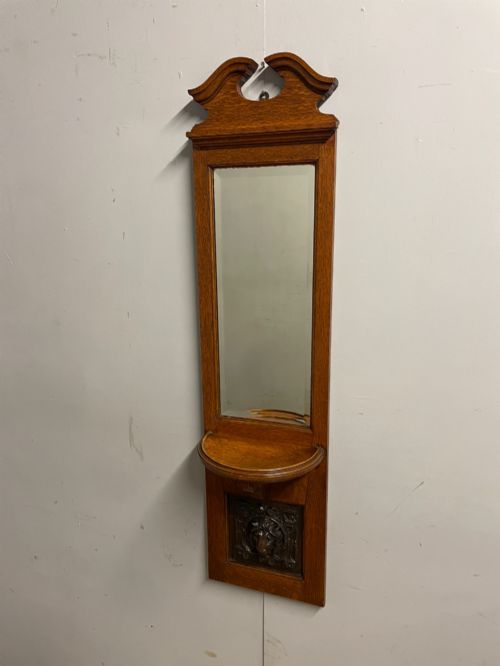
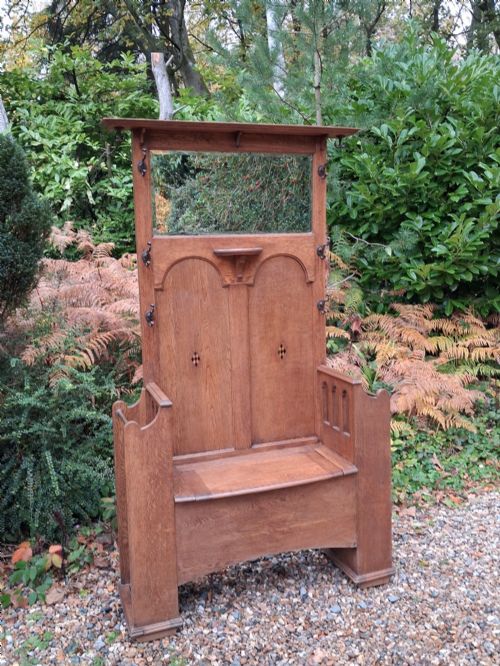
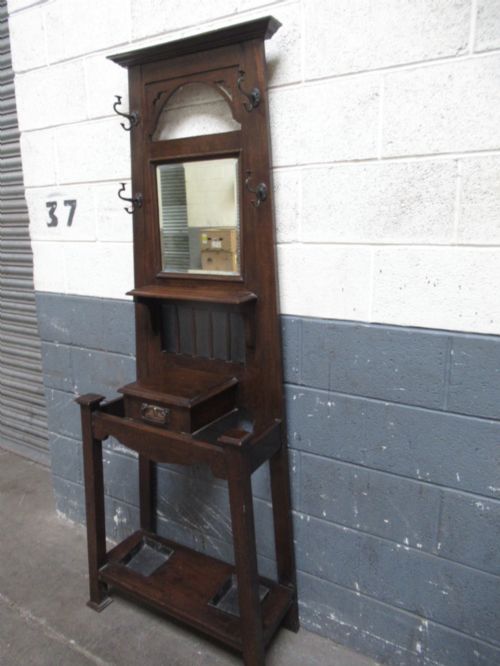
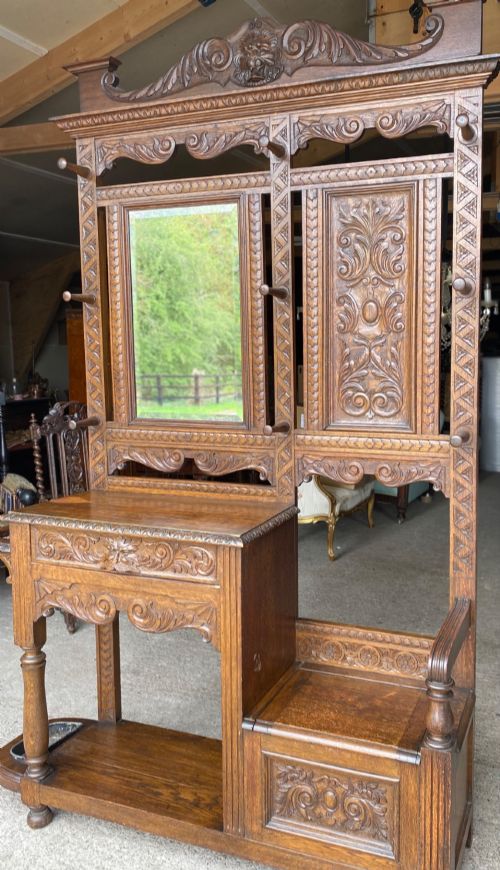
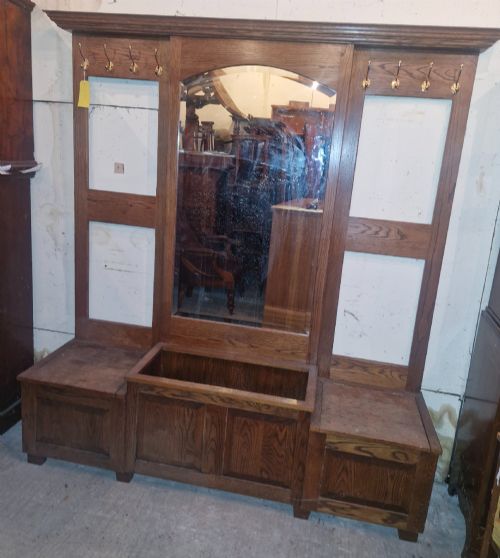
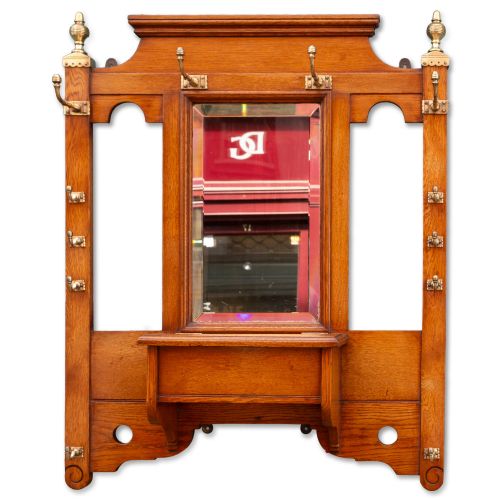
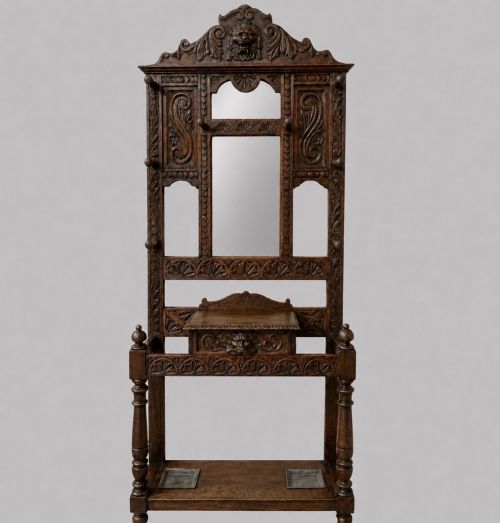
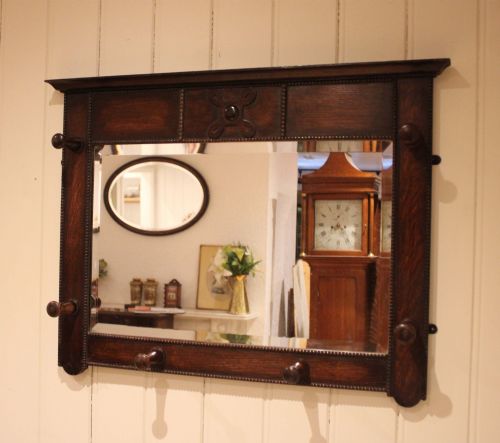
An antique oak entryway mirror serves as a functional centrepiece for hall spaces, combining glass plates with timber frames designed for daily use. These pieces range from simple wall-mounted plates with coat hooks to large, multi-functional hall stands incorporating seats and umbrella stands.
Originating primarily from the late nineteenth and early twentieth centuries, these objects reflect the domestic requirements of period hallways. They provide hanging space for hats and coats while offering a reflective surface before leaving the house.
How they were made
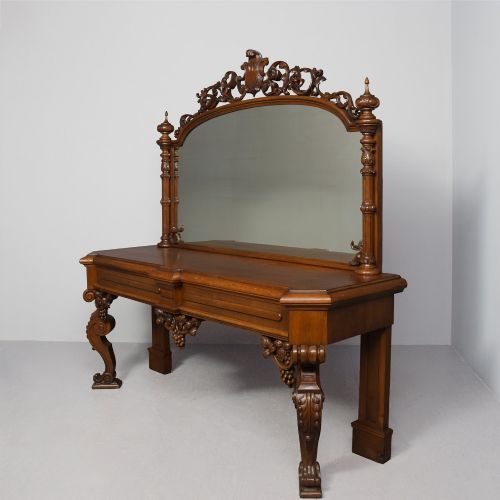
Makers utilised solid oak alongside golden oak variants, constructing frames with sturdy joinery to support heavy glass and hanging loads. Timber was frequently carved by hand, displaying floral motifs, Green Man carvings, or geometric Flemish Renaissance Revival patterns.
Metal elements including brass and iron provide structural reinforcement and functional hardware. Coat hooks, umbrella wells, and wall brackets are secured with period fixings, while mirror plates feature bevelled edges set within rebated frames.
Antique Oak Entryway Mirror Retail Price Guide 2026
Typical asking prices for oak entryway mirror among the pieces listed under this phrase on Sellingantiques today, from the lower quarter to the upper quarter. They describe what is for sale here now, not the wider market.
Listings feature oak hall furniture from the Victorian, Edwardian, and Arts and Crafts periods, incorporating brass and iron hardware.
What varies in quality
The standard of carving distinguishes standard production furniture from exceptional workshop pieces. Deep, crisp relief work on oak panels requires skilled hand labour, whereas lesser examples rely on shallow stamping or plain timber surfaces.
The integration of secondary materials such as marble inserts, brass fittings, and bevelled mirror plates dictates the tier of the piece. Superior examples combine multiple functions, such as seating, storage, and console tables, within a unified architectural design.
The Antique Oak Entryway Mirror Glossary
- Bevelled mirror plate
- A glass reflective panel with an angled edge ground down to a thinner profile. This technique adds depth and catches light differently than flat-cut glass.
- Hall stand
- A multi-functional hallway furniture piece incorporating a mirror, coat hooks, a shelf, and frequently an umbrella stand or bench seat. It organises outerwear in entrance spaces.
- Flemish Renaissance Revival
- A nineteenth-century design style drawing on sixteenth-century Low Countries motifs. It utilises heavy carved oak, scrollwork, and figurative details.
- Golden oak
- A bright, warm timber finish popular during the late Victorian and Edwardian periods. It highlights the medullary rays in quarter-sawn oak boards.
Antique Oak Entryway Mirror: Frequently Asked Questions
How do I secure an oak wall mirror?
Wall-mounted versions require sturdy fixings screwed directly into masonry or wall studs to support the combined weight of the oak frame and glass plate. Using appropriate brackets ensures the piece hangs securely without twisting the timber.
Position the mirror at a height that accommodates daily use while allowing sufficient clearance below for any integrated coat hooks or umbrella trays.
What is the difference between Arts and Crafts and Victorian hall stands?
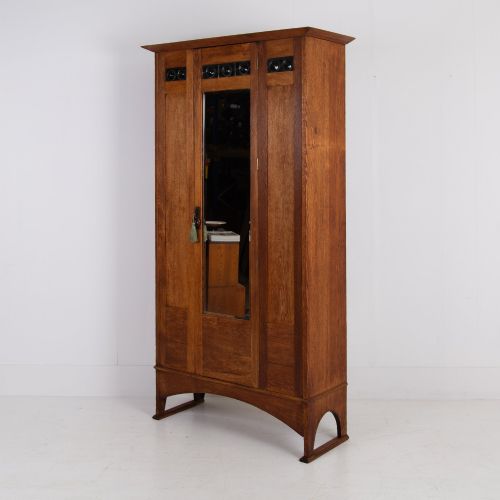
Arts and Crafts pieces focus on simpler lines, visible construction methods, and the natural grain of golden oak without heavy ornamentation. They reflect a design philosophy centred on honest craftsmanship.
Victorian and Flemish Renaissance Revival pieces tend to feature elaborate carved decoration, dark finishes, and complex architectural elements designed to impress visitors in grand entrance halls.
How should I care for antique oak furniture?
Maintain the timber by applying traditional beeswax periodically to nourish the grain and protect the surface from moisture. Avoid placing oak pieces in direct sunlight or near heat sources to prevent warping.
Clean mirror glass with a soft cloth and mild solution, taking care to keep moisture away from the wooden frame and the silvered backing of the plate.
Were these mirrors made for small hallways?
Makers produced various formats ranging from compact wall-mounted coat racks with small mirror plates to large, freestanding hall stands. Smaller wall-hanging versions suit narrow corridors where floor space is limited.
Larger combination pieces with seats and wardrobes require generous hallway proportions to balance their visual weight and functional footprint.