


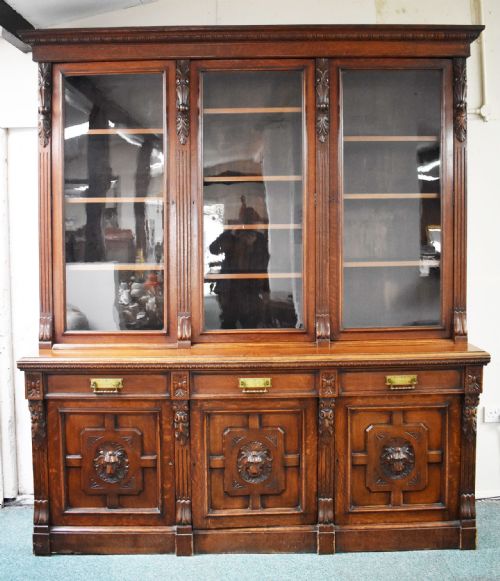


Antique Oak Breakfront
An antique oak breakfront commands a room with its stepped central section, offering substantial storage in timber that lasts generations.
Antique Oak Breakfront
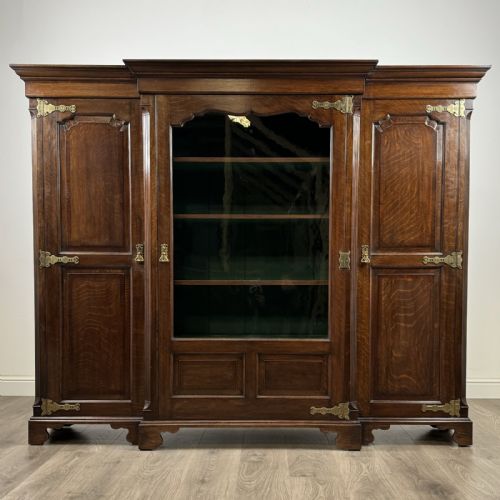
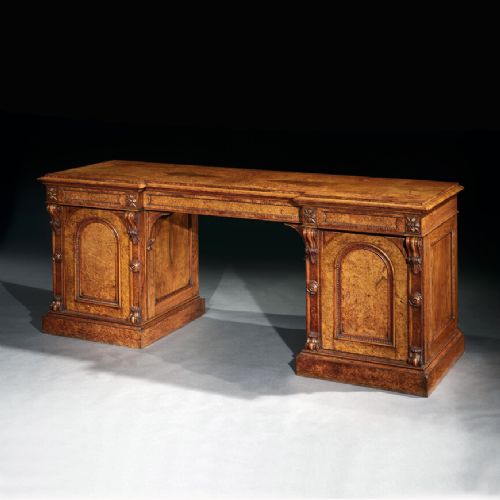
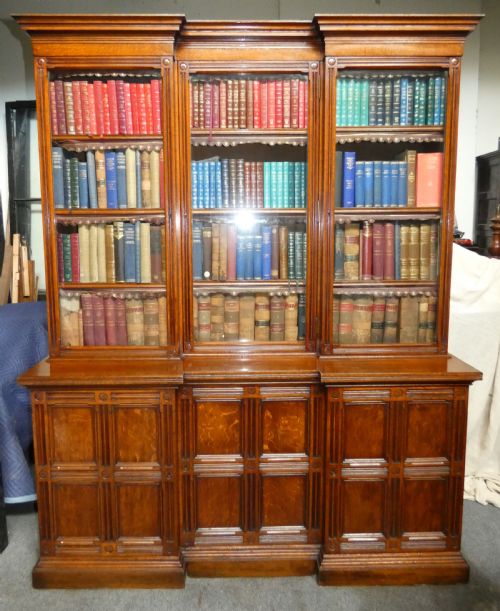
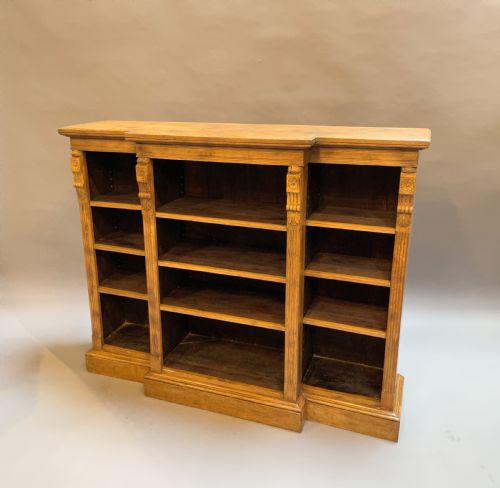
An antique oak breakfront is a large piece of furniture defined by a central section that projects forward from the flanking wings, creating a distinct stepped facade. These pieces predominantly take the form of monumental library bookcases, display cabinets, and dresser bases spanning the eighteenth, nineteenth, and early twentieth centuries. Most examples encountered here date from the Victorian and Edwardian eras, alongside earlier Georgian periods.
The layout serves both practical storage and grand display, often combining glazed upper doors with panelled cupboards or drawers below. Oak remains the primary timber throughout these variations, frequently complemented by specialised grains like pollard oak for decorative impact.
How they were made
Cabinet makers utilised solid oak alongside figured pollard oak veneers, constructing heavy carcases joined with traditional timber framing techniques. Brass hardware, iron fittings, and glass panes were incorporated into doors and drawers, while secondary timbers such as pine sometimes appeared in internal linings.
Carving was executed directly into the solid timber or applied in intricate relief panels, particularly on Gothic Revival and Victorian library pieces. Ebony inlay and subtle mouldings provided contrast against the dense grain of the primary wood.
Antique Oak Breakfront Retail Price Guide 2026
Typical asking prices for oak breakfront among the pieces listed under this phrase on Sellingantiques today, from the lower quarter to the upper quarter. They describe what is for sale here now, not the wider market.
Samuel Pepys makes a historical cameo appearance through a specific seventeenth-century style suite offered in the current lineup.
What varies in quality
The distinction between standard utility pieces and top-tier examples lies in the ambition of the design and the select figure of the timber utilised. Monumental proportions, deep relief carving, and the use of highly figured pollard oak elevate certain items far above plain functional cupboards.
Execution of detail - such as the crispness of architectural mouldings, balanced proportions across the breakfront tiers, and provenance linked to documented makers - determines the standing of a piece within the wider range.
Miskin Manor·Liberty of London·Richard Bridgens·Gillows
The Antique Oak Breakfront Glossary
- Breakfront
- A cabinet or sideboard whose central section projects forward from the flanking sides. This architectural arrangement creates depth and shadow across the front elevation.
- Pollard Oak
- Timber taken from trees that were pollarded, producing a dense, highly figured grain pattern filled with small knots. It was prized for decorative veneering on Victorian library furniture.
- Welsh Dresser
- A traditional kitchen or dining piece featuring lower cupboards or drawers surmounted by open plate racks. Oak examples often display regional variations in construction and drawer layout.
- Housekeeper Cupboard
- A large, tall storage cupboard historically used for linens and provisions in country houses. These utility pieces are constructed from solid oak with panelled doors.
- Gothic Revival
- A nineteenth-century design style drawing on medieval architectural motifs such as pointed arches and heavy tracery. It frequently manifests in monumental oak bookcases.
Antique Oak Breakfront: Frequently Asked Questions
What rooms suit an antique oak breakfront?
These large pieces demand generous wall space and high ceilings, making them natural centerpieces for studies, libraries, and spacious dining rooms.
Their substantial timber presence anchors a room, functioning effectively as both architectural joinery and practical storage for books or display items.
How do I care for antique oak furniture?
Maintain stable indoor humidity and temperature to prevent the solid oak panels and veneers from splitting or warping over time.
Clean surfaces with a soft, dry cloth and apply occasional high-quality wax to nourish the grain without building up heavy residues.
Are these bookcases modular or one piece?
Most large breakfront bookcases and wardrobes are constructed in distinct modular sections, typically separating into a breakfront base, upper display cabinets, and a cornice.
This sectional design historically facilitated transport into large country houses and remains essential for moving such heavy furniture today.
How do I distinguish Georgian from Victorian pieces?
Georgian examples from the eighteenth and early nineteenth centuries generally favour cleaner architectural lines, restrained mouldings, and simpler fielded panels.
Victorian and later nineteenth-century pieces often introduce heavier proportions, extensive carved relief work, Gothic Revival motifs, or highly figured pollard oak veneers.