


Antique Oak Book Press
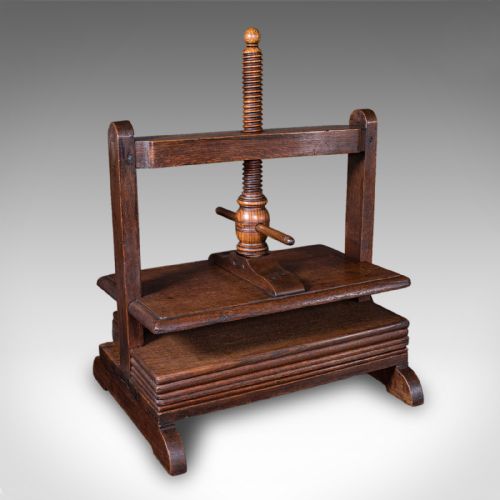
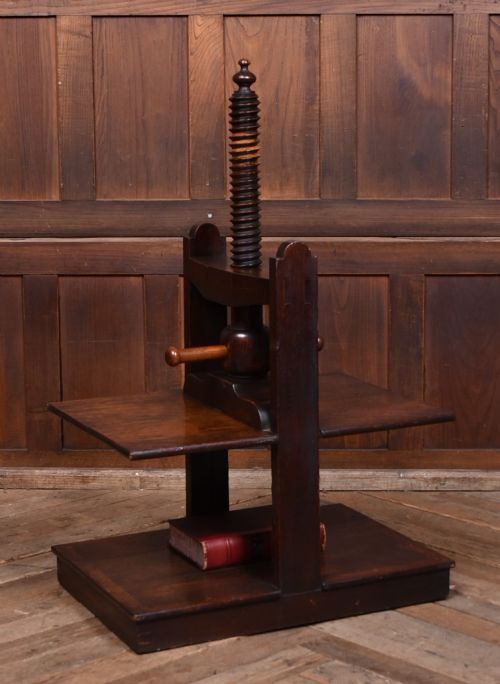
These robust antique oak book press examples bring tangible weight to a study, offering both mechanical interest and practical service for flattening paper.
Antique Oak Book Press
When a buyer searches for an antique oak book press, they seek heavy, functional workshop and library equipment designed to apply uniform downward pressure through a threaded screw mechanism. The pieces appearing here span domestic table top variants, larger provincial floor-standing linen presses adapted for paper, and dual-purpose press tables.
The material palette centres firmly on heavy timber frames, predominantly oak augmented occasionally by elm, fitted with substantial metal or brass screws and occasionally glass or iron components. Origins recorded among these examples stretch across English country houses, French provincial workshops, and Georgian domestic settings.
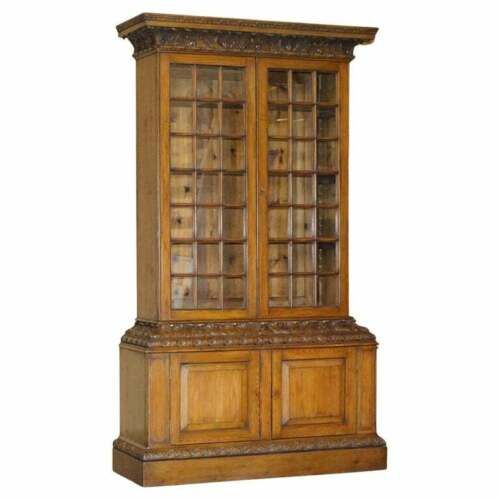
Forms vary from compact table top items intended for domestic bookbinding and flower drying to monumental library bookcases incorporating integrated press compartments. Victorian and Georgian periods dominate the selection, bringing straightforward functional design alongside occasional Gothic Revival ornamentation.
Construction and materials
Makers utilised dense timbers, predominantly solid oak supplemented by elm for subsidiary elements, to resist the immense mechanical strain exerted by tightening screws. These boards were joined using traditional framing techniques to ensure stability under heavy vertical loads.
Mechanical components rely on turned wooden screws or heavy iron and brass drives that pass through threaded box nuts to lower the upper platen evenly. The timber surfaces typically exhibit simple wax finishes that highlight the natural grain of the wood rather than elaborate veneers.
Several examples double as sturdy flower presses, proving that Victorian botanists took their pressing just as seriously as the local librarian.
Judging quality and proportion
Quality rests primarily on the integrity and smooth operation of the screw mechanism, where fine threading and substantial metal or timber housing ensure even pressure distribution across the platen. Pieces with oversized screws and thick, unwarped oak platens represent the sturdier end of the production range.
Proportion and decorative restraint dictate the desirability of domestic examples, distinguishing simple utilitarian workshop tools from refined Georgian and Victorian library furnishings. The inclusion of integrated tables, drawers, or carved detailing elevates the status of a piece beyond basic utility.
The Antique Oak Book Press Glossary
- Platen
- The heavy flat board of an antique oak book press that descends upon the books or paper. This movable panel must remain entirely flat under pressure to ensure uniform flattening.
- Screw mechanism
- The threaded rod and housing that drives the platen downward when turned. In these pieces, it is typically carved from dense wood or forged from iron and brass.
- Linen press
- A large piece of case furniture designed to store and flatten household textiles, frequently equipped with a heavy internal screw mechanism. Many such presses share identical mechanics with large book presses.
- Gothic Revival
- A nineteenth-century design style drawing inspiration from medieval architecture. Objects in this manner often display pointed arches, trefoils, and heavy structural mouldings.
Antique Oak Book Press: Frequently Asked Questions
What is an antique oak book press?
These devices are heavy mechanical appliances designed to press paper, bind books, or dry flowers by means of a centrally threaded screw.
They combine dense timber frames with metal or wooden spindles to create strong, even vertical pressure.
How were these presses used historically?
Libraries and binderies utilised them to flatten folded signatures, press damp paper after printing, and keep delicate botanical specimens flat.
Domestic households also employed smaller tabletop versions for general paper flattening and home book maintenance.
How do I date an oak press?
Dating relies on observing construction joints, turning styles on the wooden screws, and the presence of period-specific design details like Gothic Revival arches.
Georgian and Victorian examples show distinct shifts from hand-carved provincial framing towards heavier industrial iron components.
Can I use an antique press today?
Most surviving examples remain fully operational and capable of applying significant pressure for modern bookbinding or art projects.
Owners should check that the wooden threads and metal drives move smoothly without binding before applying heavy torque.