


Antique Oak Bedroom Cupboard
These antique oak bedroom cupboards bring solid timber utility and period character to domestic spaces.
Antique Oak Bedroom Cupboard
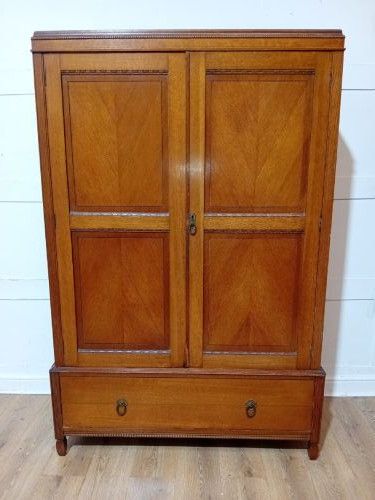
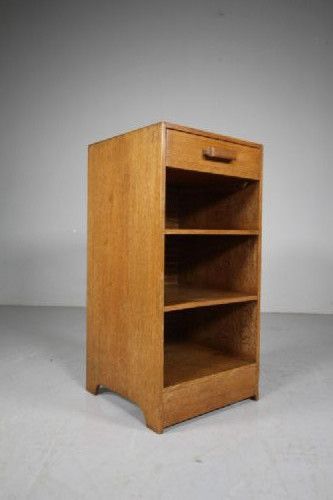
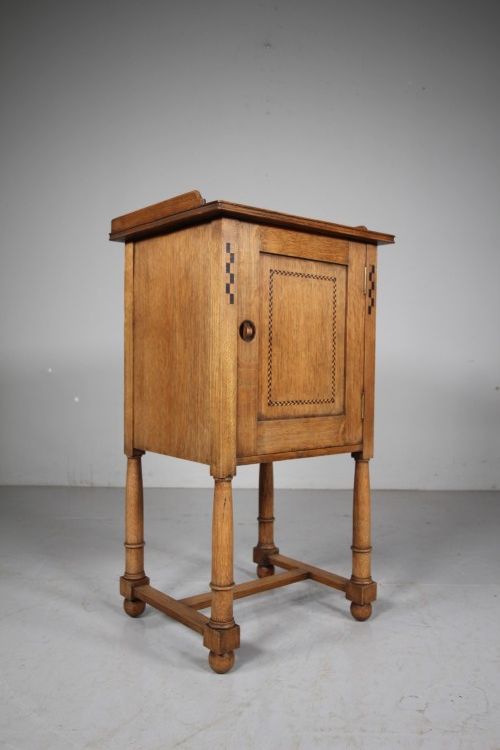
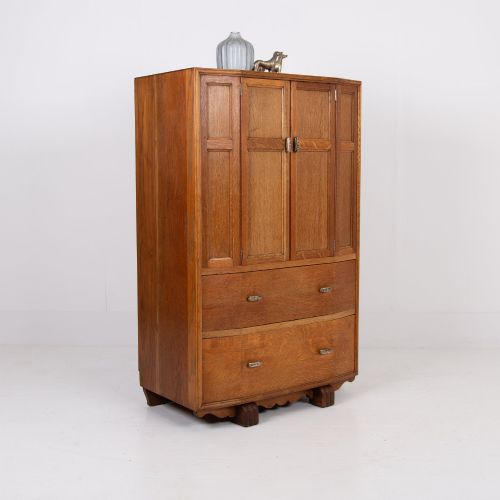
An antique oak bedroom cupboard encompasses substantial storage forms designed for sleeping quarters, ranging from compact bedside units to towering wardrobes, linen presses, and compactums. Buyers exploring this category encounter pieces spanning from the late eighteenth and nineteenth centuries through the Edwardian era and into the interwar Art Deco period.
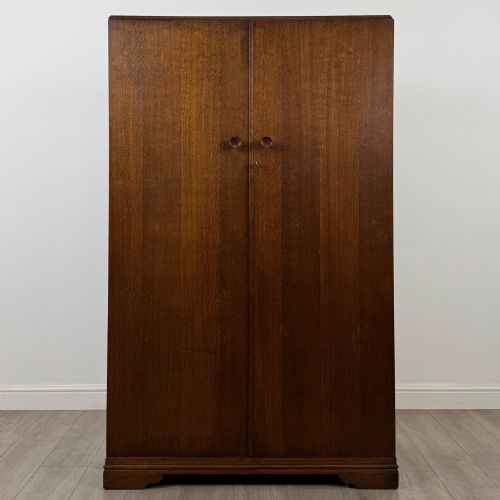
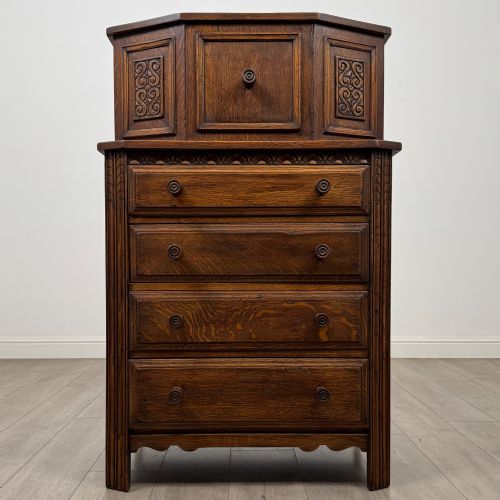
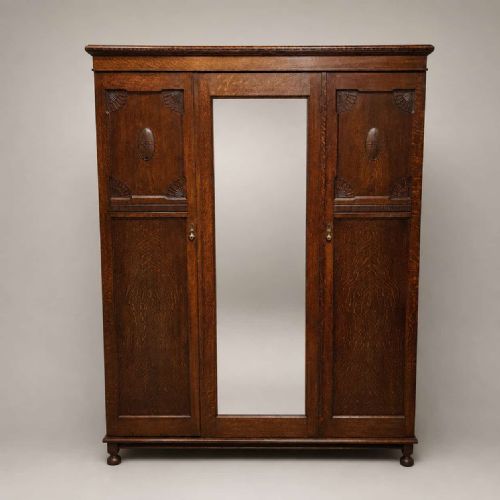
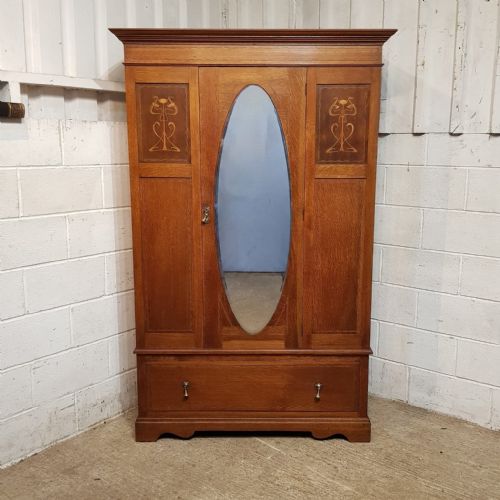
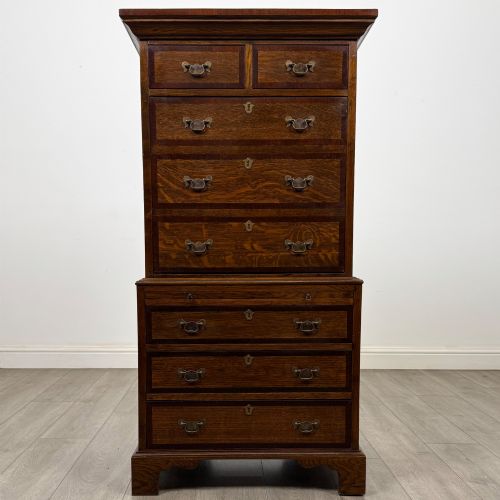
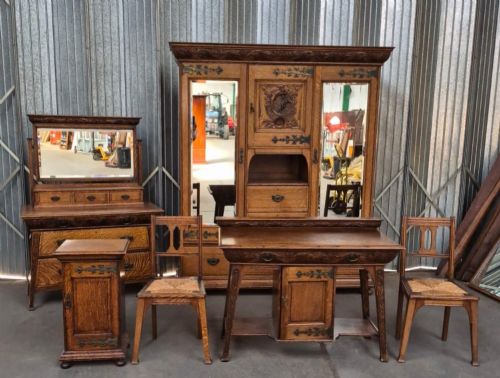
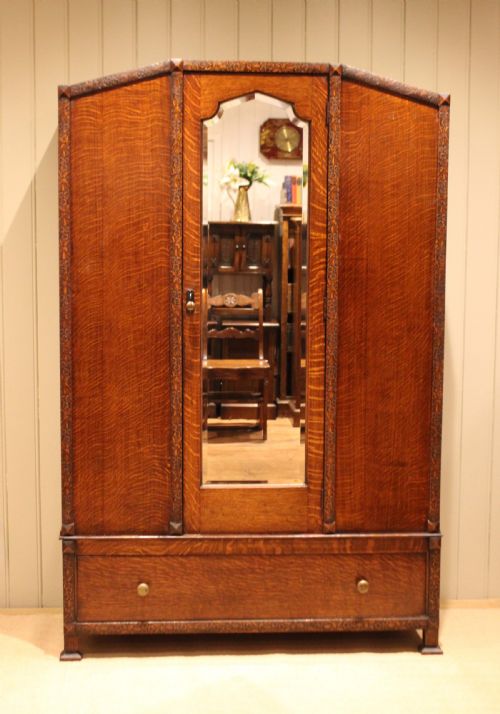
The most frequently encountered examples on this page date from the Edwardian period and the early twentieth century, often constructed as double or triple wardrobes, bedside cabinets, and dressing chests. Alongside these common forms, the selection includes regional Welsh linen presses, French armoires, and geometric nineteen-twenties designs.
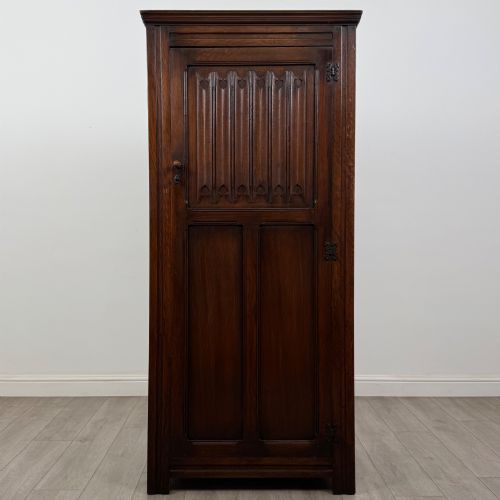
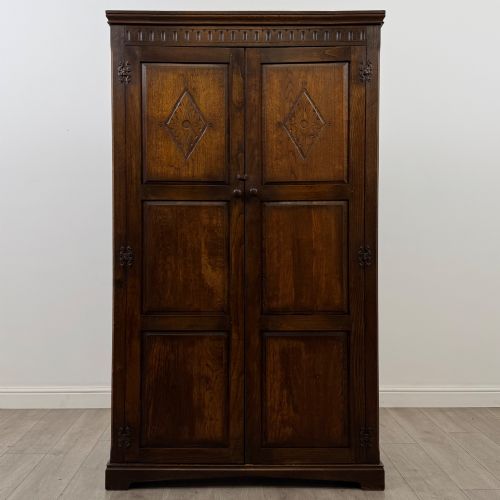
Form follows function closely within this group, offering hanging space, linen drawers, and shelved compartments housed behind timber doors. Whether styled in the plain vernacular of the Cotswold School, the decorative carving of the Gothic Revival, or the clean lines of Arts and Crafts workshops, each piece serves primary domestic storage needs.
How they were made
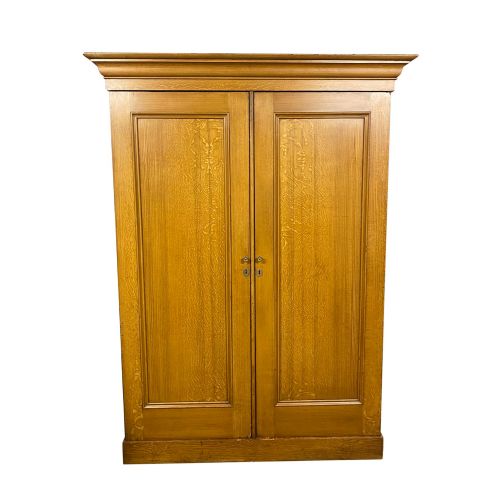
Construction relies heavily upon solid oak and pollard oak, sometimes complemented by secondary timbers like pine, shaped through traditional joinery techniques including panelled doors, dovetailed drawers, and pegged joints. Surface finishes range from natural golden oak polish and limed treatments to decorative French bleaching and occasional nineteenth-century scumble faux paintwork.
Hardware details incorporate brass fittings, iron hinges, and functional locks, while selected pieces integrate bevelled glass mirror panels into their doors. Carved ornamentation appears on specific Edwardian and Gothic revival examples, contrasting with the unadorned surfaces of utilitarian bedside cabinets and linear twentieth-century cupboards.
Listings feature oak bedroom cupboards spanning the eighteenth, nineteenth, and twentieth centuries, including Arts and Crafts, Gothic Revival, and Art Deco styles.
What varies in quality
Quality rests upon the selection of timber grain, the integrity of structural joinery, and the harmony of original hardware rather than mere age. Superior examples demonstrate thoughtful timber matching across large panelled doors, robust internal configuration, and crisp execution of period details such as carved mouldings or exposed dovetails.
Proportion and execution distinguish standard vernacular pieces from workshop-designed items bearing maker labels or specific stylistic attribution. The retention of original finishes, glass, and brasswork preserves the integrity of the piece more effectively than later restorations or heavy refinishing.
Heals·Maple and Co·Harris Lebus
The Antique Oak Bedroom Cupboard Glossary
- Compactum
- A multi-functional wardrobe combining hanging space, internal drawers, and shelving within a single enclosed cabinet. This efficient layout gained significant popularity during the Victorian and Edwardian periods.
- Linen press
- A tall storage piece comprising upper cupboard doors enclosing sliding trays for textiles, positioned above a base chest of drawers. Georgian and nineteenth-century examples often display rich regional timber figuring.
- Scumble paint
- A decorative surface finish applied to mimic the grain of more costly hardwoods like oak over a simpler secondary wood. Nineteenth-century pieces occasionally utilise this technique to simulate genuine timber.
- Pollard oak
- Timber sourced from trees that have been pollarded, producing a highly figured, clustered burl pattern used for decorative veneer. Victorian cabinetmakers favoured this material for high-status wardrobe doors.
- Armoire
- A large freestanding wardrobe or cupboard of continental European origin, often featuring double doors and deep internal capacity. French examples frequently exhibit carved decorative panels and bleached finishes.
Antique Oak Bedroom Cupboard: Frequently Asked Questions
How do I care for antique oak furniture?
Maintain stable indoor humidity levels away from direct heat sources and strong sunlight to prevent timber splitting or warping. Dust regularly with a dry cloth and apply a quality beeswax polish sparingly to nourish the grain.
Avoid silicone-based sprays, which can penetrate porous timber surfaces and create a difficult residue. Clean glass panels and brass hardware gently with appropriate non-abrasive products.
Where were these cupboards placed in a period bedroom?
Wardrobes and large armoires stood against primary bedroom walls to maximise storage capacity in high-ceilinged rooms. Their substantial proportions often made them permanent fixtures within the chamber layout.
Smaller bedside cabinets and chests sat directly adjacent to the sleeping platform for immediate nighttime access. Dressing chests and tallboys found placement near windows or dressing areas to catch natural light.
How do I identify an Arts and Crafts oak piece?
Arts and Crafts pieces emphasise visible hand-craftsmanship, featuring exposed pegged joinery, simple geometric forms, and minimal applied ornamentation. The design prioritizes structural honesty and the natural grain of the golden oak timber.
Hardware often consists of hammered brass or iron handles and strap hinges rather than hidden modern mechanisms. Maker labels from prominent firms or workshops occasionally appear inside the drawers or doors.