



Antique Needlework Case
An antique needlework case keeps fine sewing tools orderly and makes a handsome desk accessory.
Antique Needlework Case
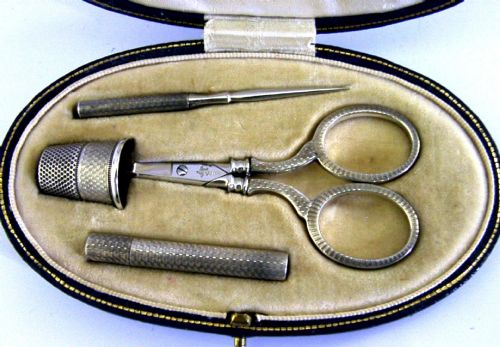
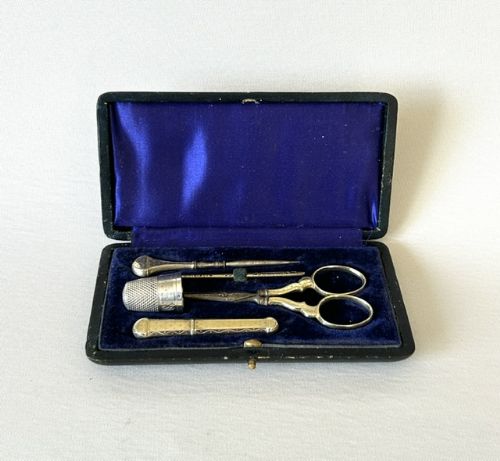
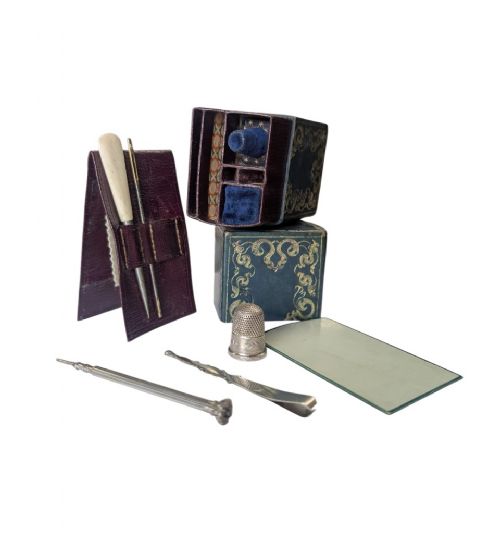
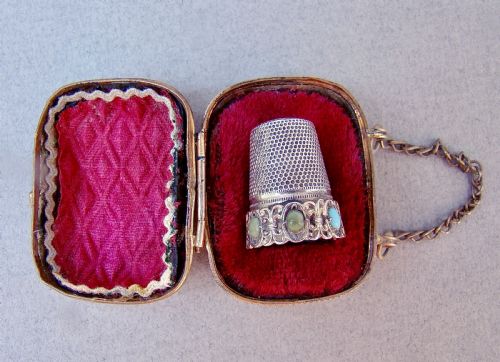
An antique needlework case holds essential sewing implements like needles, threads, and thimbles in fitted compartments. These pieces encompass small pocket cases, solid silver holders, and larger fitted boxes.
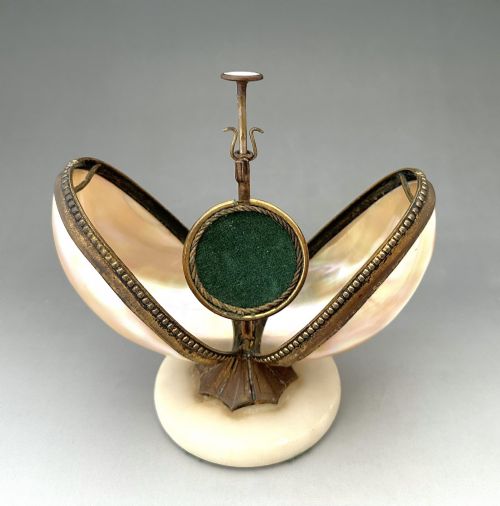
Victorian examples appear most frequently in the current selection, alongside pieces from the Georgian era and the mid-nineteenth century. Makers utilised diverse forms, ranging from compact bone and corozo nut holders to elaborate French etuis.
Object types include sewing boxes, chatelaine cases, and dedicated thimble holders. Buyers encounter both utilitarian pocket pieces and decorative cabinet objects designed for the needlewoman.
Materials and construction methods
Craftsmen shaped these cases from precious metals, wood, and organic materials including bone, mother-of-pearl, and tortoiseshell. Silver, brass, and gilt metal often form the structural mounts and protective outer sheaths.
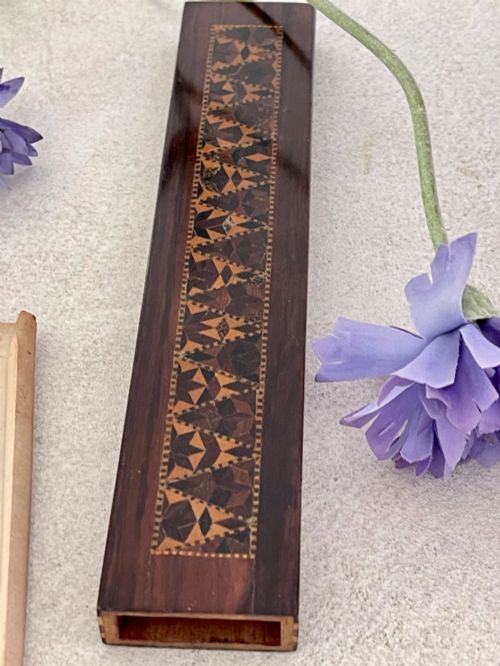
Woodworking traditions produced inlaid boxes in Tunbridge ware and coromandel, whilst metalworkers utilised casting, engraving, and ormolu mounts. Textile linings in silk and velvet secure the individual tools inside.
Antique Needlework Case Retail Price Guide 2026
Typical asking prices for needlework case among the pieces listed under this phrase on Sellingantiques today, from the lower quarter to the upper quarter. They describe what is for sale here now, not the wider market.
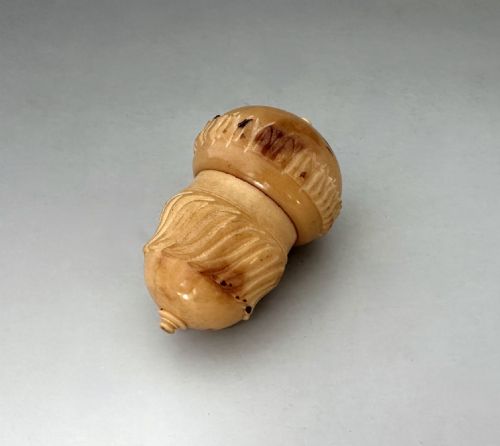
Nut containers rely on the humble corozo palm seed to keep Victorian needles snug.
Determinants of quality
Quality rests upon the precision of internal fittings and the integrity of the exterior materials. Finer examples retain their original matching contents, such as specialised scissors or marked silver thimbles.
Superior decorative work distinguishes standard receptacles from exceptional pieces. Finely chased silver, intricate Tunbridge wood inlay, and detailed mother-of-pearl carving indicate skilled workshop production.
Charles Horner·Laurence Emanuel·Edwards·Faudels of London·Meissen
The Antique Needlework Case Glossary
- Etui
- A small ornamental case used for holding needles, tweezers, or cosmetic implements. These portable containers often featured gilt metal or silver construction.
- Chatelaine
- A decorative belt hook worn with suspended chains carrying household or sewing implements. Cases hung from these devices for immediate access during needlework.
- Tunbridge Ware
- Woodwork decorated with minute mosaic patterns made from differently coloured natural timbers. Artisans applied these geometric pictorial designs to small boxes and needle cases.
- Corozo
- The seed of the tagua palm, often carved into small protective containers. This dense organic material mimics ivory.
- Bodkin
- A thick, blunt needle used for drawing tape or cord through a hem. These tools frequently accompanied specialised storage cases.
Antique Needlework Case: Frequently Asked Questions
How do I date an antique sewing case?
Dating relies upon material fashion, decorative style, and any accompanying hallmarks on silver components. Georgian pieces often display rococo motifs and cut steel, whilst Victorian items frequently incorporate tortoiseshell or Tunbridge ware.
Maker marks and metal stamps provide precise chronological markers when present on silver thimbles or etui mounts.
Can I use these cases for modern sewing tools?
These historical containers accommodate modern needles and small accessories with ease. Their compact dimensions make them practical for contemporary embroidery kits and sewing bags.
Careful handling preserves delicate velvet linings and fragile exterior materials like mother-of-pearl during daily use.
What is the difference between an etui and a sewing box?
An etui is a small pocket-sized container designed to hold a few specific portable implements. A sewing box offers larger proportions with fitted trays and multiple compartments for extensive supplies.
Both forms served domestic needlework but catered to different environments and quantities of tools.