
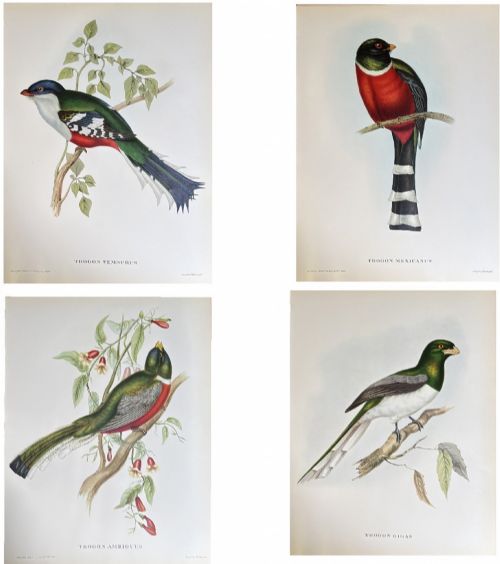
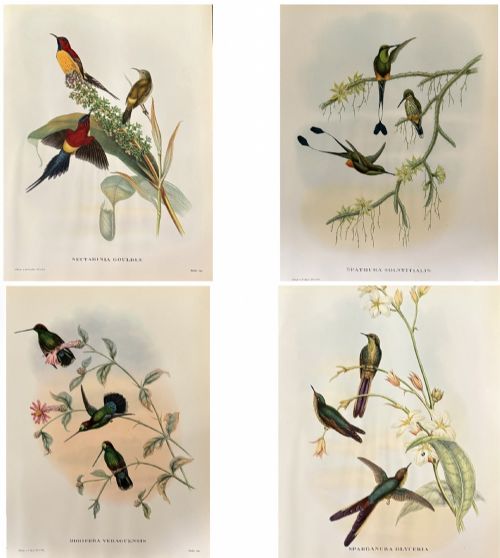
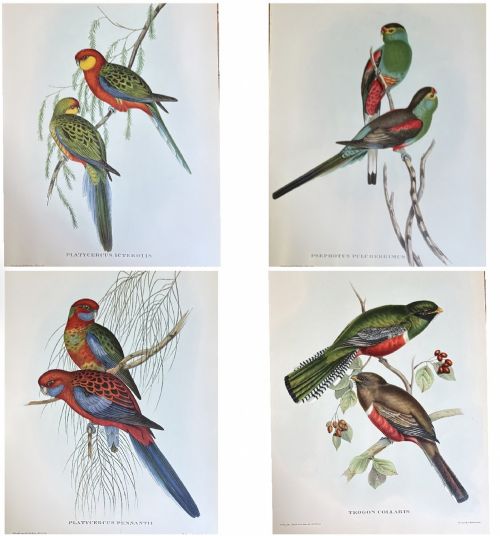
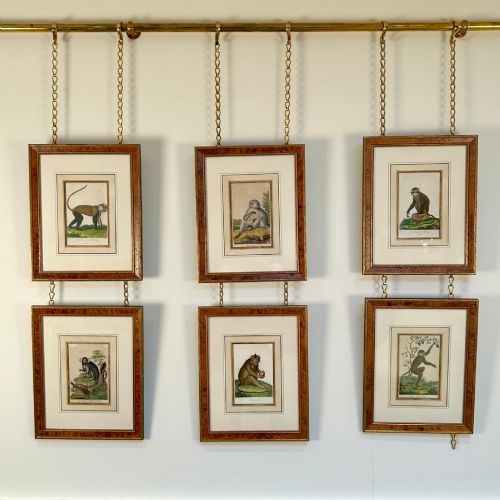



Antique Natural History Set
An antique natural history set brings botanical, avian, and marine illustrations from past centuries straight to the wall.
Antique Natural History Set
An antique natural history set comprises grouped collections of framed prints, engravings, watercolours, books, or pith paintings depicting flora and fauna. These gatherings originate from periods spanning the eighteenth and nineteenth centuries into the mid-twentieth century.
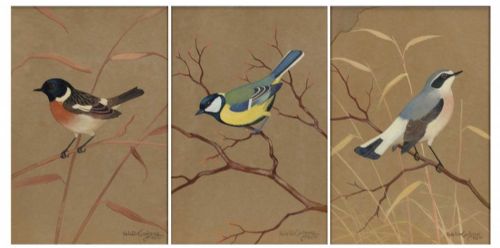
Buyers seeking an antique natural history set most frequently encounter framed prints or engravings featuring birds, botanical specimens with insects, fish, shells, or butterflies. Such groupings range from small trios and quartets to larger series of ten or twelve plates.
The aesthetic stems from Georgian, Victorian, Regency, and mid-century British art traditions, occasionally intersecting with Chinese export art. These works originated as scientific illustrations within reference books or folios before being preserved as wall art.
Materials and production techniques
Makers utilised paper, ink, and watercolour to create individual plates, often applying hand-colouring to engraved lines. Reference volumes and framed works frequently employed wood, glass, and brass hardware.
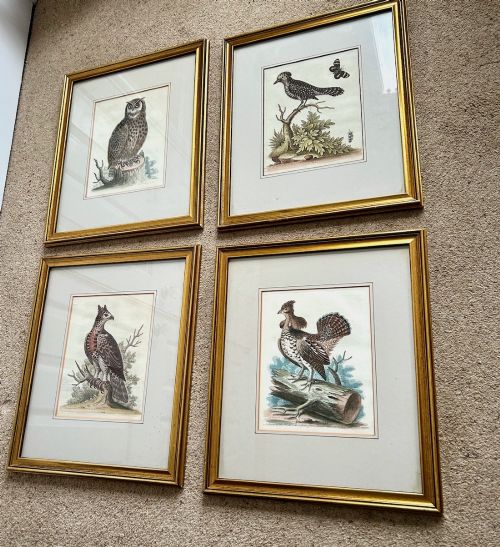
Framed sets often incorporate gilt wood or gold leaf accents around paper artworks, highlighting the visual weight of the prints. The foundational imagery relies on printmaking techniques like engraving and lithography, enhanced by pigment application.
Even serpents and tropical ducks find themselves carefully coloured by hand, proving that Victorian naturalists loved a dramatic reptile as much as a songbird.
Distinctions in quality
Quality rests upon the precision of the original engraving work and the vibrancy or accuracy of the hand-applied watercolour pigments. Earlier eighteenth-century impressions and mid-nineteenth-century plates by known illustrators command closer attention for their detailed draughtsmanship.
The integrity of the paper support and the consistency within a grouped set determine visual harmony. Complete matching series from the same publication present a stronger aesthetic cohesion than assembled groups.
Oliver Goldsmith·George Edwards·Jonathan Couch·John Curtis·William Swainson·Edward Lear·Eleazor Albin
The Antique Natural History Set Glossary
- Engraving
- A printmaking technique where an image is incised into a metal plate with a cutting tool to hold ink. This process allows for fine, crisp lines essential for scientific illustration.
- Hand-coloured
- The practice of applying watercolours by hand to a printed monochrome engraving or lithograph. This adds lifelike hues to botanical and zoological subjects.
- Pith painting
- Artwork created on thin slices of plant pith, commonly associated with nineteenth-century Chinese export art. These delicate works often depict flora, fauna, and figures with vibrant pigments.
- Ornithological
- Pertaining to the scientific study or depiction of birds. Many natural history sets focus specifically on these avian illustrations.
Antique Natural History Set: Frequently Asked Questions
What subjects appear in these sets?
These collections predominantly feature birds, botanical specimens paired with insects, fish, butterflies, serpents, and sea shells. The subjects reflect the scientific curiosity of past centuries.
Illustrations originate from classic natural history publications, reference books, and dedicated plate folios produced by prominent naturalists and artists.
How were these prints originally published?
Many plates were bound inside reference volumes, avian reference books, or folios before being separated and framed for display. Publications often focused on British birds, tropical species, or general natural history.
Complete multi-volume works also survive intact, preserving the original context of the illustrations alongside text.
How do I style a set at home?
Matching sets of four or six prints work well hung together in a symmetrical grid or linear arrangement to create a cohesive focal point. Their traditional frames suit studies, hallways, and living spaces.
Pairing works with complementary paper tones or shared subjects, such as botanical specimens or garden birds, maintains visual balance across the wall.
How can I tell the period of a set?
Dating relies on the paper characteristics, printing techniques, framing styles, and attribution to specific naturalists or publication dates noted in the records. Eighteenth-century plates differ in presswork quality from Victorian or mid-twentieth-century print runs.
Typography on accompanying book pages or engraved captions also offers clear clues to the decade or century of production.