
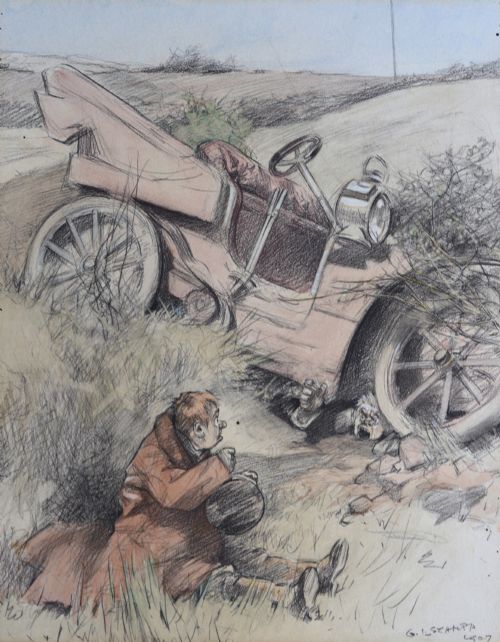
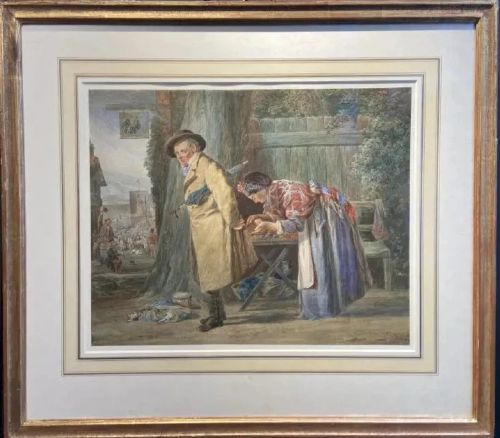


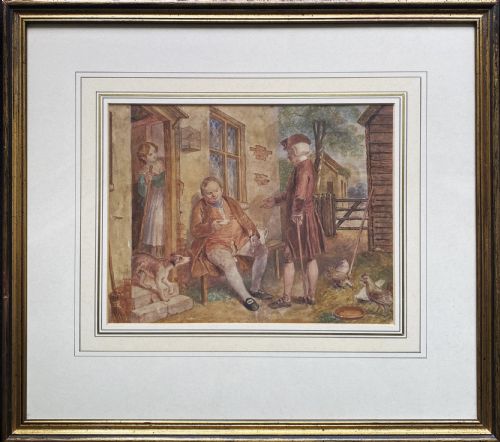

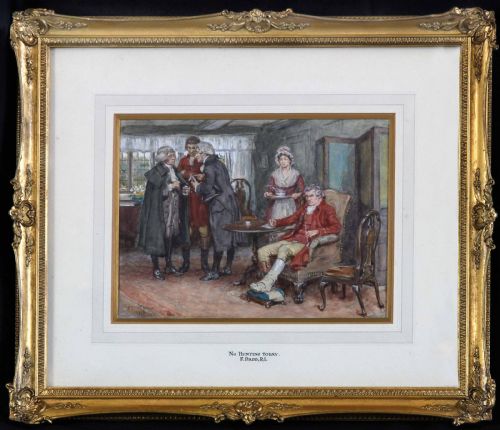
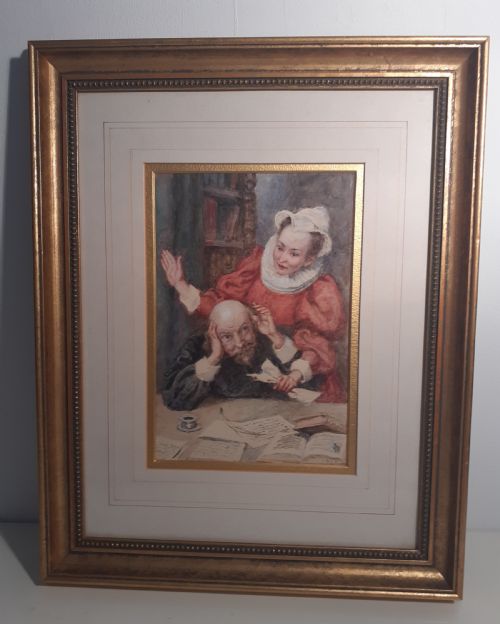

Antique Narrative Watercolour
These antique narrative watercolour works capture dramatic scenes and literary moments on paper, offering collectors a direct window into nineteenth-century storytelling.
Antique Narrative Watercolour
When you search for antique narrative watercolour, you are looking at original paintings and drawings designed to tell a specific story, often drawn from literature, history, or everyday social observation. The pieces available here span the nineteenth century and the Edwardian era, taking the form of framed fine art paintings under glass.
The subjects range widely, taking in domestic genre scenes, historical dramas, sporting moments, and orientalist compositions. Many works carry specific titles or literary references, such as depictions of Shakespearean characters or well-known novels, marking them out as narrative pieces rather than straightforward landscapes or portraits.
The most common formats on this page are finished works on paper executed by listed artists of the period. They arrive ready to hang in period frames, frequently incorporating pen, ink, pencil, and occasional touches of gold leaf alongside the primary watercolour medium.
How They Were Made
These works are executed primarily in watercolour on paper, often built up with underlying pencil or pen and ink preliminary sketches. Artists of this era used fine brushes to achieve intricate detail in facial expressions and period costumes, sometimes combining opaque bodycolour with translucent washes.
Framing is an integral part of the survival of these watercolours, utilising wood and glass to protect the delicate pigments from light and moisture. Some pieces also incorporate gold leaf within the framing or the mount to enhance the visual weight of the historical subject matter.
The periods represented on this page stretch from Victorian and 1860s examples through to Edwardian works dated up to 1910.
What Varies in Quality
Quality in these narrative works rests on the surety of the draughtsmanship and the psychological depth given to the figures. Stronger pieces display confident handling of complex multi-figure compositions and expressive characterisation, whereas lesser examples can feel static or overly formulaic.
The survival and vibrancy of the pigments also distinguish the range. Works that have retained their original colour saturation without excessive fading represent the higher tier of what is available from this period.
George Lorain Stampa·Joseph H Barnes·James Hayllar·Charles Bellay·Frank Dadd·John Masey Wright·George Cattermole
The Antique Narrative Watercolour Glossary
- Watercolour
- A painting method in which the paints are made of pigments suspended in a water-based solution. It is traditionally applied to paper to create translucent washes of colour.
- Genre realism
- A style of painting that depicts aspects of everyday life by portraying ordinary people engaged in common activities. In nineteenth-century work, this often included detailed narrative storytelling.
- Bodycolour
- Watercolour mixed with a white pigment to make it opaque rather than transparent. Artists utilised this technique to highlight specific areas and add body to clothing or light effects.
- Orientalist
- A nineteenth-century artistic tradition depicting scenes from the Middle East, North Africa, and Asia. These works often emphasised exotic narratives and local colour.
- Framed artwork
- A piece of art finished with a protective border and glazing. Period frames on these works contribute significantly to their historical context.
Antique Narrative Watercolour: Frequently Asked Questions
How should I display a nineteenth-century watercolour?
Keep works on paper away from direct sunlight to prevent the watercolour pigments from fading over time. Hanging them on interior walls with stable humidity ensures the paper and framing remain secure.
Ensure that the glass protects the surface properly and that the backing materials are archival to prevent acid transfer into the paper.
What is the difference between genre painting and historical narrative?
Genre painting focuses on scenes of everyday life and ordinary people engaged in normal daily activities. Historical narrative depicts specific moments from literature, historical events, or dramatic plays.
Both styles were popular in the nineteenth century, often sharing similar techniques of detailed character interaction on paper.
Are these watercolours original or reproductions?
The pieces listed are original works created by hand during the nineteenth and early twentieth centuries. Artists used pen, ink, pencil, and watercolour directly on paper.
Signatures, dates, and preparatory pencil marks under close inspection confirm their status as unique historical artworks rather than later prints.
How do I identify an Edwardian watercolour?
Edwardian watercolours date from the reign of Edward VII, typically spanning the first decade of the twentieth century. They often continue the illustrative narrative traditions of the late Victorian period.
Artists from this time frequently signed and dated their works on paper clearly, providing a direct link to the period's sporting and social themes.