




Antique Moorish Furniture
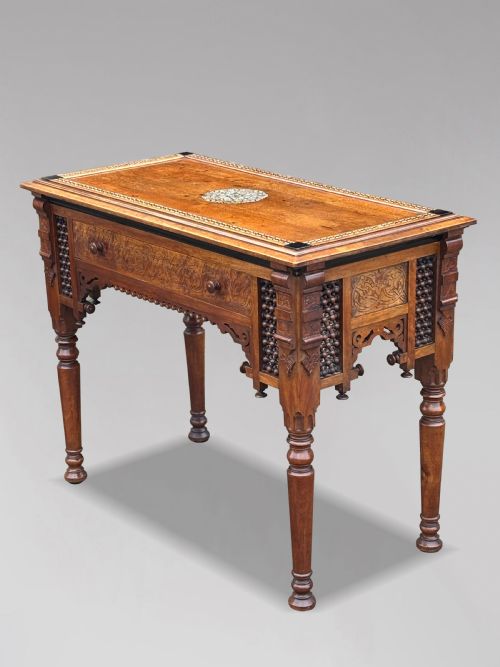
Antique moorish furniture brings intricate geometry and rich surface inlay into domestic spaces through tables, chairs, and cabinets.
Antique Moorish Furniture
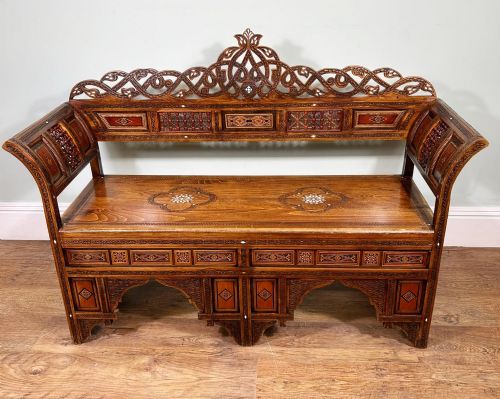
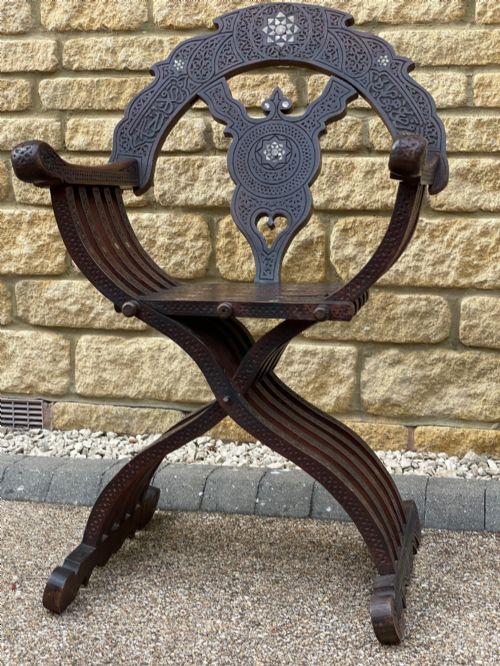
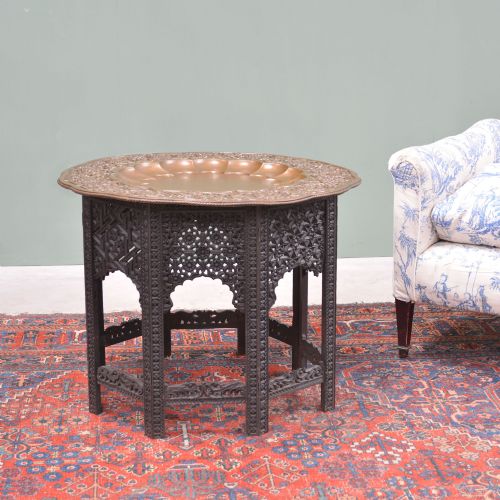
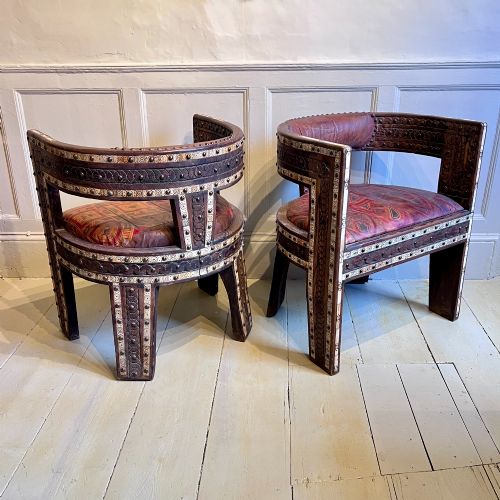
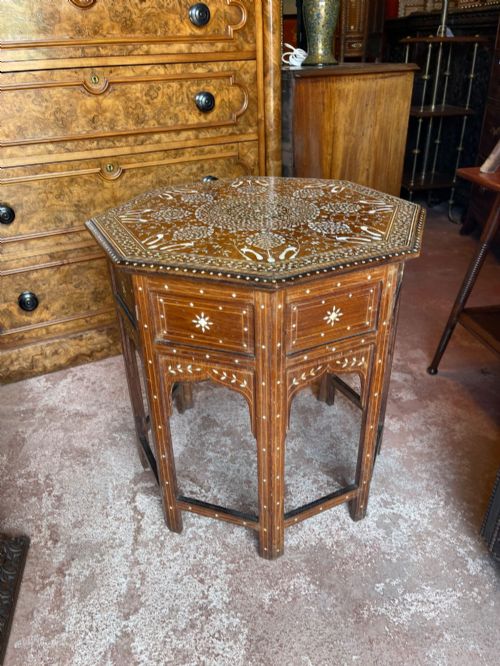
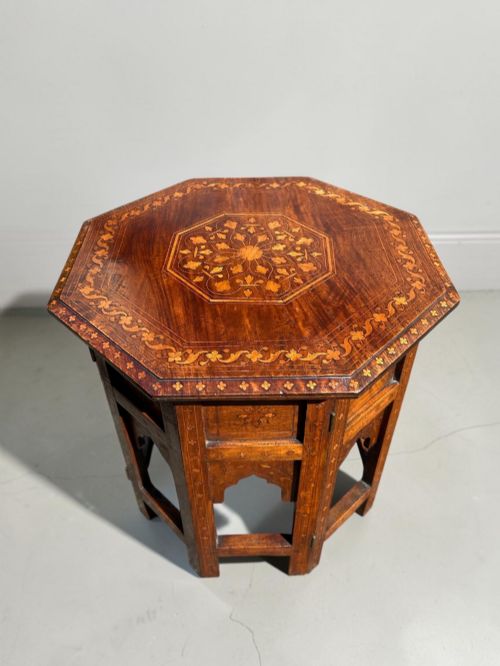
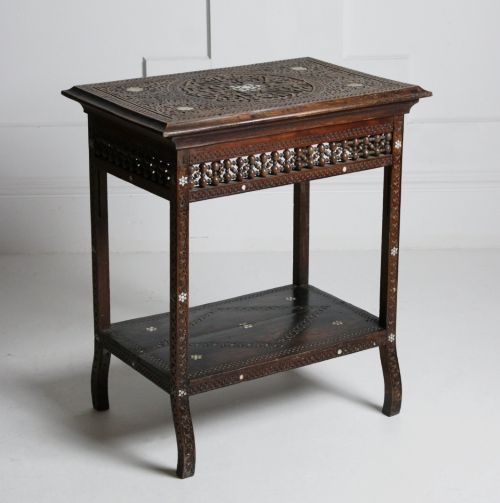
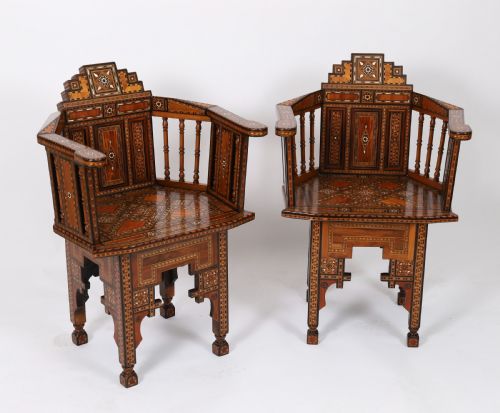
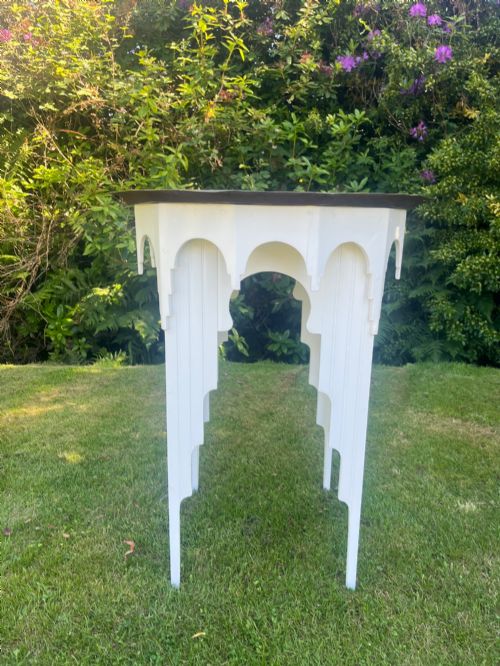
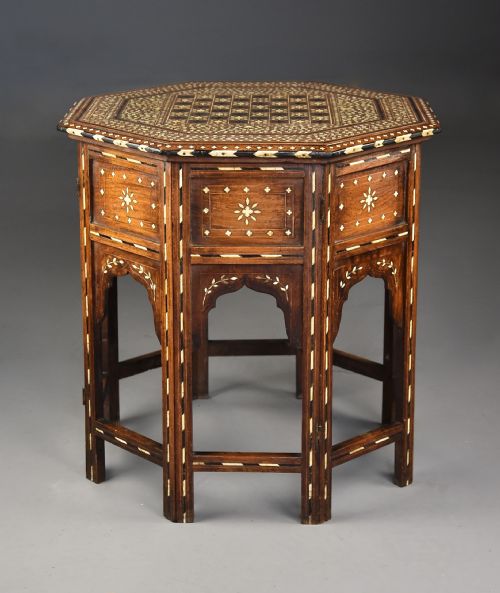
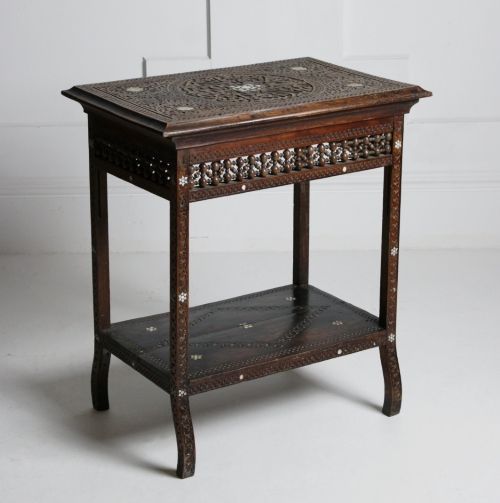
Antique moorish furniture encompasses a rich variety of seating, tables, and cabinets produced across diverse regional traditions during the nineteenth and early twentieth centuries. Pieces range from occasional tables and octagonal lamp tables to armchairs, conversation seats, and multi-piece seating suites.
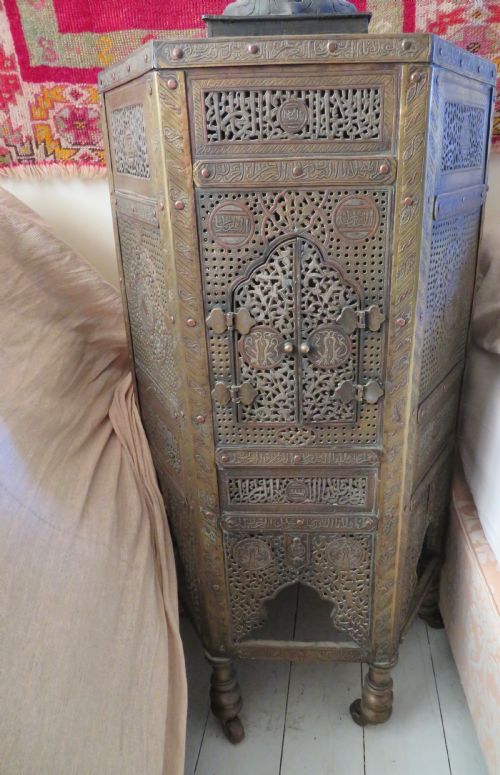
The selection reflects distinct stylistic intersections including Moorish Revival, Anglo-Indian, Syrian, Moroccan, and Aesthetic Movement designs. Buyers encounter everything from compact side tables to substantial cabinets, bookcases, and overmantel mirrors originating from workshops in Cairo, Damascus, and Hoshiarpur.
Makers such as Liberty & Co., Shapland & Petter, Adriano Brambilla, and Carlo Bugatti interpreted these orientalist and regional motifs for Western interiors. The resulting objects combine traditional geometric carving with the domestic utility required by Victorian and Edwardian households.
Materials and Construction
Construction relies heavily on dense timbers such as walnut, mahogany, ebony, and ebonised or painted hardwoods. Artisans build sturdy frames designed to support complex surface decoration.
Surfaces are transformed through meticulous inlay work utilising bone, mother-of-pearl, abalone, white-metal, and copper wire. Intricate parquetry and openwork carving define the geometric panels characteristic of these pieces.
Antique Moorish Furniture Retail Price Guide 2026
Typical asking prices for moorish furniture among the pieces listed under this phrase on Sellingantiques today, from the lower quarter to the upper quarter. They describe what is for sale here now, not the wider market.
Conversation seats encourage intimate dialogue by angling two chairs together within a single connected wooden frame.
Assessing Craftsmanship
Quality rests primarily on the density and precision of the surface inlay and the crispness of the carved woodwork. Pieces featuring extensive mother-of-pearl, bone, or metal wire work demand exceptional hand-skill to secure each small element flush within the hardwood ground.
The integrity of the structural joinery distinguishes standard production from exceptional examples, particularly in complex forms like folding chairs, multi-tiered tables, and tiered cabinets. Attribution to noted retailers and makers such as Liberty & Co. or Carlo Bugatti also elevates the standing of an item.
Liberty & Co·Shapland & Petter·Adriano Brambilla·Carlo Bugatti
The Antique Moorish Furniture Glossary
- Hoshiarpur
- A region in Punjab, India, renowned for producing intricately carved wooden furniture featuring dense bone and shesham inlay.
- Parquetry
- A geometric mosaic of wood pieces used for decorative surfaces on tables and cabinet doors.
- Cairoware
- Metalwork objects, or furniture incorporating metal elements, produced in Cairo with detailed inlaid copper and silver-coloured alloys.
- Overmantel
- A decorative mirror or structure designed to be hung or placed upon the mantelpiece above a fireplace.
- Ebonised
- Wood finished with a dark stain or black lacquer to imitate expensive ebony.
Antique Moorish Furniture: Frequently Asked Questions
What defines antique moorish furniture?
These pieces combine Islamic and North African geometric motifs with European furniture forms from the nineteenth and early twentieth centuries.
They rely on rich surface decoration, intricate woodwork, and contrasting inlays to create striking visual focal points.
Where were these pieces made?
Origins span diverse regions including Cairo, Damascus, Morocco, and Hoshiarpur in India, alongside European interpretations.
Many items were produced by Western firms importing or adapting traditional eastern craftsmanship for domestic Victorian and Edwardian interiors.
How do I care for inlaid surfaces?
Maintain stable indoor humidity levels to prevent the hardwood base from expanding and loosening delicate bone or mother-of-pearl inlays.
Dust gently with a soft dry cloth and avoid harsh liquid cleaners or excessive moisture on the decorative panels.
Can I use these tables daily?
Sturdy occasional tables and seating suites function well for everyday domestic use when treated with reasonable care.
Delicate surfaces with extensive openwork or intricate wire inlay benefit from coasters and protection against heavy wear.