



Antique Monochrome Landscape Art
Antique monochrome landscape art offers a quiet tonal depth, capturing fields, rivers, and architecture through restraint in colour.
Antique Monochrome Landscape Art
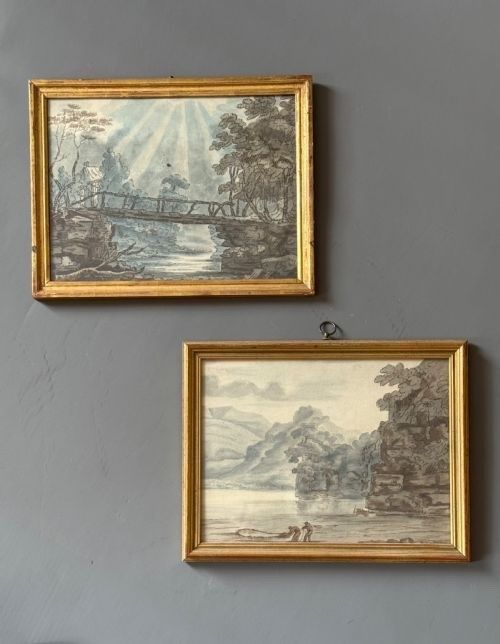
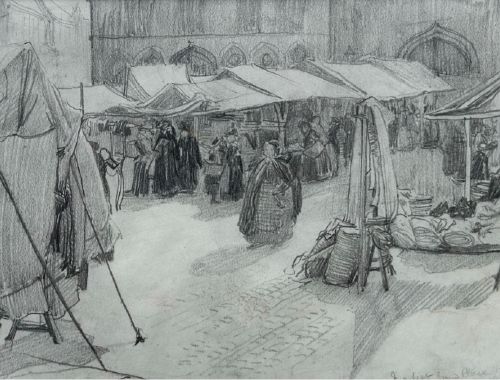
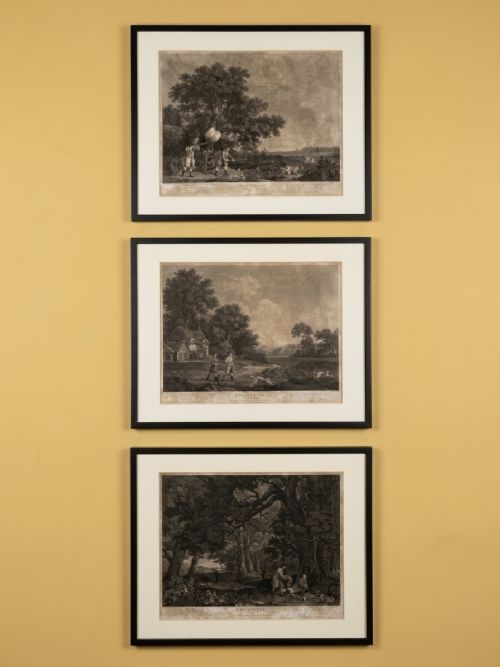
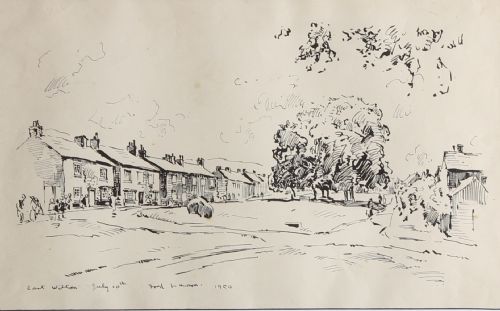
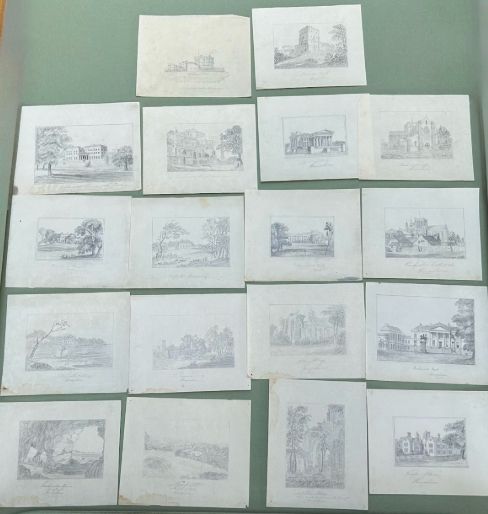
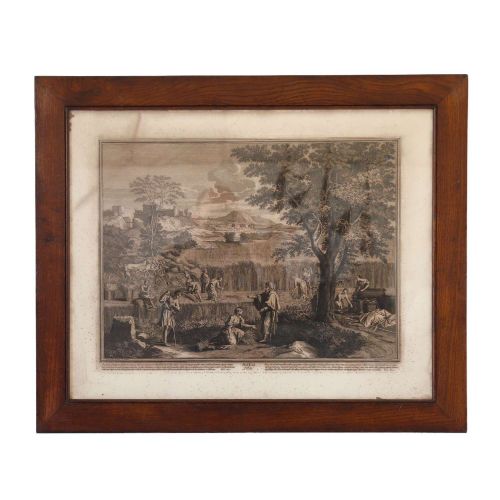
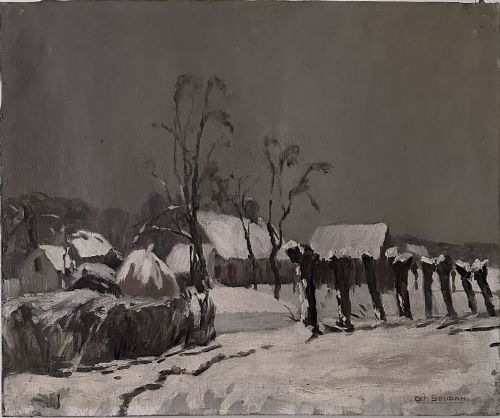
Antique monochrome landscape art comprises works on paper and canvas executed in graphite, charcoal, ink, and watercolour without full naturalistic colour. Buyers seeking this category encounter framed drawings, etchings, engravings, and monochrome paintings dating from the eighteenth century through to the early twentieth century.
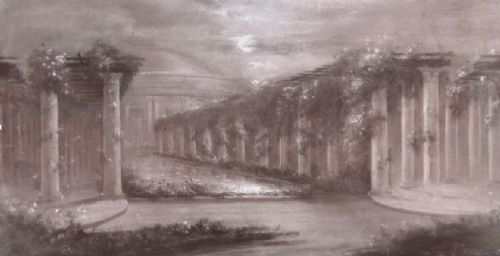
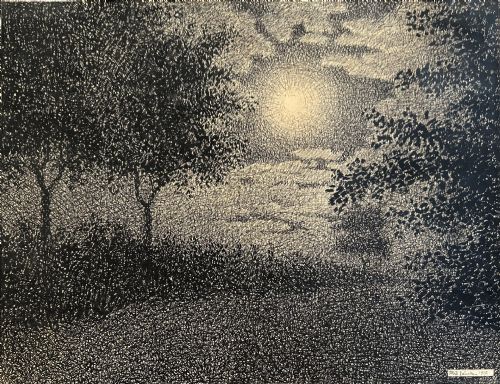
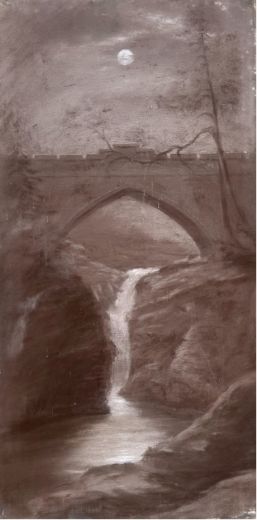
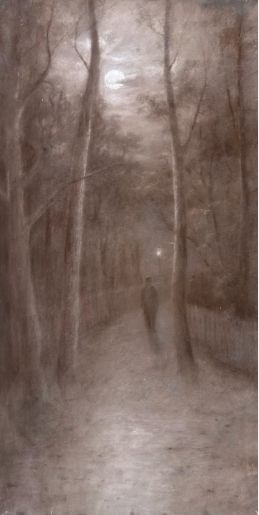
The selections span English lake views, Scottish Highlands, French rural scenes, and moonlit architectural studies. Pieces frequently originate from Georgian, Victorian, and early twentieth-century periods, capturing topographical scenes and imaginative compositions alike.
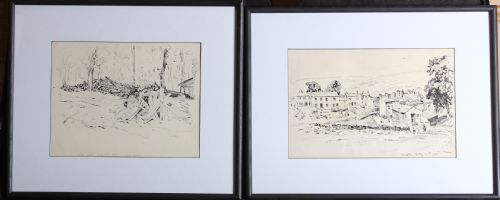
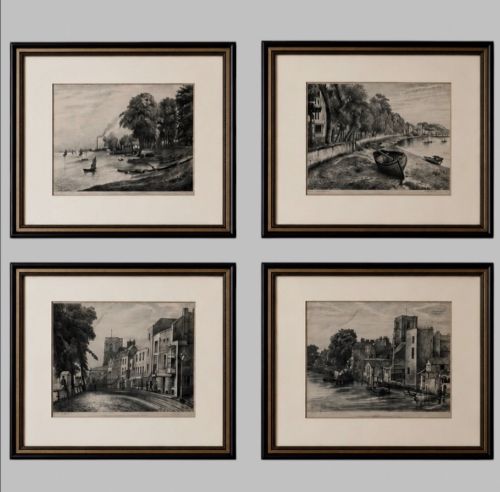
Framed artwork and prints dominate the physical forms available, often preserved in period wood frames behind glass. The aesthetic draws on tonalism and historical schools that emphasise light and shadow over palette.
How They Were Made
Artists laid down images utilising graphite, charcoal, and ink on paper or canvas, building form through line and hatched shadow. Etchings and engravings involved biting metal plates with acid or scoring lines by hand before printing onto dampened paper.
Watercolour and wash drawings applied diluted pigments monochromatically to create graduated tones of grey, brown, or sepia. Support materials primarily consist of handmade or early machine-rolled paper, occasionally mounted on canvas or board.
Antique Monochrome Landscape Art Retail Price Guide 2026
Typical asking prices for monochrome landscape art among the pieces listed under this phrase on Sellingantiques today, from the lower quarter to the upper quarter. They describe what is for sale here now, not the wider market.
The inventory includes architectural studies, coastal scenes, and pastoral watercolours created within British and French artistic traditions.
What Varies in Quality
The mastery of tonal gradation separates standard topographical records from works of lasting artistic merit. Stronger pieces demonstrate confident line work and atmospheric depth that capture light and mood effectively.
Condition of the paper support and integrity of the medium dictate the preservation of the original hand. Strong execution in shading and composition distinguishes individual drawings and etchings from mass-produced prints.
Herbert Dicksee·William Manners·Samuel Palmer·Fred Lawson·Sir Muirhead Bone
The Antique Monochrome Landscape Art Glossary
- Etching
- A printmaking process where lines are bitten into a metal plate with acid before ink is applied and pressed onto paper. This technique allows for fine, fluid lines that mimic freehand drawing.
- Engraving
- A method of cutting design lines directly into a metal plate using a sharp tool called a burin. The resulting prints exhibit clean, precise edges and structured compositions.
- Monochrome
- Artwork executed in a single colour or shades of a single colour, typically black, sepia, or grey. This restriction places emphasis entirely on tone, shadow, and line.
- Wash
- A layer of diluted watercolour or ink applied broadly across paper to create smooth, transparent background tones. It provides depth and atmospheric effect in landscape drawings.
- Tonalism
- An artistic style that emerged in the late nineteenth century where artists painted landscapes with an overall tone or atmospheric mist. Works in this style prioritize mood and shadow over sharp topographical detail.
Antique Monochrome Landscape Art: Frequently Asked Questions
What is monochrome landscape art?
Monochrome landscape art consists of drawings, paintings, and prints created without a full spectrum of colour, relying instead on shades of black, grey, brown, or sepia.
These pieces use line, wash, and shadow to depict natural scenery, architectural studies, and pastoral views.
How should I frame these works?
Works on paper require conservation mounting with acid-free materials to prevent discolouration over time. Framing behind glass protects fragile charcoal, graphite, and watercolour surfaces from dust and atmospheric moisture.
Selecting wooden frames that match the period of the artwork helps maintain historical context.
How do I date an antique drawing?
Dating relies on examining the watermark and texture of the paper stock, the framing style, and any inscriptions or signatures on the reverse. Stylistic markers such as Georgian framing conventions or Victorian subject matter also provide chronological clues.
Comparative analysis with known works by contemporary artists helps narrow the period further.
Where were these landscapes made?
These pieces originate from British, French, and European studios, documenting local countryside, coastal towns, and grand architectural sites. Artists often travelled to specific regions like the Lake District or Scotland to sketch direct from nature.
Many works reflect urban and rural views across England, Wales, and continental Europe.