





Antique Money Chest
An antique money chest is a sturdy security box designed to safeguard coin, bullion and documents, combining heavy ironwork and timber construction.
Antique Money Chest
When you search for an antique money chest, you encounter a range of secure receptacles spanning several centuries, from iron-bound timber strongboxes to heavy cast iron safes and lacquer cashier boxes. The pieces listed here most commonly date from the nineteenth century, alongside earlier seventeenth-century examples such as painted Armada chests.
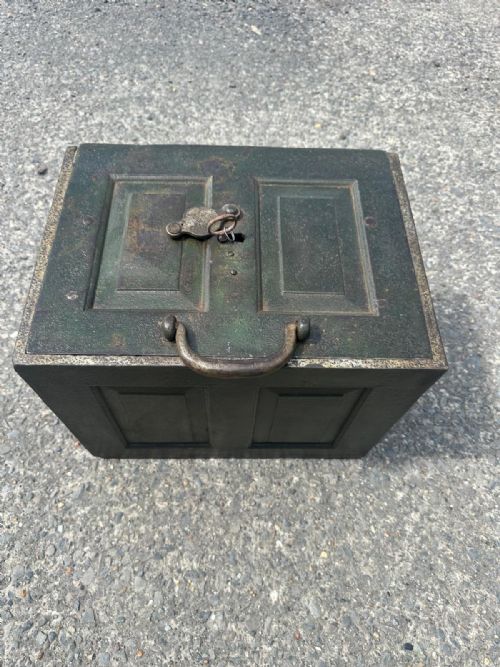
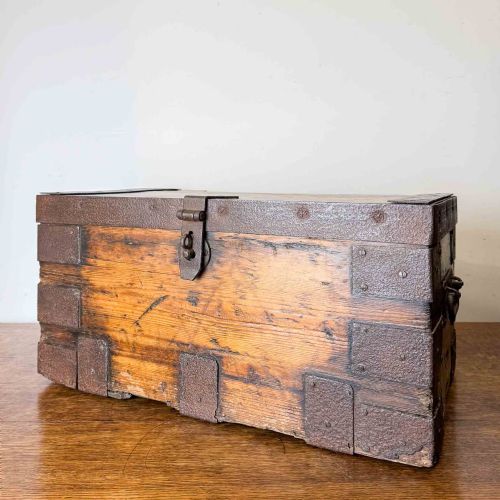
Forms vary from utilitarian elm and pine strongboxes with iron straps to Japanese zenibako money boxes, Regency brass-bound ladies safes, and painted Swedish green strongboxes. Object types encompass chests and coffers, safes and strongboxes, and decorative boxes designed for desktop or travel use.
Materials and construction methods
Makers utilised robust timber frames of elm, pine, and lacquer, reinforcing them with heavy cast iron, wrought iron, and brass bands to resist forced entry. Surface finishes range from original paintwork and hand-painted Qajar lacquer to natural wood patination.
Complex locking mechanisms formed an integral part of construction, incorporating patent safe technology, internal secret compartments, and original keys designed to secure valuables effectively.
Antique Money Chest Retail Price Guide 2026
Typical asking prices for money chest among the pieces listed under this phrase on Sellingantiques today, from the lower quarter to the upper quarter. They describe what is for sale here now, not the wider market.
Listings span four distinct periods: the seventeenth century, the Regency era, the Victorian period, and the nineteenth century generally.
Assessing quality and authenticity
Quality rests in the originality of the surface finish, whether original paint, lacquer, or timber patination, and the survival of the original key and internal locking mechanism. Retaining secondary elements such as brass mounts, secret letter drawers, and iron straps elevates a piece.
The sophistication of the ironwork and the integrity of the structural joinery distinguish utilitarian storage from exceptional workshop production across periods spanning the seventeenth to the nineteenth century.
Milners of Liverpool
The Antique Money Chest Glossary
- Armada chest
- A heavy iron strongbox manufactured in sixteenth and seventeenth-century Europe, typically secured by a complex multi-bolt lock beneath the lid.
- Zenibako
- A traditional Japanese merchant money box featuring internal drawer compartments for sorting coin denominations.
- Strongbox
- A secure container constructed from thick timber and reinforced with iron bands, used for storing currency and bullion.
- Qajar lacquer
- A glossy resin finish applied to Persian artefacts, featuring intricate hand-painted figurative or floral decoration.
Antique Money Chest: Frequently Asked Questions
What is an antique money chest?
An antique money chest is a secure receptacle built from timber, iron or brass to store currency, documents and valuables safely.
These pieces range from seventeenth-century iron-strapped Armada chests to nineteenth-century cast iron patent safes and painted wooden strongboxes.
How were money chests used?
Merchants, goldsmiths and households utilised these chests to protect coins, bullion and private letters from theft and fire.
Many incorporate internal locking compartments, secret letter drawers or complex multi-bolt mechanisms operated by specialised keys.
How do I date an antique money chest?
Dating relies on materials, construction techniques, lock designs, and stylistic traits associated with periods like the seventeenth or nineteenth century.
Evidence such as hand-painted Qajar lacquer, Regency brass binding or seventeenth-century iron strapwork provides clear chronological markers.
How do I care for a metal and wood chest?
Preserve the surface by keeping the chest in a stable environment away from direct heat and excessive moisture.
Apply gentle wax to timber surfaces and keep iron components clean and dry to maintain the original patination.