
Antique Mirrored Cupboards
Antique mirrored cupboards bring light and reflection into a room, combining practical storage with the decorative sheen of bevelled or flat glass plates.
Antique Mirrored Cupboards
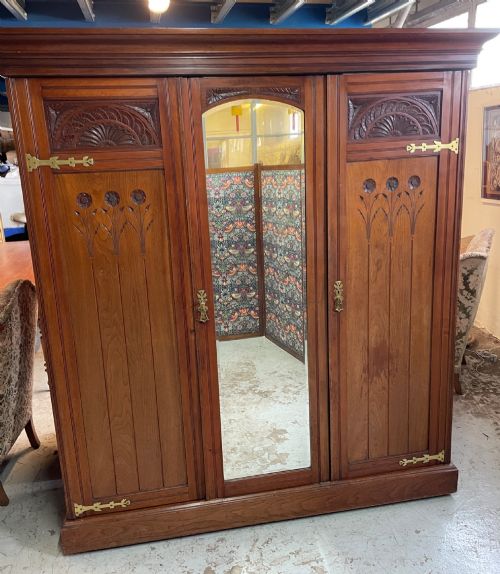
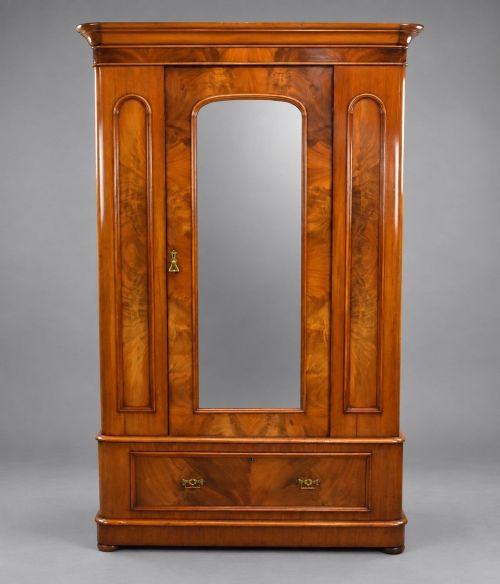
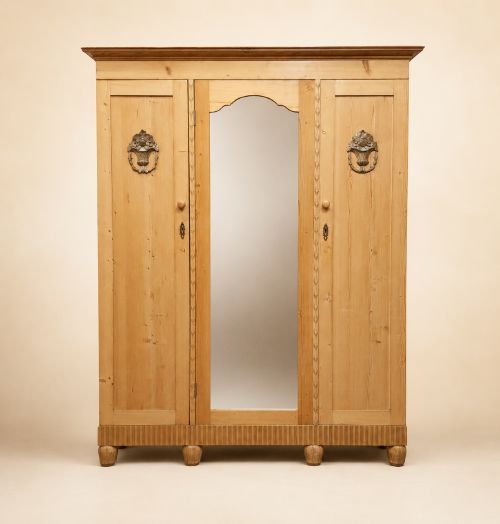
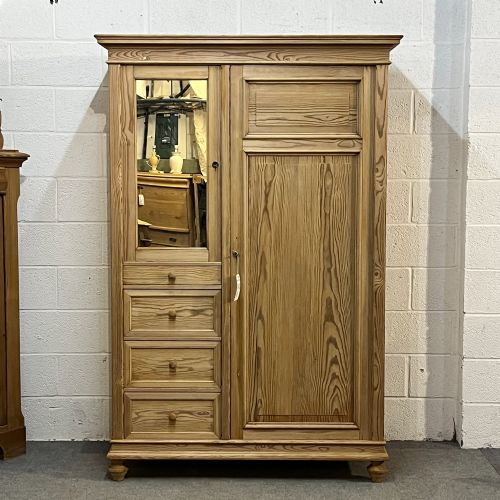
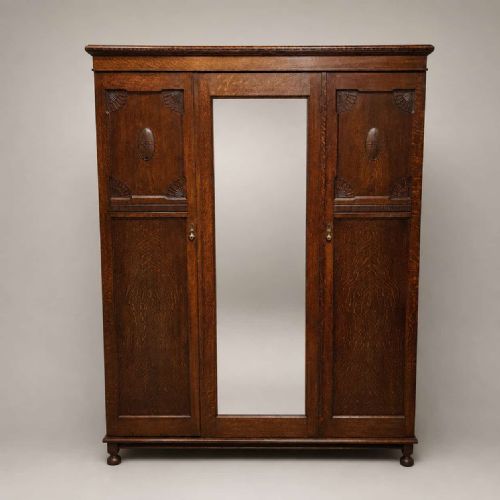
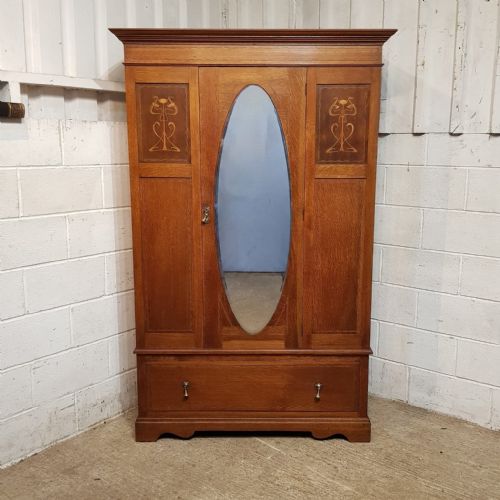
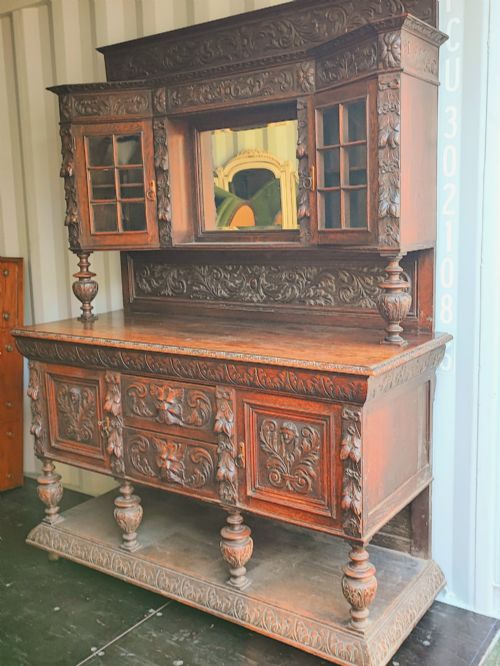
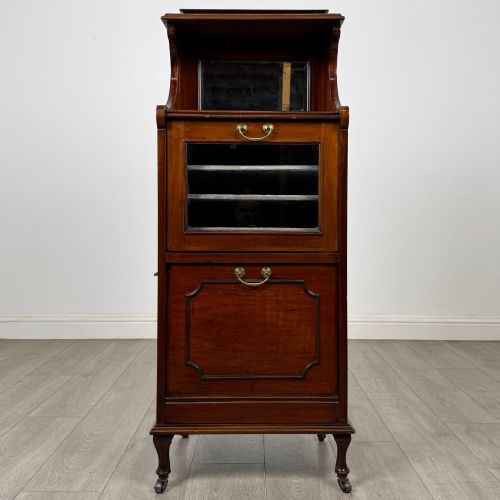
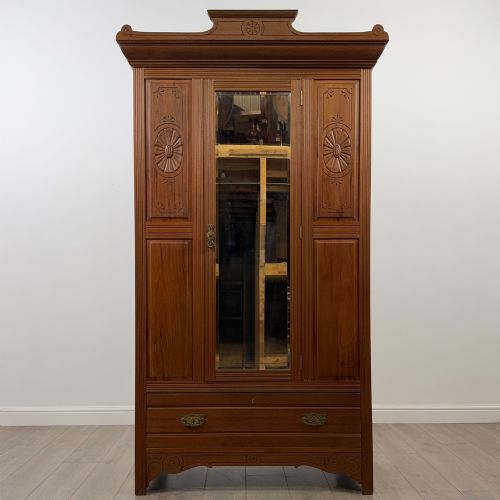
When you search for antique mirrored cupboards, you encounter a varied selection of large wardrobes, armoires, compactums and display cabinets dating from the nineteenth and early twentieth centuries. These pieces predominantly span the Victorian, Edwardian and Regency periods, reflecting the domestic storage needs of those eras.
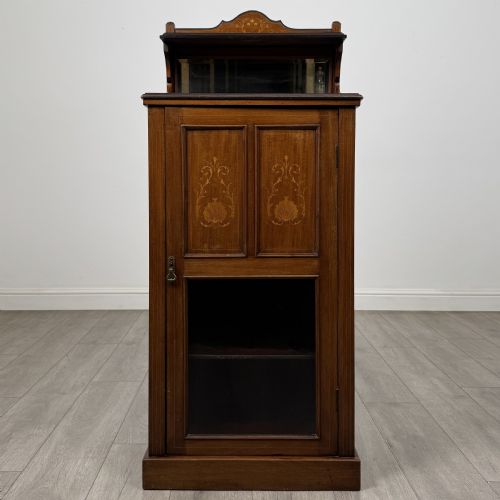
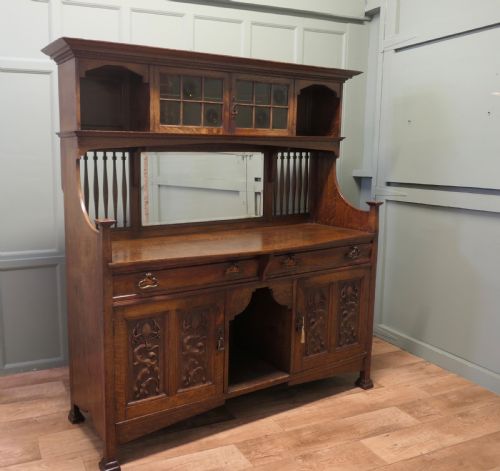
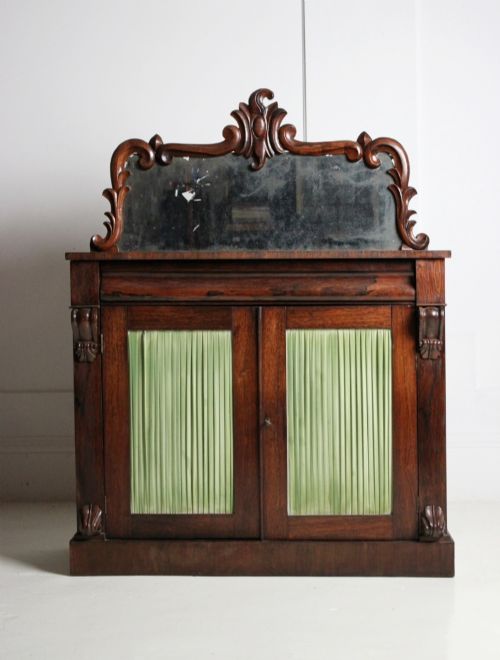
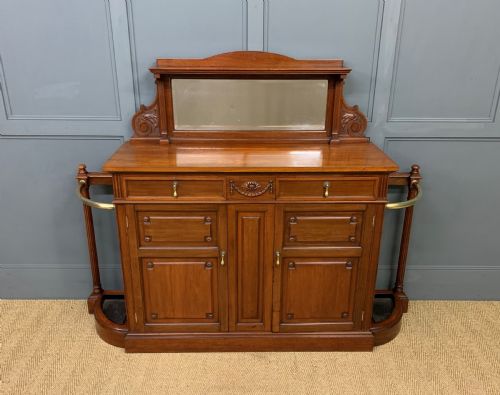
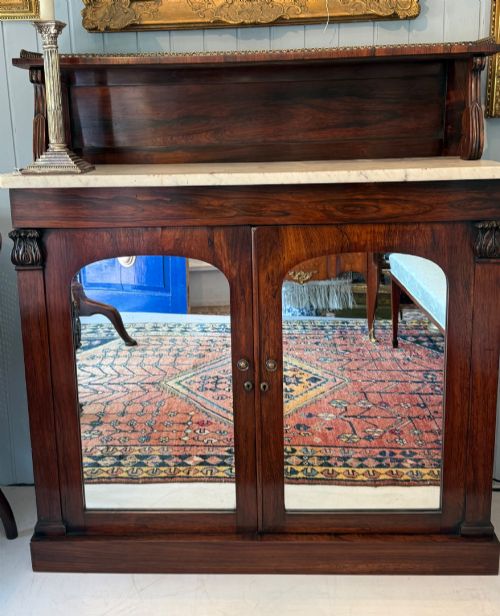
The most common forms on this page include single, double and triple wardrobes fitted with mirrored doors, alongside smaller wall-hanging cabinets, sideboards and chiffoniers with mirror backs. Materials range from traditional timbers such as mahogany, oak and walnut to lighter satinwood, rosewood and pine.
How they were made
Cabinet makers constructed these pieces using solid timbers and decorative veneers such as mahogany, walnut, rosewood and satinwood, often supported by secondary woods like pine. Construction techniques relied on traditional joinery, including dovetail joints for drawers and mortise and tenon frames for heavy wardrobe doors.
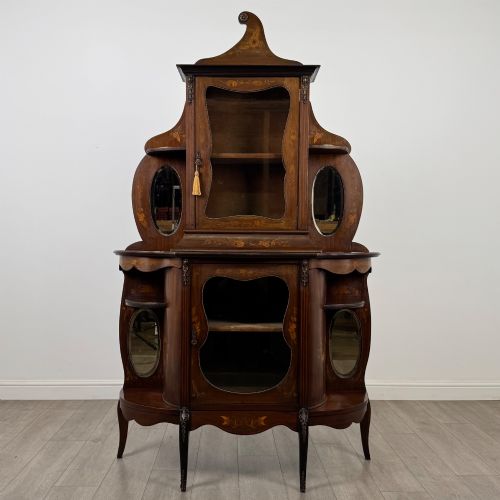
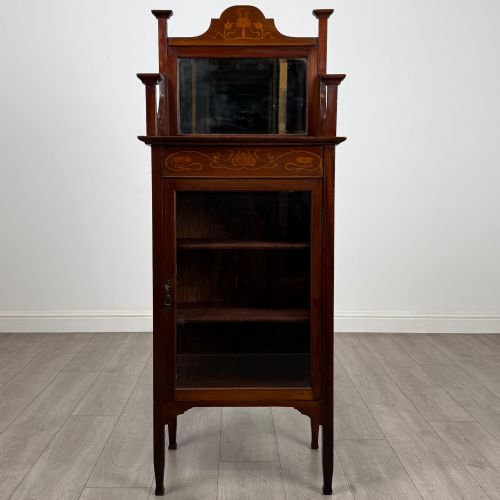
Mirrors were set into door panels or framed as mirror-backs on sideboards and display cabinets, secured with wooden beads and backing boards. Decoration often included marquetry inlays, brass or gilt bronze ormolu mounts, carved woodwork and painted details.
Finishes were hand-applied using French polish, wax or varnish to highlight the natural grain and colour of the wood, while brass handles, locks and hinges provided functional hardware.
Miniature apprentice pieces let master craftsmen practice their joinery on tiny wardrobes, proving that big storage sometimes comes in very small packages.
What varies in quality
The integration of the mirror itself marks a clear division in standard. Heavy bevelled glass securely housed within properly balanced doors demonstrates superior craftsmanship compared to thin, flat replacement plates held by crude modern beads.
Hardware and internal fittings also separate standard examples from finer work. Original brass locks, working keys, well-fitted linen slides, drawers and hanging spaces denote workshops of higher repute.
Shoolbred & Co.·Edwards & Roberts
The Antique Mirrored Cupboards Glossary
- Armoire
- A large wardrobe or cupboard, frequently French in origin, designed for hanging garments and storing linen. These often feature full-length mirrored doors.
- Compactum
- A fitted wardrobe that combines hanging space, shelving and drawers within a single carcass. They provide comprehensive bedroom storage.
- Chiffonier
- A low sideboard or cabinet developed in the nineteenth century, typically featuring shelves or a mirror back. They sit neatly in dining rooms and morning rooms.
- Marquetry
- Decorative woodwork where pieces of contrasting veneer are fitted into a ground material to form geometric or floral patterns. It is common on Edwardian and Victorian inlaid cabinets.
- Ormolu
- Gilt bronze mounts applied to furniture for decorative effect. They appear frequently on French nineteenth-century pieces.
Antique Mirrored Cupboards: Frequently Asked Questions
How do I clean the mirror plate?
Use a soft microfiber cloth and a mild glass cleaner sprayed onto the cloth rather than directly onto the mirror. This prevents moisture from seeping behind the silvering.
Avoid harsh ammonia-based solutions that can damage the antique backing and corrode the edges of the glass over time.
Where should I place a mirrored cupboard?
Position the piece opposite or adjacent to a window to maximise the amount of natural light it reflects back into the room. This makes smaller bedrooms and hallways feel significantly brighter and more spacious.
Ensure the floor is level so that heavy mirrored doors hang straight and close smoothly without catching on the frame.
How do I date an antique mirrored cupboard?
Examine the timber, the style of the hardware, and the construction methods used inside the drawers and carcass. Victorian pieces often display heavier proportions and dark mahogany or walnut, while Edwardian examples favour lighter satinwood and delicate inlays.
The silvering on the mirror can also offer clues, as older plates may show light foxing or speckling around the edges.