



Antique Military Rifle
An antique military rifle carries the weight of state service, bearing the marks of conflicts from the Georgian and Victorian eras down to the late nineteenth century.
Antique Military Rifle
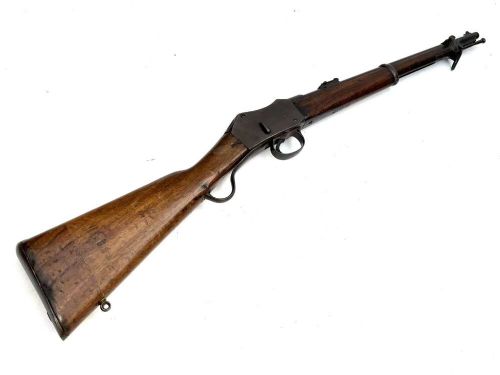
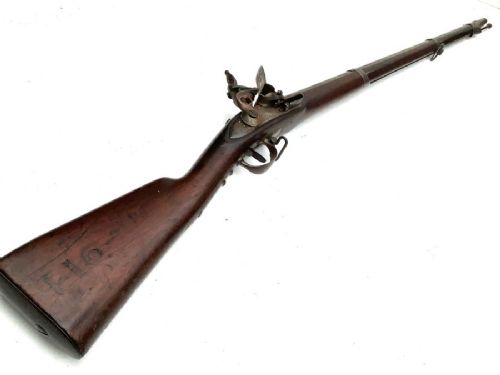
When you search for an antique military rifle, you are looking at functional service arms and related equipment from the eighteenth and nineteenth centuries, including flintlock muskets, percussion carbines, and breech-loading rifles. The selection on this page ranges from Georgian Brown Bess muskets used in the Revolutionary Wars to Victorian Martini-Henry and Enfield rifles dating into the 1870s.
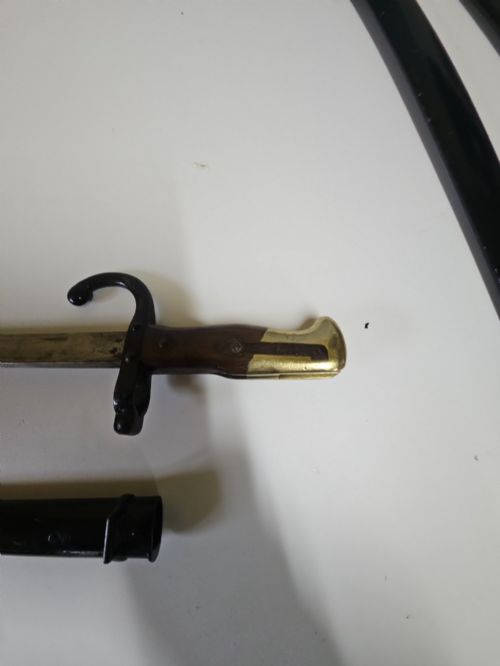
The most common examples you will meet on this page are British and French longarms, such as Enfield rifles and Charleville muskets, alongside associated militaria like bayonets and military landscape oil paintings. These pieces span notable military epochs including the Napoleonic Wars and the Victorian military expansion.
Collector interest centres on the historical mechanisms and recognised service patterns, whether an East India Company percussion musket or a Sneider conversion. Each piece reflects the standard issue of its period rather than civilian sporting manufacture.
Factors of quality and survival
The distinction between average and exceptional pieces rests upon the crispness of government inspection stamps, regimental markings, and proof marks stamped into the wood and metal. Clear maker attribution, such as a named Birmingham contractor on a lockplate, elevates the historical interest of a firearm.
Originality of components and the preservation of wood stock surfaces without excessive sanding or replacement parts determine the standing of an antique military rifle. The clarity of action function and the survival of matching serial numbers or issue units further separate standard pieces from notable survivors.
Antique Military Rifle Retail Price Guide 2026
Typical asking prices for military rifle among the pieces listed under this phrase on Sellingantiques today, from the lower quarter to the upper quarter. They describe what is for sale here now, not the wider market.
Alongside heavy ordnance and bayonets, volunteer rifle soldiers occasionally prompted military landscape oil paintings to capture camp life.
Sargant and Son·Frederick Henry Howard Harris
The Antique Military Rifle Glossary
- Flintlock
- An ignition mechanism utilising a piece of flint held in a cock to strike a steel frizzen, creating sparks to ignite priming powder. This system dominated military firearms from the seventeenth through the early nineteenth century.
- Percussion cap
- A small metal cup containing fulminate of mercury placed on a nipple, struck by the hammer to ignite the main powder charge. It replaced the flintlock system during the nineteenth century.
- Smoothbore
- A barrel lacking internal rifling grooves, used on muskets like the Brown Bess to fire spherical lead balls over moderate distances. Rifling was later introduced to impart spin and increase accuracy.
- Socket bayonet
- A blade featuring a tubular offset socket that fits over the muzzle of a musket barrel, allowing the piece to be used as a thrusting weapon while remaining loaded.
Antique Military Rifle: Frequently Asked Questions
How do I identify a Brown Bess musket?
Examine the lockplate for crown markings and contractor stamps, and check for the characteristic full-length walnut stock fitted with brass furniture.
Verify the smoothbore barrel length and overall configuration against standard Georgian military patterns.
What is the difference between a musket and a rifle?
Muskets feature smooth bores designed for rapid loading and massed volleys, whereas rifles have spiral grooves cut inside the barrel to spin the projectile for increased range and accuracy.
This technical distinction separates earlier smoothbore arms from mid-nineteenth-century Enfield and Martini-Henry patterns.
How should I clean a wooden stock?
Preserve the historical surface by applying microcrystalline wax or traditional boiled linseed oil sparingly with a soft cloth.
Avoid modern chemical strippers or abrasive pads that remove age-related patina and inspection stamps.