




Antique Military Dagger
These antique military dagger pieces span from the nineteenth century to the mid-twentieth, offering collectors edged weapons with operational histories and distinct historical forms.
Antique Military Dagger
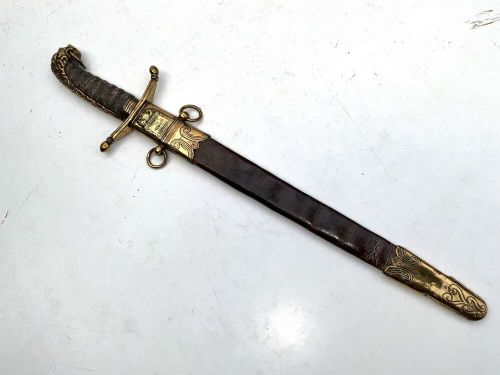
An antique military dagger brings together edged weapons from various operational theatres, including Victorian military issues and mid-twentieth-century examples. Buyers looking at this selection will find specialised forms ranging from naval dirks and commando knives to bayonets and regional fighting blades.
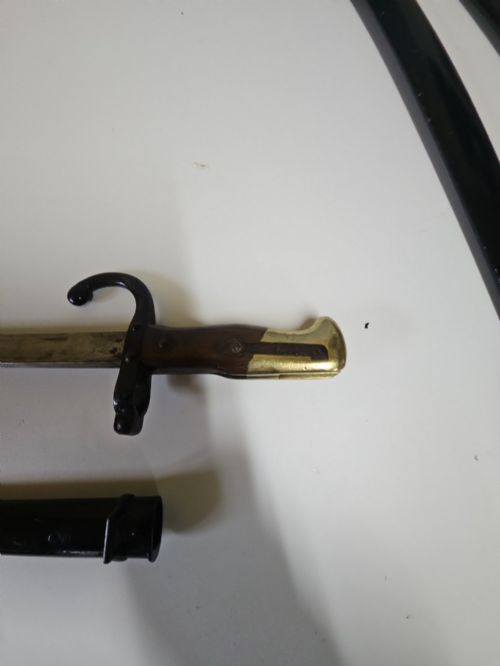
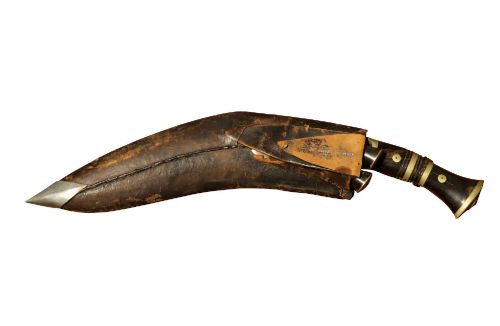
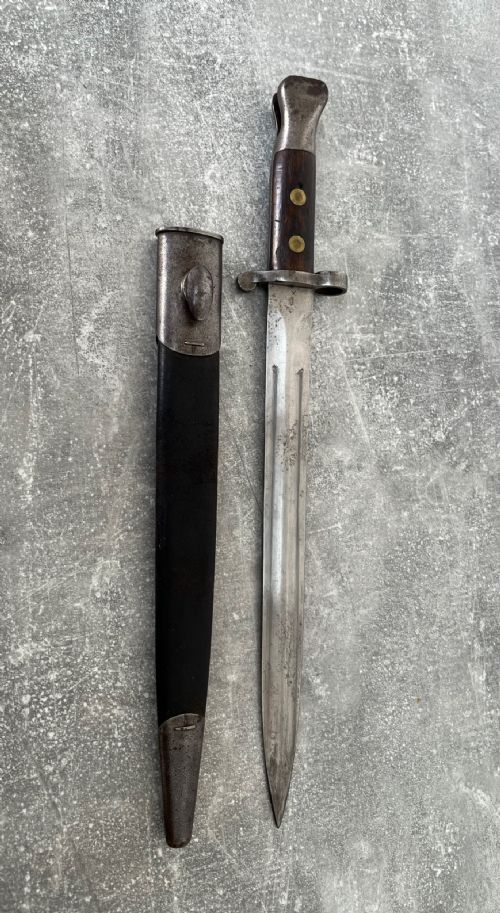
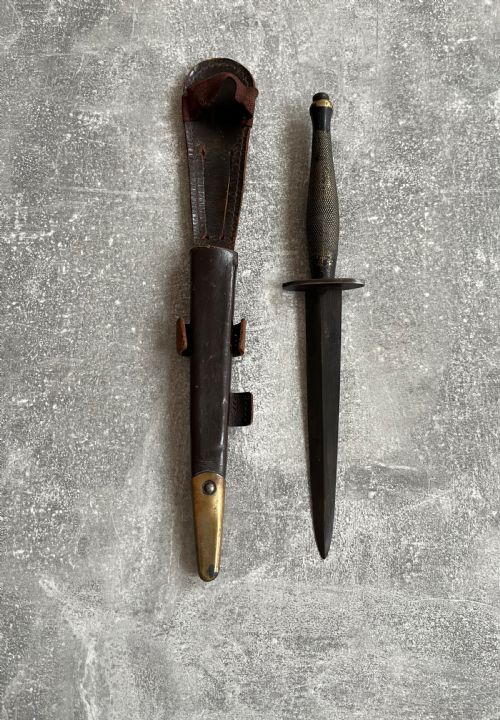
The most common examples encountered on this page belong to the nineteenth-century Victorian period and mid-twentieth-century conflicts. These encompass British naval officers' dirks, French bayonets, Gurkha kukris, and World War II fighting knives with their original scabbards.
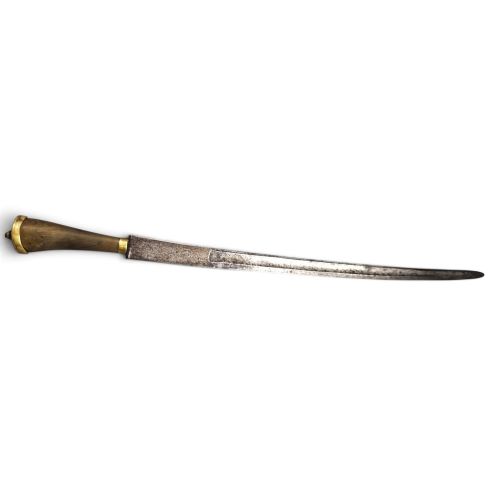
Geographic origins and military styles stretch across European, Afghan, Nepalese, and Indo-Persian traditions. Pieces like the Pesh-Kabz or Khyber knife demonstrate cross-cultural designs alongside standard-issue British and French edged weapons.
Materials and construction methods
The construction of these pieces relies heavily on forged steel for blades, often complemented by gilt brass mounts, wire wrapping, and ferrous or non-ferrous metals. Scabbards and grips incorporate natural materials such as leather, wood, horn, and walnut to ensure durability during active service.
Specialised techniques are visible in blued and gilt officer blades, alongside fitted wooden and leather scabbards that frequently house companion knives. Metal components utilise casting and turning, while grips feature bound wire and carved organic materials for secure handling.
Some nineteenth-century Afghan knives arrived with blue and gilt officer blades that managed to look entirely theatrical while meant for serious work.
Evaluating the standard of execution
Quality varies according to the original intended commission, distinguishing standard-issue private purchase officer pieces from mass-produced military bayonets. Higher-grade examples feature decorative blue and gilt treatments on the steel and superior finishing on the hilt furniture.
The preservation of original components, such as matching scabbards and companion blades, defines the integrity of the piece. Superior specimens retain crisp markings, tight grip bindings, and unpolished steel surfaces that reflect their period of service accurately.
The Antique Military Dagger Glossary
- Dirk
- A long-bladed stabbing weapon, historically associated with naval officers and traditional Scottish dress. These often feature decorative hilts and specialised leather scabbards.
- Bayonet
- A solid blade designed to be fitted to the muzzle of a rifle for close combat. Examples here include French models and British pattern sword bayonets.
- Kukri
- A Nepalese knife with a distinctively recurved blade used for both utility and combat purposes. Traditional sets frequently include two smaller companion knives housed in the main scabbard.
- Gilt brass
- A metallic composition treated with a thin layer of gold to simulate solid gold enrichment. This technique appears on the pommels, crossguards, and mounts of officer weapons.
Antique Military Dagger: Frequently Asked Questions
What periods do these daggers cover?
The selection covers a broad chronological range spanning the early nineteenth century through to the middle of the twentieth century.
Key eras represented include the Napoleonic period, the Victorian era, and the Second World War.
Are scabbards typically included with them?
Many of the listed edged weapons retain their original leather or metal-mounted scabbards from the period of issue.
Some regional variants, such as Nepalese kukris, also include fitted pockets containing small companion blades.
How do I identify naval officer pieces?
Naval variants often feature specific organizational markers, such as the curved brass hilt and folding guard typical of nineteenth-century dirks.
Blades on these officer weapons may display etched or gilt ornamentation denoting service branch.
What is a Fairbairn Sykes knife?
The Fairbairn Sykes is a double-edged combat knife designed for close-quarter fighting during the Second World War.
Pattern two variants represent specific manufacturing phases issued to commando units.