





Antique Micro Mosaic Wood
These antique micro mosaic wood pieces combine tiny geometric tesserae with turned timbers to create astonishingly detailed domestic objects.
Antique Micro Mosaic Wood
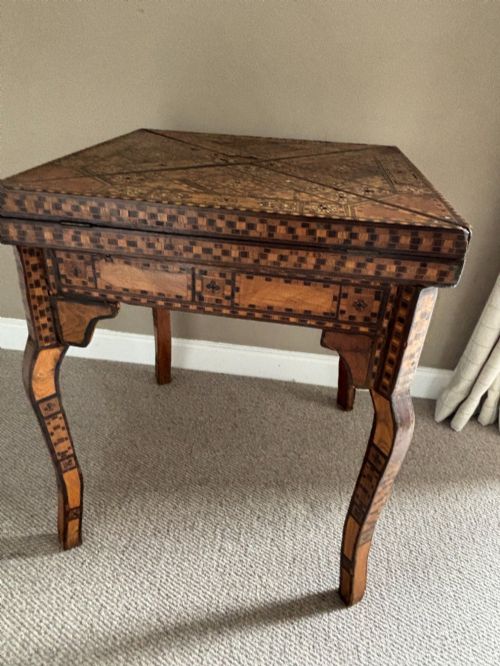
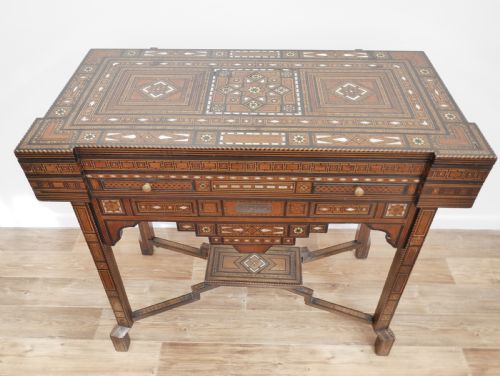
When you search for antique micro mosaic wood, you encounter intricate items that showcase detailed pictorial views or geometric patterns built from minute wooden or bone segments. The pieces on this page span the nineteenth century, taking forms such as tea caddies, games tables, trinket boxes, wall plaques, and stationery boxes.
You are most likely to meet Victorian Tunbridge Ware boxes and plaques featuring rosewood or walnut foundations, alongside Anglo-Indian and Syrian inlaid occasional furniture. These items served as elegant desk accessories or decorative parlour furnishings for affluent Victorian homes.
Makers utilised specialised techniques to assemble thousands of microscopic wood prisms, slicing them to reveal architectural scenes, floral motifs, or complex tessellations. Such objects demand close inspection to appreciate the sheer patience and skill involved in their construction.
What varies in quality
The fineness of the mosaic work dictates the tier of the piece, with higher quality examples containing vastly more and smaller tesserae per square inch. Simpler geometric bands sit at the accessible end of the scale, while complex pictorial representations of castles or ruins demand exceptional mastery.
The choice of primary timber and the preservation of the original lining or interior fittings significantly influence the standing of an item. Pieces retaining their complete, unshifted mosaic tiles without shrinkage gaps represent the finest output of the workshops.
Antique Micro Mosaic Wood Retail Price Guide 2026
Typical asking prices for micro mosaic wood among the pieces listed under this phrase on Sellingantiques today, from the lower quarter to the upper quarter. They describe what is for sale here now, not the wider market.
The selection encompasses Victorian Tunbridge Ware alongside Anglo-Indian and Syrian inlay traditions.
Henry Hollamby
The Antique Micro Mosaic Wood Glossary
- Tunbridge Ware
- A type of decorative woodwork characteristic of nineteenth-century Kent, famous for mosaic pictures made from thousands of tiny wood blocks. It takes its name from the spa town where the industry flourished.
- Tessera
- An individual small block of wood or bone used to form the mosaic pattern. Artisans shaped these tiny units with absolute precision before gluing them to the surface.
- Stringing
- Thin lines of contrasting wood inlay used to create borders and frame panels on boxes and furniture. It provides a crisp linear boundary to the more complex mosaic fields.
- Caddy
- A small box or chest once used for storing loose tea leaves. Victorian examples often featured elaborate mosaic lids and partitioned interiors.
- Sadeli work
- A traditional form of micro mosaic from India utilising geometric patterns formed from wood, horn, and bone. It frequently appears on nineteenth-century boxes and work trays.
Antique Micro Mosaic Wood: Frequently Asked Questions
What is antique micro mosaic wood?
These items are nineteenth-century decorative objects decorated with tiny wooden or bone tiles assembled to form pictures or geometric patterns. They include small containers, games tables, and wall plaques.
Most examples originate from English workshops in Tunbridge Wells or reflect international inlay traditions such as Anglo-Indian Sadeli work and Syrian Damascus tables.
How were these wooden mosaics constructed?
Artisans glued together bundles of differently coloured wood rods and sliced them across the grain to produce hundreds of identical mosaic squares. These microscopic tiles were then arranged by hand onto a solid wood carcase.
Woods like boxwood, holly, and dyed timbers provided the natural colour palette needed to shade architectural motifs and floral designs.
Where were these pieces made?
The majority of the domestic boxes and plaques originated in Tunbridge Wells, Kent, during the Victorian era. Other notable styles emerged from workshops in India and the Middle East.
Makers utilised local and exotic timbers to supply a growing Victorian market for decorative deskware and parlour novelties.
How do I care for antique wood mosaics?
Keep these items away from direct sunlight and sudden temperature changes to prevent the wood from shrinking and mosaic tiles from loosening. Gentle dusting with a soft, dry cloth is sufficient for routine maintenance.
Avoid using liquid polishes or damp cloths, as moisture can weaken the historical glue behind the tiny tesserae.