

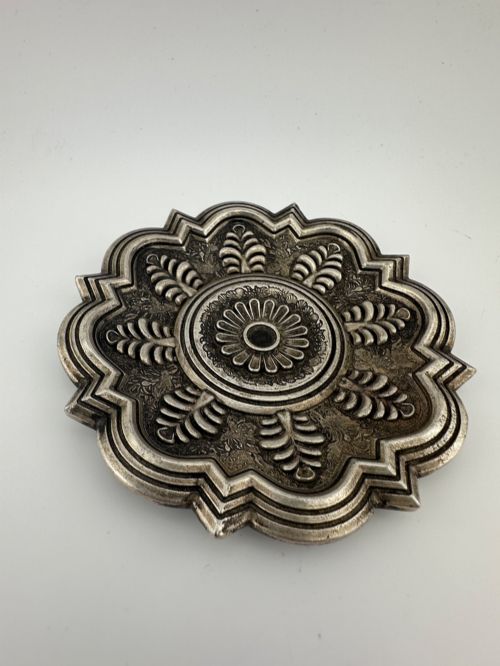


Antique Metalware Tray
An antique metalware tray brings tactile weight and historic craftsmanship into daily domestic life.
Antique Metalware Tray
The selection ranges from Arts and Crafts pewter serving trays to intricately patterned Middle Eastern copper chargers and Chinese white metal dishes. Art Nouveau designs in pewter and copper also feature prominently among these domestic objects.
Originating from diverse European, Asian, and Middle Eastern workshops, each antique metalware tray reflects the distinct aesthetic preferences and metalworking traditions of its period.
Materials and construction methods
Maker utilisation of copper, brass, and pewter formed the foundation of these domestic objects, shaped through hammering, casting, and spinning techniques. Artisans often applied patination to enhance the visual depth of the metal surfaces.
Inlay work involving silver created striking contrasts on copper and patinated surfaces, particularly in Middle Eastern and Cairo Ware items. Engraving and floral relief work further decorated the rims and centres of plates and chargers.
Antique Metalware Tray Retail Price Guide 2026
Typical asking prices for metalware tray among the pieces listed under this phrase on Sellingantiques today, from the lower quarter to the upper quarter. They describe what is for sale here now, not the wider market.
Geographic origins span across Europe, China, and the Middle East, demonstrating diverse global metalworking traditions.
Markers of quality and execution
The refinement of surface decoration and the crispness of chased or engraved details distinguish superior examples from standard production pieces. Hand-beaten textures display deliberate skill rather than mechanical uniformity.
The integrity of the construction, including the weight of the metal and the stability of applied mounts or handles, indicates the level of care invested by the original maker.
Liberty And Co·Elkington Mason
The Antique Metalware Tray Glossary
- Charger
- A large ornamental or serving plate, often displayed on walls or sideboards rather than used at the dining table. These substantial pieces frequently feature intricate surface engraving.
- Pewter
- A malleable alloy composed principally of tin, combined with copper and antimony. This material allowed makers to cast decorative vessels and domestic utensils with ease.
- Patination
- The natural or induced ageing of a metal surface through oxidation and handling. A desirable patination adds character and depth to copper and bronze objects.
- Silver Plated
- Base metal coated with a thin layer of silver through chemical or electrochemical processes. This technique provided the appearance of solid silver at a lower production cost.
Antique Metalware Tray: Frequently Asked Questions
How do I clean an antique metalware tray?
Maintenance depends entirely on the specific metal and whether it possesses an intentional patination. Gentle dusting with a soft cloth preserves historic surfaces without removing age character.
Harsh chemical polishes should be avoided on patinated copper and pewter to prevent permanent damage to the finish.
Can I use these trays for serving food?
Many historical trays served functional roles in domestic settings, though modern usage requires assessing the underlying metal composition. Pewter and silver-plated items need careful evaluation for potential wear.
Decorative chargers and inlaid copper pieces are typically better suited for display rather than active culinary service.
What is Cairo Ware?
Cairo Ware refers to metalwork produced in Egypt during the late nineteenth and early twentieth centuries, frequently marketed to European travellers. These pieces are characterised by brass or copper bodies inlaid with silver and calligraphic designs.
They represent a distinct cross-cultural aesthetic popular during the period of the Grand Tour.
How do I date an antique metalware tray?
Dating relies on stylistic markers, manufacturing techniques, and any maker marks stamped into the base. Art Nouveau pieces display characteristic organic floral motifs typical of the early twentieth century.
Earlier pewter plates and chargers often exhibit specific rim shapes and touchmarks associated with eighteenth-century guilds.