


Antique Metal Scuttle
An antique metal scuttle brings honest utility and warmth to a hearth, holding fuel while grounding the room with weight and texture.
Antique Metal Scuttle
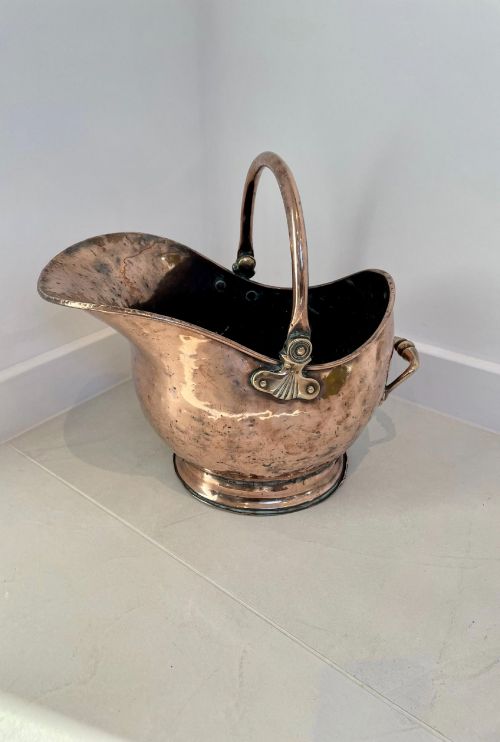
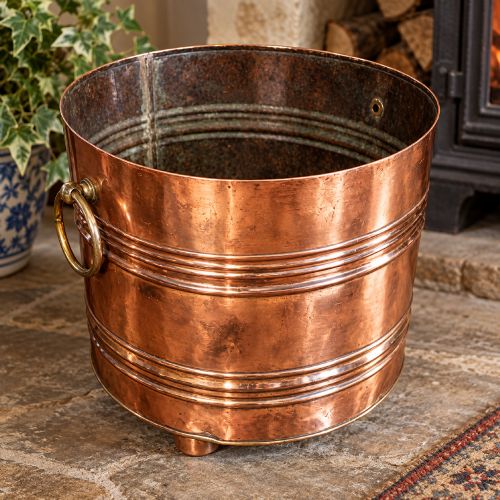
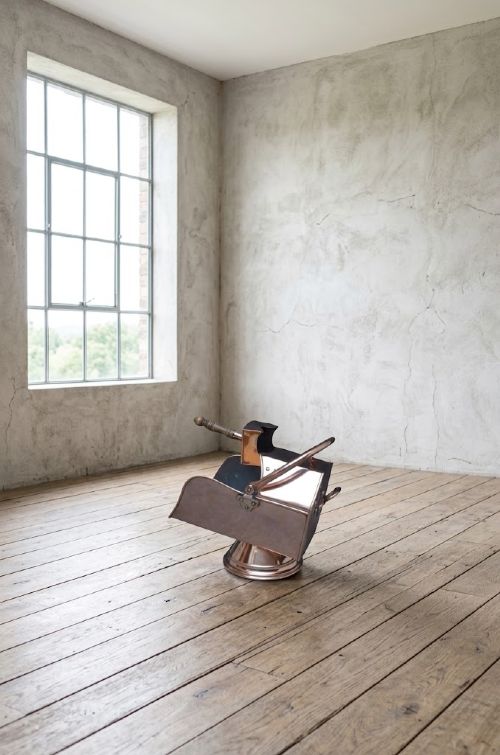
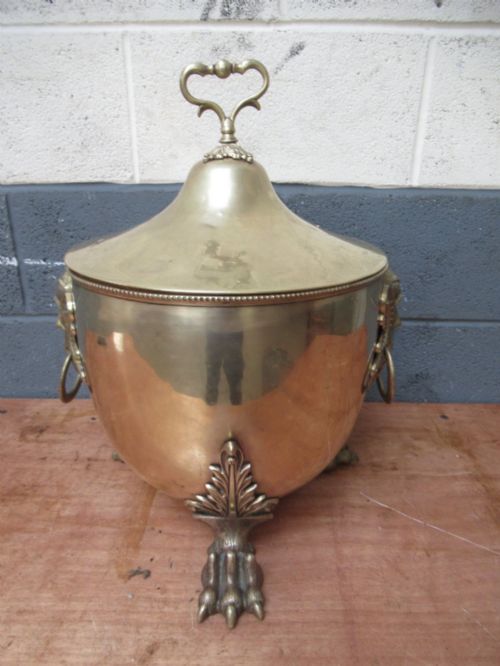
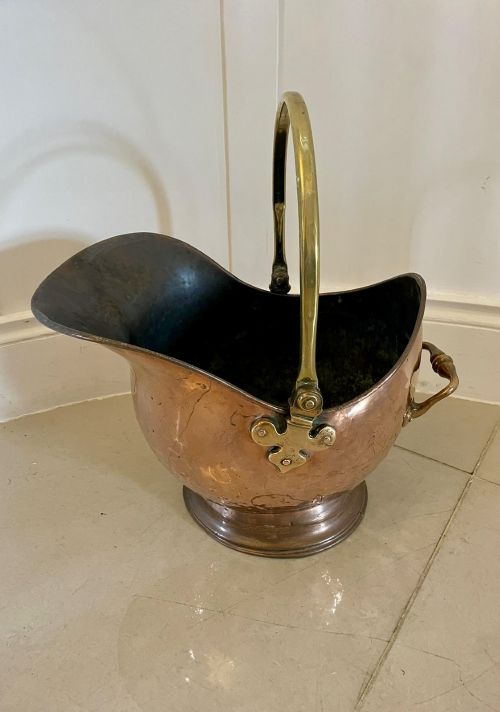
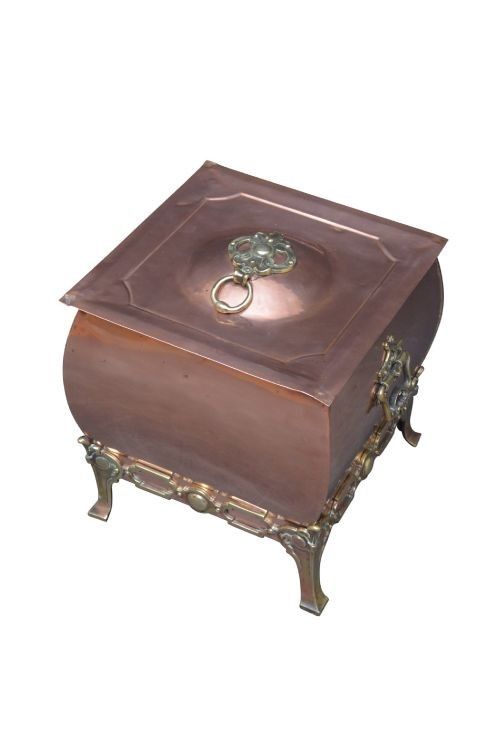
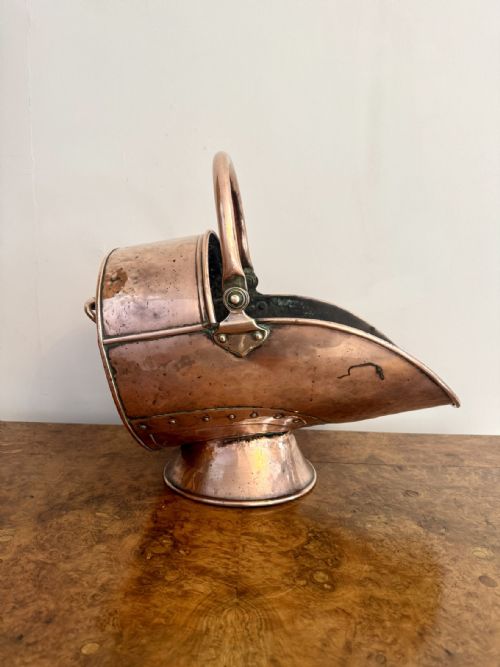
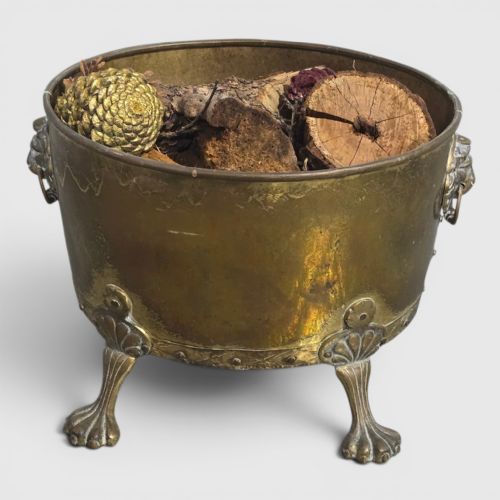
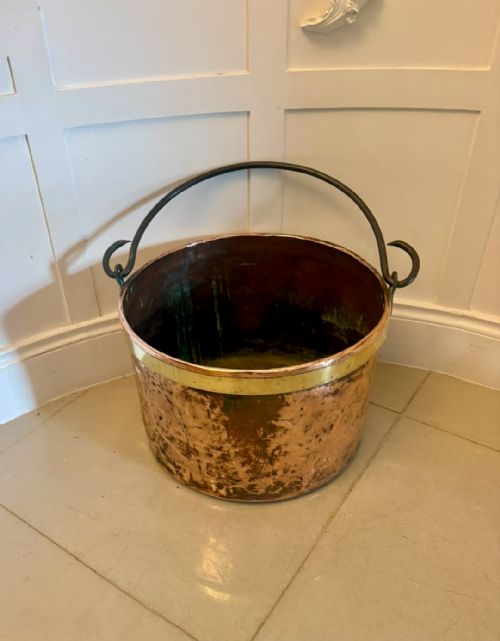
An antique metal scuttle is a practical fireside accessory designed to hold coal, logs, or kindling near the hearth. The forms range from helmet-shaped buckets to lidded bins, often doubling as planters or jardinières in modern interiors.
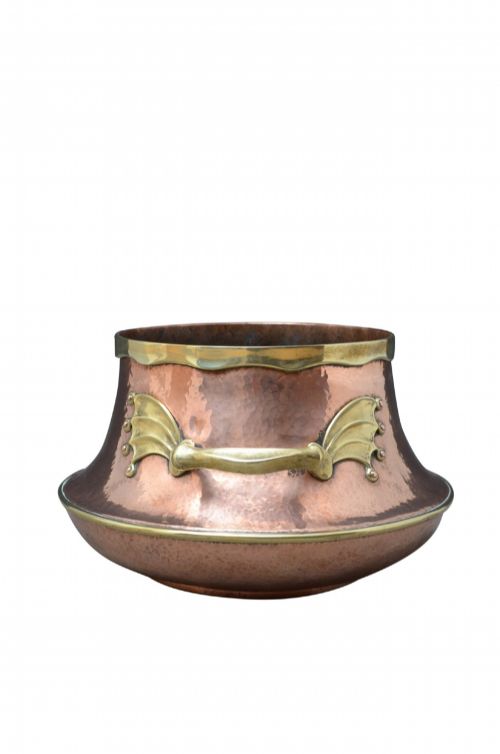
You will most frequently meet Victorian and Edwardian examples made of copper or brass, alongside earlier George III pieces and robust Arts and Crafts designs.
These vessels sit naturally beside open fires and wood-burning stoves, serving both their original purpose and acting as sculptural containers in living spaces.
How they were made
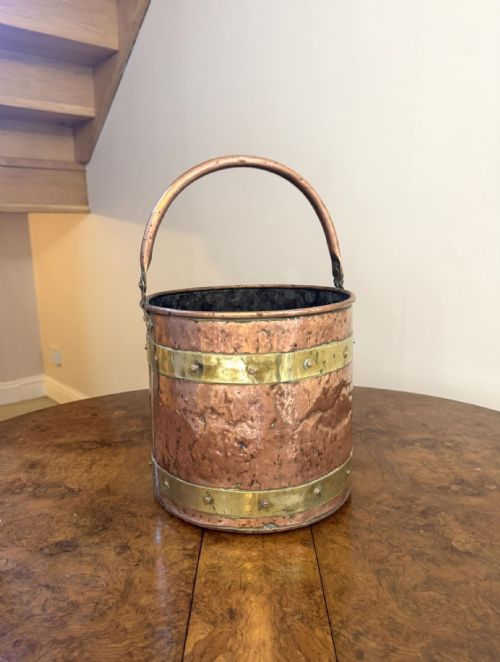
Makers shaped sheet iron, copper, and brass using hand-riveting, hammering, and soldering techniques to build durable containers that could withstand daily heavy use. Many pieces incorporate wrought iron handles, brass bands, and cast feet for added structural support.
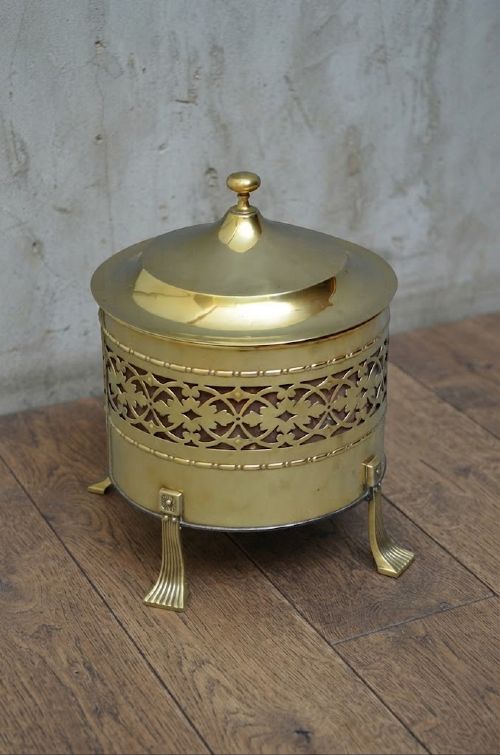
Surface treatments included hand-beaten finishes, particularly in Arts and Crafts examples, and detailed fretwork designs seen on Edwardian brass buckets.
Listings feature items spanning from George III and Victorian eras through to the Edwardian period and the 1930s.
What varies in quality
The distinction between standard utility items and finer pieces lies in the weight of the metal, the crispness of the hand-hammering, and the integrity of the joints and handles. Heavy-gauge copper and thick brass retain their structural rigidity and polish better over time.
Proportion and decorative restraint set apart superior examples, where riveted seams, original swing handles, and matching shovels integrate harmoniously rather than looking purely utilitarian.
Petrus Ramus
The Antique Metal Scuttle Glossary
- Helmet scuttle
- A coal container featuring a flared mouth and a footed base, designed for pouring fuel cleanly. The shape derives from military headwear popular in the Georgian and Victorian periods.
- Tole ware
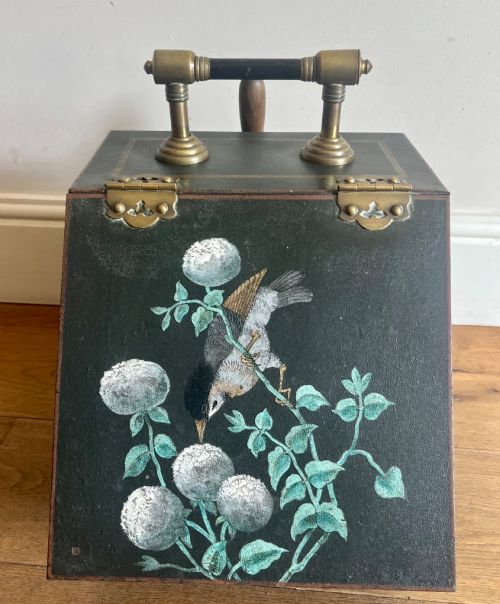
- Lacquered or enamelled sheet metal items decorated with painted designs. This technique offered colourful alternatives to plain brass or copper.
- Jardiniere
- An ornamental pot or receptacle for holding plants or flowers. Many metal coal buckets serve this secondary function today.
- Fretwork
- Ornamental openwork patterns cut into sheet metal or wood. Edwardian makers often applied this technique to brass bucket rims.
- Riveting
- A method of joining sheet metal using metal pins hammered flat to secure overlapping seams. Visible hand-riveting indicates traditional construction methods.
Antique Metal Scuttle: Frequently Asked Questions
How do I clean an antique metal scuttle?
Wash the surface gently with warm soapy water and a soft cloth to remove dust and soot. Avoid harsh abrasive cleaners that strip the historic patina from copper and brass.
Dry the metal thoroughly to prevent water spotting. If you prefer a polished shine, apply a suitable metal polish sparingly, though many collectors leave the aged surface untouched.
Can I use these for logs today?
These vessels were built to hold fuel and handle daily fireside duties. They function well for storing logs or kindling beside modern hearths.
Check for any small holes or missing liners if you plan to use an older piece for holding damp wood or wet garden plants.
How do I date a copper scuttle?
Examine the construction methods and stylistic details of the piece. Hand-riveted seams and heavy gauge copper often point to the nineteenth century or earlier George III periods.
Lighter construction, machine stamping, and specific decorative motifs like Edwardian fretwork help distinguish later twentieth-century or 1910s examples.
Why do some have liners?
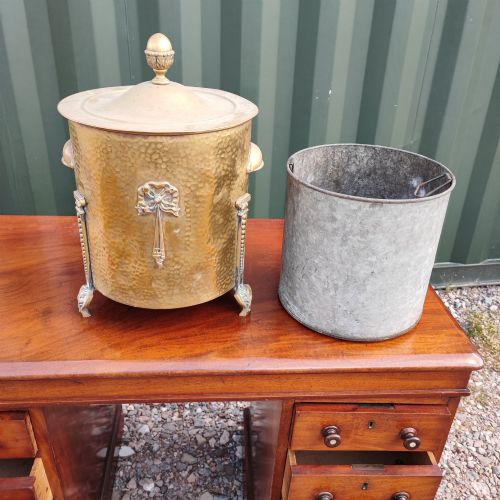
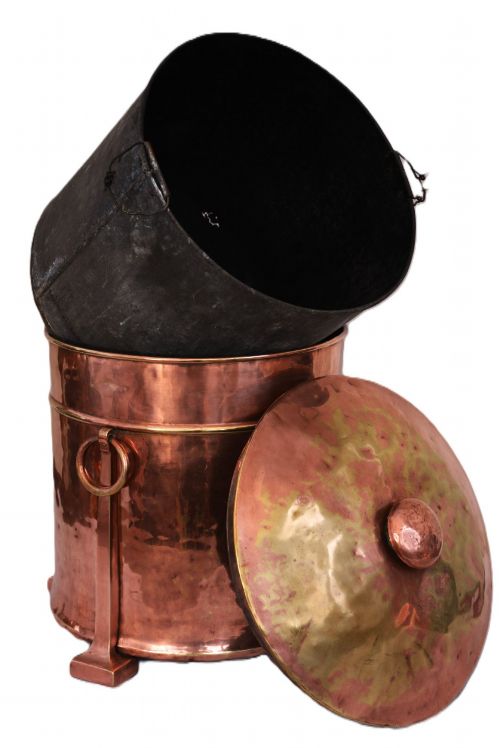
Original metal or ceramic liners protected the outer shell from moisture and coal dust corrosion. They caught debris and made emptying the container cleaner.
Finding a scuttle with its original inner vessel adds utility and completeness to the piece.