



Antique Metal Purdonium
An antique metal purdonium is a fireside coal container designed to hold solid fuel neatly beside a hearth.
Antique Metal Purdonium
When you search for an antique metal purdonium, you are looking at fireside accessories made to store coal, logs, or kindling. These receptacles date from the nineteenth century through the Edwardian period, encompassing Victorian and later manufacturing eras.
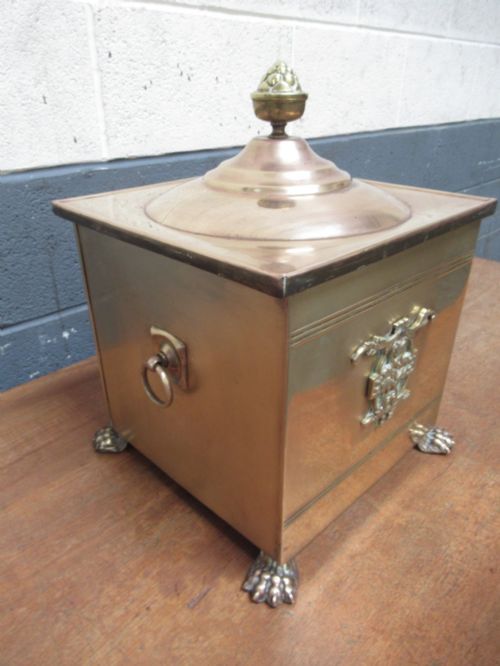
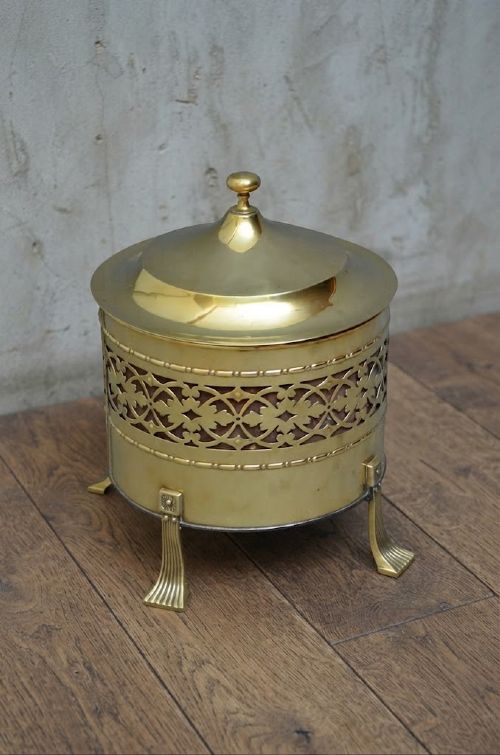
The most common examples you will meet on this page are constructed from brass or copper, frequently styled with Arts and Crafts, Art Nouveau, or traditional Victorian decoration. Many double as coal buckets or bins, and some include internal liners or matching scoops.
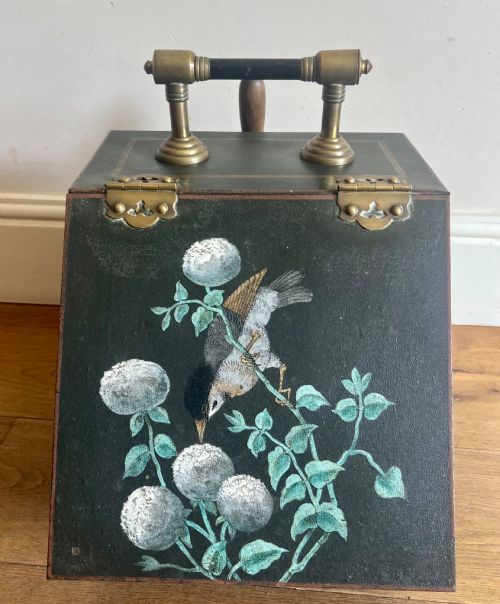
Makers produced these items to sit prominently by the fireplace, combining practical fuel storage with decorative metalwork. Formats range from lidded boxes and upright buckets to painted metal tole ware and heavy industrial designs.
How they were made
Makers utilised sheet iron, copper, and brass as the primary materials for these fireside containers, often combining metals to create contrasting bodies and trims. Some examples incorporate wooden elements or iron frameworks to add structural rigidity.
Construction techniques involved beating, riveting, and soldering sheet metal into rigid forms, supplemented by cast brass handles and hinges. Surface decoration was achieved through hammering, fretwork piercing, repoussé work, and painted finishes.
Antique Metal Purdonium Retail Price Guide 2026
Typical asking prices for metal purdonium among the pieces listed under this phrase on Sellingantiques today, from the lower quarter to the upper quarter. They describe what is for sale here now, not the wider market.
What varies in quality
Quality in these fireside pieces rests upon the thickness of the metal used for the body and the integrity of the internal liner. Substantial gauge brass and copper resist dents better and hold their shape under the daily weight of coal.
The refinement of the decorative details distinguishes standard production from superior examples. Hand-beaten surfaces, intricate fretwork designs, and secure joints indicate careful workshop production rather than mass fabrication.
William Soutter And Sons
The Antique Metal Purdonium Glossary
- Purdonium
- A decorative coal box or scuttle designed for domestic fireside use. It typically includes a hinged lid or drop-front mechanism.
- Tole ware
- Lacquered or painted sheet metal items produced for domestic utility and decoration. This technique allowed for colourful painted finishes on iron bases.
- Repoussé
- A metalworking technique where the metal is hammered from the reverse side to form a raised design in relief. It appears frequently on Arts and Crafts metalwork.
- Fretwork
- Openwork ornamentation cut into sheet metal or wood to create patterns. This method decorates the panels and galleries of many Edwardian receptacles.
- Kindling basket
- An open container intended for small dry wood used to start fires. These pieces often match the larger coal bins in material and finish.
Antique Metal Purdonium: Frequently Asked Questions
What is a metal purdonium?
A metal purdonium is a Victorian or Edwardian coal box designed to keep fuel tidy beside a domestic fireplace.
These pieces usually feature a hinged lid or drop front and often contain a removable metal liner for carrying coal cleanly.
How do I clean antique brass?
Cleaning antique brass depends on the level of patination you prefer to maintain on the surface. Light dusting and gentle wiping keep the metal clean without removing the historic character.
Avoid harsh modern chemical abrasives that strip away the aged finish accumulated over the decades.
Can I use these for logs?
Many of these containers serve as log bins or fuel stores alongside their original function for coal. Their sturdy metal construction accommodates wood and kindling comfortably.
Check the interior dimensions and liner condition to ensure dry logs fit securely inside the container.
How old are these bins?
The pieces available date from the mid-nineteenth century through the Edwardian era around nineteen hundred. Stylistic details such as Arts and Crafts motifs help identify the specific period of manufacture.
Victorian examples often display heavier cast brass fittings, whereas Edwardian pieces lean towards lighter fretwork designs.