





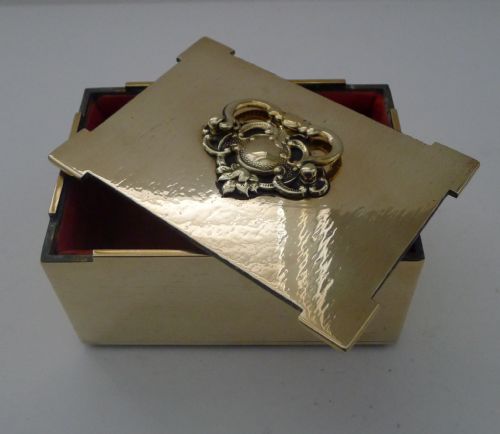

Antique Metal Jewellery Box
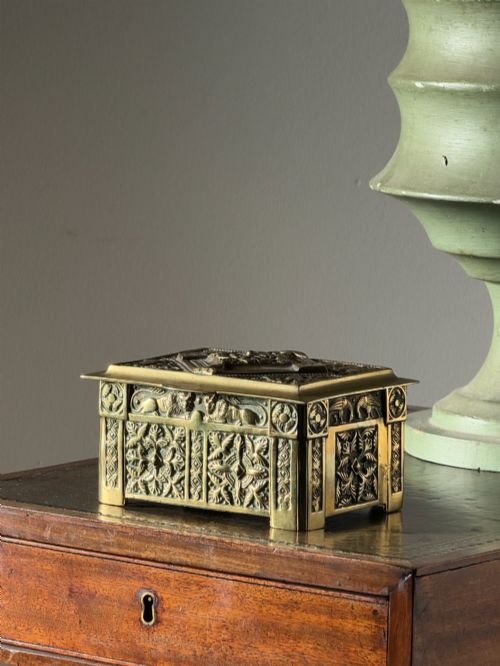
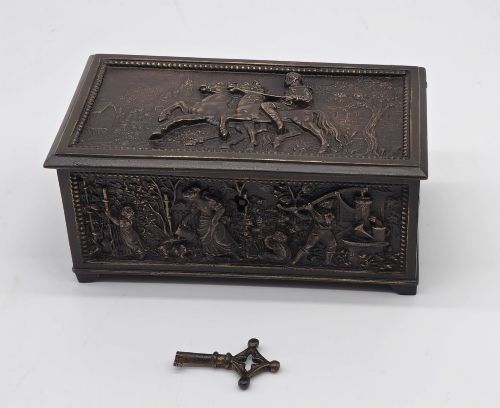
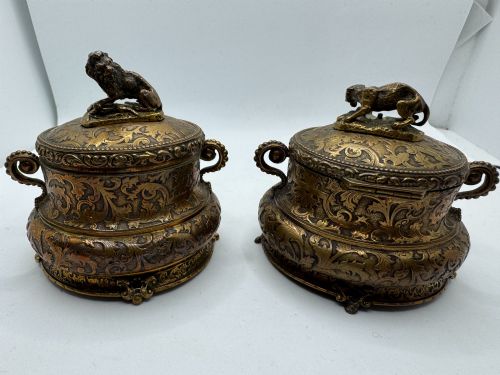
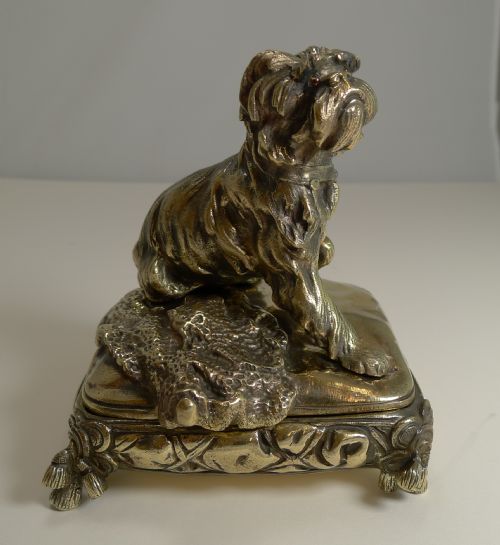
These antique metal jewellery boxes range from heavy cast bronze caskets to beaten copper and enamel coffers, offering secure housing for precious trinkets.
Antique Metal Jewellery Box
The forms vary widely from miniature domed trunks and glass-panelled caskets to small strong boxes and hinged coffers mounted with enamel plaques or pietra dura panels. Many pieces double as decorative desk ornaments or boudoir accessories, lined with velvet or silk to protect delicate rings and necklaces.
Origin and period dictate much of the character, with Continental workshops producing ornate ormolu and champleve enamelled pieces whilst British makers favoured Arts and Crafts pewter and riveted steel. The selection here reflects these diverse stylistic currents across the nineteenth and early twentieth centuries.
Materials and construction methods
Metals such as brass, bronze, copper, and pewter form the structural core of these pieces, frequently enhanced by fire gilding, silver plating, or ormolu finishes. Makers employed casting, electro-forming, and hand-beating techniques to shape the body before applying decorative surface treatments.
Detailing often incorporates inset glass panels, Limoges miniatures, hand-painted ceramic plaques, cloisonne or champleve enamel, and pietra dura stonework. Hinges, locks, and dog finials are typically cast separately and secured with pins or rivets to the main body.
Antique Metal Jewellery Box Retail Price Guide 2026
Typical asking prices for metal jewellery box among the pieces listed under this phrase on Sellingantiques today, from the lower quarter to the upper quarter. They describe what is for sale here now, not the wider market.
Distinguishing quality in metal boxes
The standard of an antique metal jewellery box rests on the crispness of its casting, the weight of the metal used, and the integration of decorative elements like enamel or micro-mosaics. Superior pieces show hand-chased definition in the metalwork rather than flat, mass-produced surface moulding.
Internal condition and the survival of original silk or velvet linings also separate fine examples from ordinary utility boxes. High quality work is evident in the precision of the hinge action, the snug fit of the lid, and the originality of the lock and key.
Jacob Amyand·S Theeman·Walker and Hall
The Antique Metal Jewellery Box Glossary
- Ormolu
- Gilded bronze or brass, typically created by applying a mercury-gilt amalgam to cast metal during the eighteenth and nineteenth centuries. This finish gives a warm, deep gold appearance that resists tarnishing.
- Casket
- A small decorative box or chest used for holding jewellery, letters, or precious items. They frequently feature elaborate locking mechanisms and hinged lids.
- Champleve
- An enamelling technique where troughs or cells are hollowed out of a metal surface and filled with vitreous enamel paste before firing. The surrounding metal lines remain visible as part of the design.
- Pietra dura
- An artistic technique using cut and fitted polished coloured stones to create geometric or pictorial images. It appears frequently on the lids of nineteenth century Italian boxes.
- Repousse
- A metalworking technique where the malleable material is hammered from the reverse side to create a raised design in relief on the front. This method is common in Arts and Crafts copper and pewter boxes.
Antique Metal Jewellery Box: Frequently Asked Questions
What were antique metal jewellery boxes used for?
These boxes served as secure receptacles for valuable rings, necklaces, and personal trinkets kept on dressing tables or desks. Wealthy owners utilised them both for safekeeping and as decorative display pieces in private chambers.
Over time their uses expanded to include holding visiting cards, cigars, or secret letters. The velvet or silk interiors protected delicate gems from scratching against the rigid metal walls.
How do I date a metal jewellery box?
Dating relies on stylistic clues, manufacturing techniques, and occasional maker marks stamped into the brass or bronze. Pieces from the early nineteenth century often reflect Regency or Georgian neoclassical tastes.
Later Victorian and Edwardian examples lean towards Gothic Revival, Art Nouveau, or Arts and Crafts aesthetics. The presence of electro-plating usually points to a date after the mid-nineteenth century.
Are these boxes fragile?
While the metal structures themselves are robust, inset elements like glass panels, enamel plaques, and stone inlays require careful handling. Hinges and locking mechanisms can also weaken with age if forced.
Placing the box on a stable surface away from damp environments preserves the original gilding and internal fabric linings. Gentle dusting is all that is required for routine maintenance.
How should I clean an antique metal box?
You should avoid using harsh metal polishes that can strip away original gilt, silver, or patinated finishes. A soft, dry cloth is sufficient to remove surface dust without harming delicate patinas.
If the box has glass or ceramic panels, clean those specific areas cautiously with a damp cloth while avoiding the surrounding metal mountings. Preserving the natural age of the metal maintains both its character and historical integrity.