




Antique Medical Glass Jar
These antique medical glass jars bring the quiet gravity of the old dispensary into a room.
Antique Medical Glass Jar
An antique medical glass jar encompasses hand-blown pharmacy carboys, chemist bottles, and gelatine jars originating from the Georgian, Victorian, and early twentieth-century periods. These vessels once held tinctures, dry drugs, and chemical compounds in apothecaries and dispensaries.
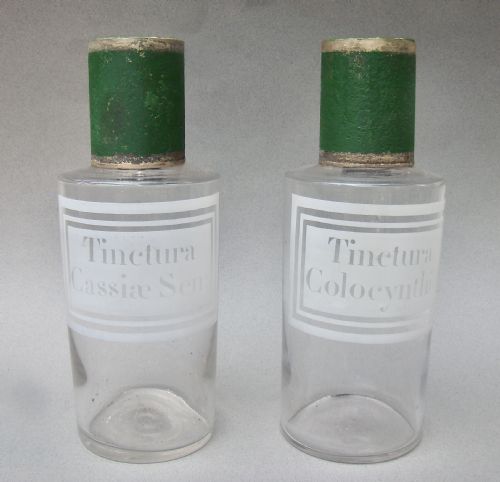
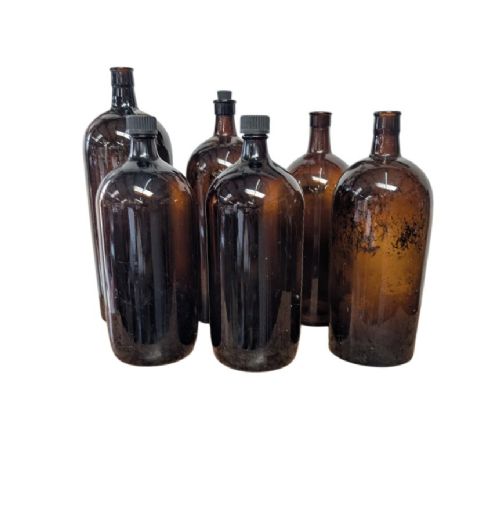
Buyers searching for an antique medical glass jar most frequently encounter nineteenth-century examples and amber Winchester bottles from the 1930s. The selection spans French etched vessels, large carboys, and sets of small pharmacy bottles.
Forms range from tall display carboys intended for shop windows to smaller drug bottles meant for shelves and medicine chests. Each piece records the utilitarian needs of historical medical practice through functional glass shapes and paper labels.
Materials and construction
Makers formed these pieces using traditional glass-blowing techniques, resulting in natural bubbles, pontil marks, and slight irregularities in the heavy walls. Clear and amber glass dominate the evidence, shaped into heavy apothecary jars and bottles.
Surface decoration and labelling relied on acid-etching, hand-painting, and applied paper labels highlighted with gold leaf. Brass and metal hardware occasionally appear on related cabinets and closures, while plastic surfaces mark later twentieth-century iterations.
Antique Medical Glass Jar Retail Price Guide 2026
Typical asking prices for medical glass jar among the pieces listed under this phrase on Sellingantiques today, from the lower quarter to the upper quarter. They describe what is for sale here now, not the wider market.
Some bottles retain traces of dried gelatine, reminding modern owners of the sticky remedies once measured out for Victorian patients.
Variations in quality
Quality rests upon the clarity and weight of the blown glass, alongside the presence of original stoppers and legible etched or paper labelling. Hand-etched French decoration or early hand-blown character separates finer display pieces from standard utilitarian bottles.
The survival of original surface details, such as gilt lettering and intact covers, elevates certain pieces above plain storage vessels. Scale also plays a part, as large carboys and matching sets command greater visual presence than single small vials.
The Antique Medical Glass Jar Glossary
- Carboy
- A large, globular glass bottle with a narrow neck, traditionally used in apothecaries for holding and displaying bulk liquids.
- Apothecary
- A historical practitioner who prepared and sold medicines and drugs to physicians and patients.
- Pontil mark
- The scar left on the base of a hand-blown glass vessel where the pontil rod was snapped off after shaping.
- Winchester
- A standard heavy glass bottle design with a narrow neck and screw or glass stopper, frequently made in amber.
Antique Medical Glass Jar: Frequently Asked Questions
What did they hold?
These glass vessels contained liquid tinctures, dry chemicals, pharmaceutical powders, and medicinal preparations used by chemists and doctors.
Larger carboys held distilled water or bulk stock solutions in shop windows, while smaller bottles sat on dispensary shelves.
How old are they?
The pieces span from the Georgian period through the Victorian era up to the 1930s.
Hand-blown examples with pontil marks generally date to the nineteenth century, whereas amber Winchester bottles often point to the twentieth century.
Are stoppers original?
Many jars and bottles retain their matching glass stoppers, which were ground to fit individual necks during manufacture.
Finding a vessel with its original cover or stopper is desirable for completeness and historical accuracy.
How do I clean them?
Gentle washing with warm water and mild soap preserves the delicate interior residue, aged glass surfaces, and old paper labels.
Avoid soaking paper labels or gold leaf accents, as moisture can easily detach historical adhesives and decoration.