



Antique Marquetry Shelf
An antique marquetry shelf brings together fine timber and precise contrasting veneers to form a functional display surface.
Antique Marquetry Shelf
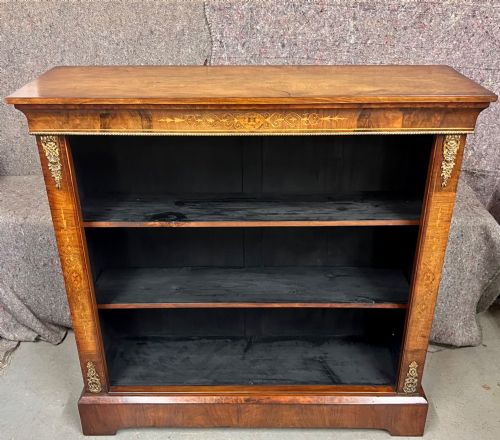
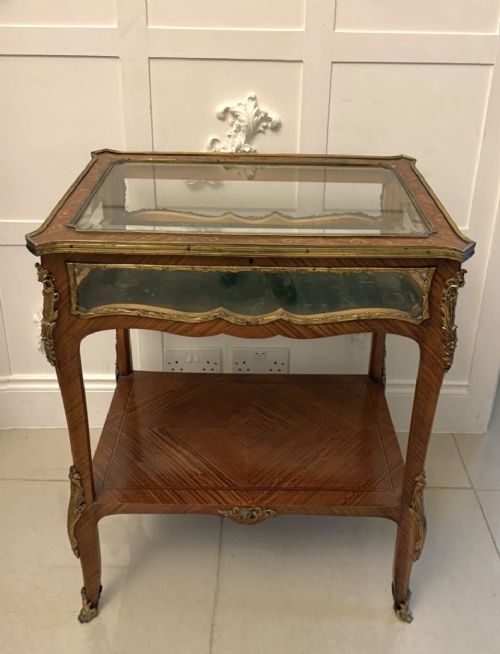
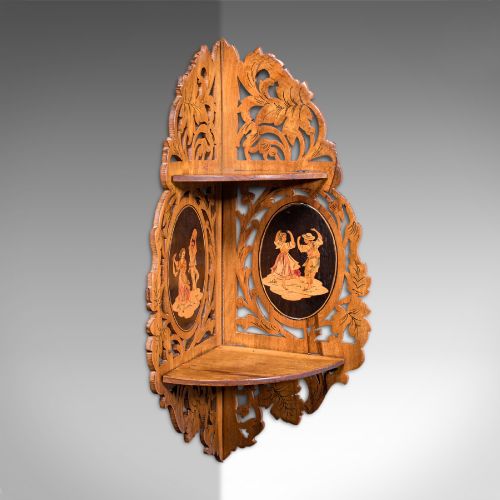
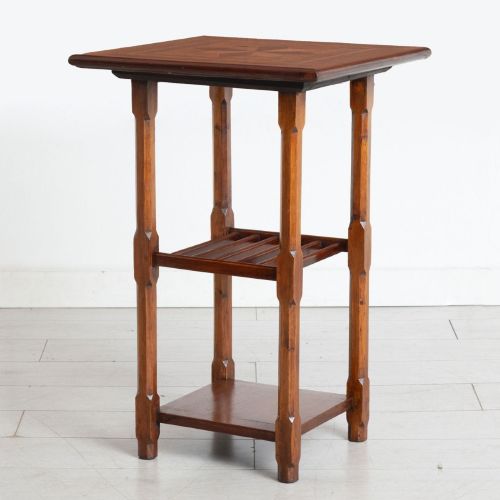
When searching for an antique marquetry shelf, buyers encounter several distinct furniture forms across the Victorian, Edwardian, and nineteenth-century periods. The listings show these pieces appearing as corner whatnots, etageres, hanging bookshelves, and display cabinets incorporating integrated wooden ledges. Walnut, mahogany, rosewood, and satinwood provide the structural foundation for these tiered surfaces.
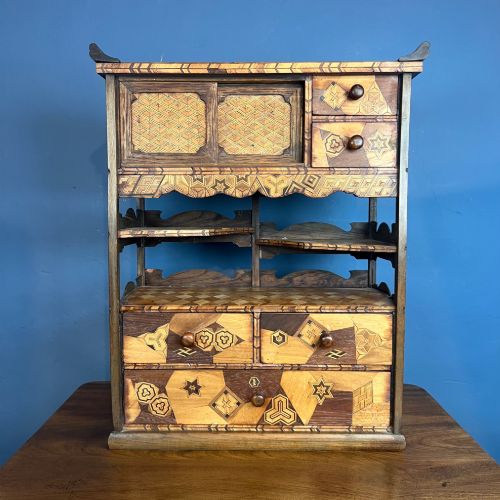
The decorative inlay work defines the character of each piece, utilising floral or geometric motifs set into the primary timber. Most examples date from the late nineteenth century and the Edwardian era, reflecting prevailing tastes for ornate display furniture in domestic interiors. These multi-tiered units served to display ornaments, small clocks, and collectibles in formal reception rooms.
Regional variations emerge through French imports alongside British production in Sheraton revival and Arts and Crafts styles. Buyers frequently meet smaller wall-mounted shelves, corner stands, and freestanding etageres equipped with multiple ascending levels. The integration of marquetry panels distinguishes these functional ledges from plain utilitarian shelving.
Construction and inlay techniques
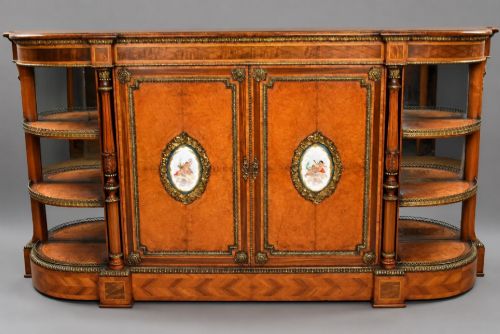
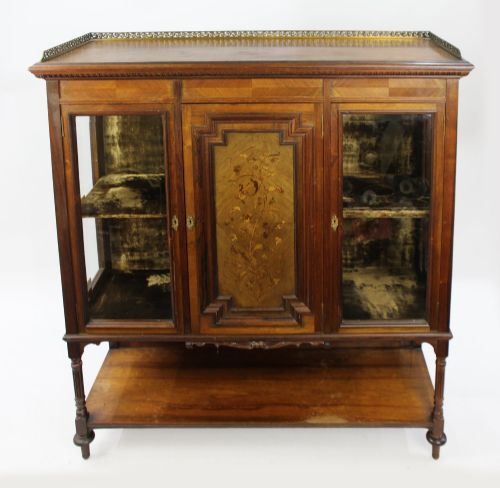
Craftsmen built the main carcase using dense cabinet timbers such as mahogany, walnut, and rosewood, often shaping them into curved corner units or multi-tiered etageres. Marquetry and parquetry elements were then hand-cut from contrasting woods like satinwood and olive wood, fitted precisely into recessed channels within the primary surface. Brass mounts, ormolu, and glass components frequently supplemented the timber construction on larger cabinets and credenzas.
The assembly relies on traditional joinery techniques appropriate to each period, from nineteenth-century dovetailing to Edwardian framing methods. Surface finishing involved polishing the timber to highlight the grain while protecting the delicate veneer work embedded in the friezes and shelves. Inlaid borders and brass stringing frequently outline the edges of the display platforms.
Antique Marquetry Shelf Retail Price Guide 2026
Typical asking prices for marquetry shelf among the pieces listed under this phrase on Sellingantiques today, from the lower quarter to the upper quarter. They describe what is for sale here now, not the wider market.
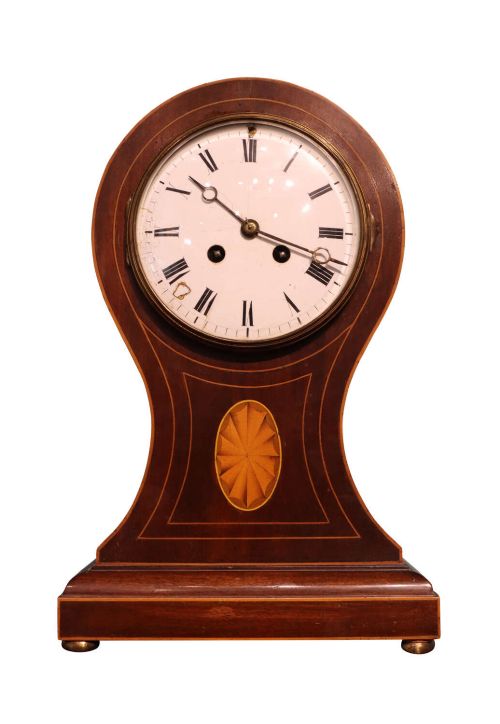
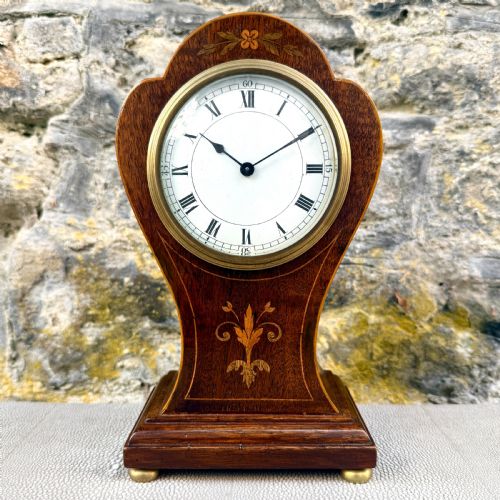
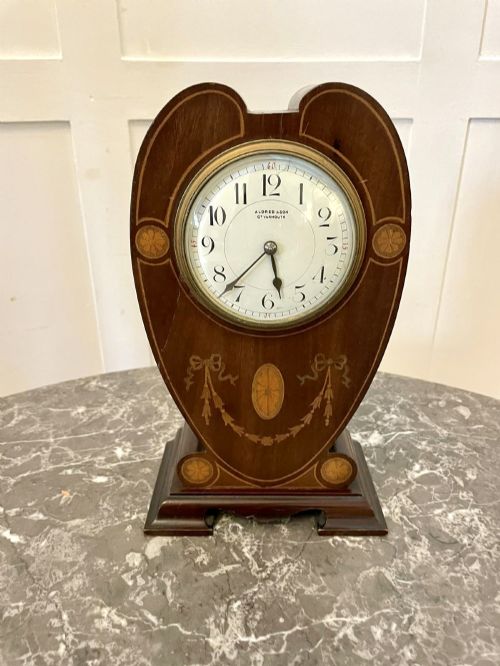
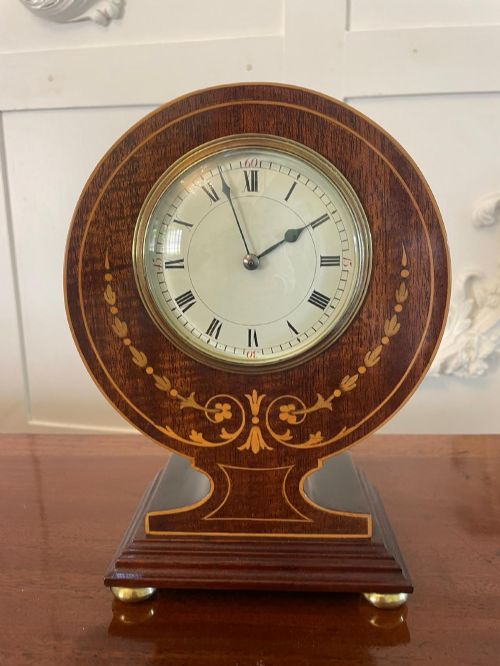
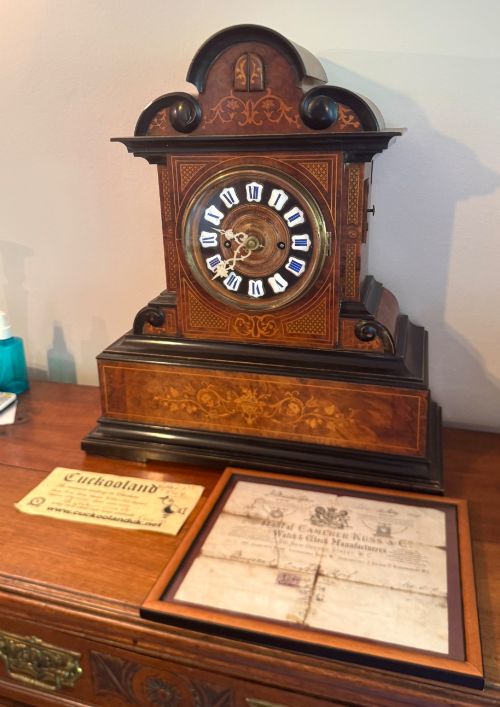
Several pieces combine timekeeping with display, mounting miniature clock movements directly into the centre of towering inlaid wall shelves and brackets.
Assessing quality in inlaid shelving
The refinement of the veneer work separates standard production from exceptional pieces, particularly in the complexity and tightness of the marquetry cutting. Precision in the fitting of contrasting woods without excessive filler indicates superior cabinet-making standards.
The choice of primary and secondary timbers also dictates value, with figured burr walnut, satinwood, and rich rosewood commanding greater regard than plain secondary woods. Surviving original surface patination and crispness in cast brass or ormolu mounts preserve the integrity of the piece.
Gillows·Maple & Co.
The Antique Marquetry Shelf Glossary
- Marquetry
- Decorative veneer work forming pictorial or geometric patterns by assembling small pieces of various woods. It transforms a simple flat surface into an elaborate picture.
- Etagere
- A set of open shelves for displaying small objects, standing on legs or mounted to a wall. Originating in France, these multi-tiered stands became popular in Victorian interiors.
- Whatnot
- A tiered piece of freestanding furniture with three or more platforms supported by slender columns or uprights. It was designed specifically for holding ornaments and books.
- Parquetry
- Geometric mosaic woodwork used for floors or furniture surfaces, created from contrasting timber blocks. Unlike marquetry, it relies strictly on repeating angular patterns.
- Ormolu
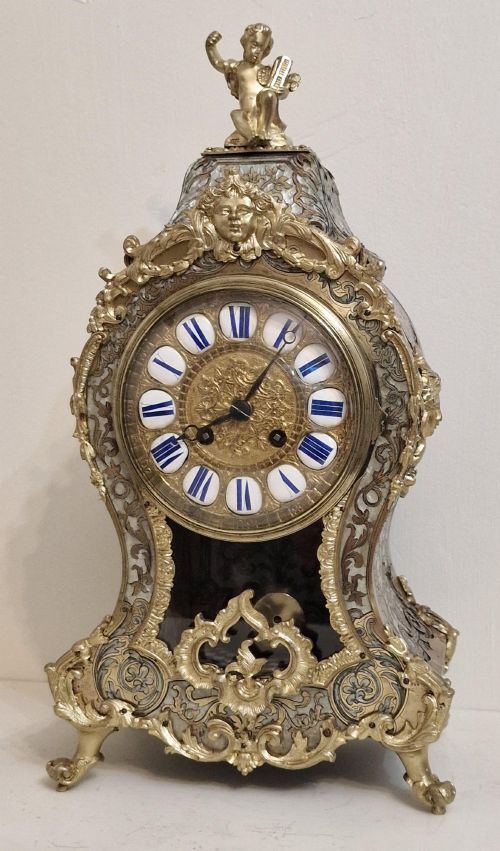
- Gilt bronze ornamentation applied to furniture mounts, clock cases, and decorative shelving during the nineteenth century. It provides a bright metallic contrast against dark rosewood and walnut.
Antique Marquetry Shelf: Frequently Asked Questions
What rooms suit an antique marquetry shelf?
These tiered units function well in hallways, living rooms, and studies where vertical display space is required without occupying a large floor footprint.
Smaller hanging shelves and corner etageres fit easily into compact spaces while offering stable platforms for decorative ceramics and small clocks.
How do I care for inlaid wood surfaces?
Keep wooden furniture away from direct sunlight and steady heat sources to prevent the delicate veneer from drying out and lifting.
Apply a microcrystalline wax sparingly to maintain the polish and protect the timber grain without building up heavy residues.
Are these shelves structurally sound for heavy books?
Most multi-tiered étagères and whatnots were constructed primarily for display ornaments rather than heavy library volumes.
Wall-mounted hanging shelves require secure fixings into solid masonry or stud work to support the weight of timber and decorative objects safely.
How can I distinguish Victorian from Edwardian styles?
Victorian pieces tend to feature darker timbers such as rosewood and burr walnut with dense, heavy ornamentation and robust proportions.
Edwardian examples frequently utilise lighter satinwood and mahogany with refined Sheraton revival influences and airier, more restrained silhouettes.