



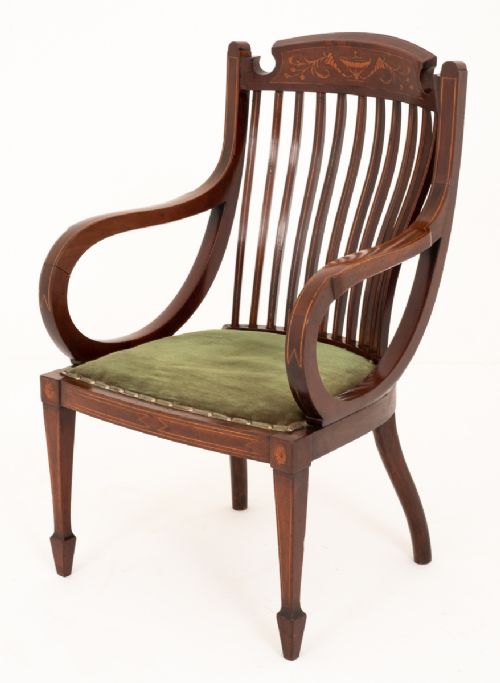
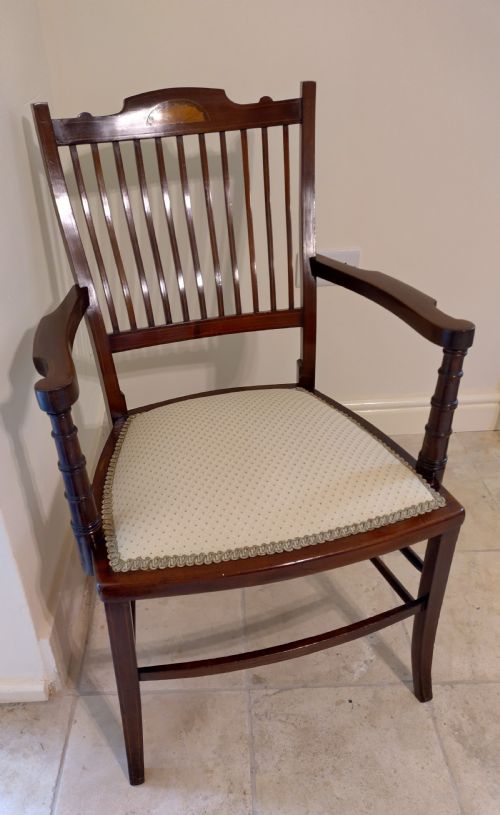


Antique Marquetry Carver Chairs
These antique marquetry carver chairs combine sturdy timber frames with intricate contrasting wood inlay, offering both functional seating and striking historical decoration.
Antique Marquetry Carver Chairs
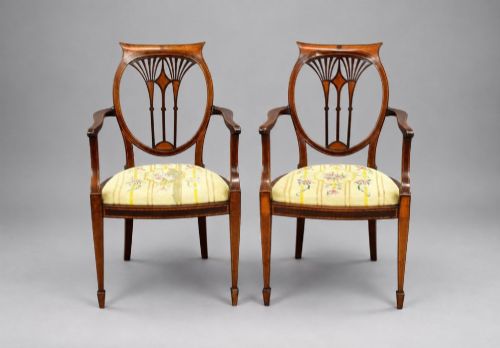
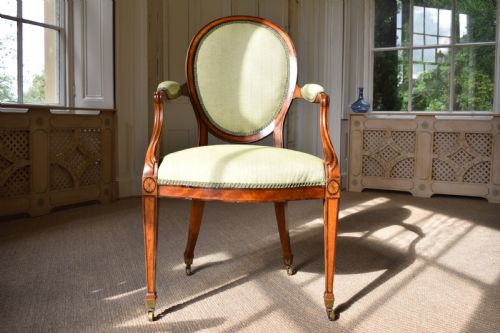
When you search for antique marquetry carver chairs, you encounter open armchairs and elbow seats distinguished by decorative wood or brass patterns set into the primary timber. The selection spans periods from the late eighteenth century through the Victorian era and the Edwardian years.
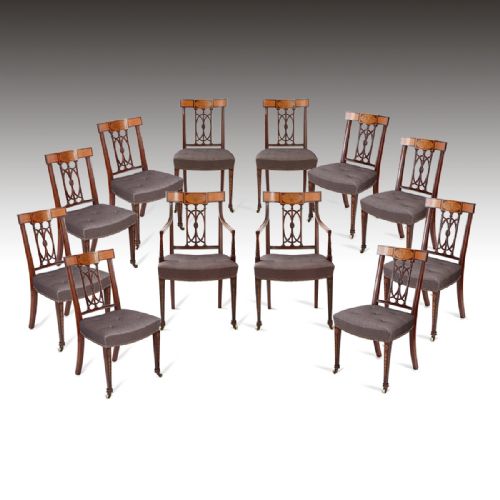
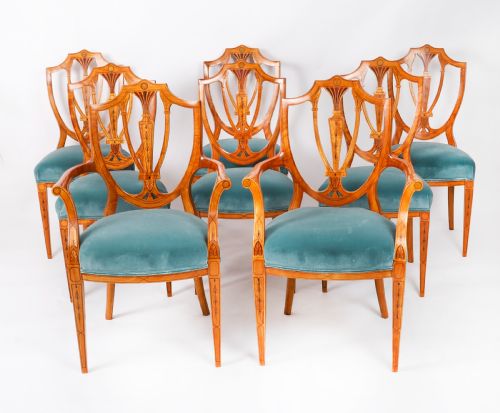
The assortment includes matched pairs and larger dining sets alongside individual elbow chairs. Formats range from high-backed Dutch marquetry chairs to shieldback satinwood designs and petal-backed Victorian seating.
Materials and construction methods
Cabinet makers built the primary frames of these chairs using solid timbers such as mahogany, walnut, rosewood, and satinwood. These structural woods provided the necessary durability for daily seating while offering a stable base for decorative surface work.
Artisans created the characteristic ornamentation through wood inlay, fruitwood inlay, and brass detailing. Skilled hands fitted contrasting veneers and metal strips into recessed channels within the timber surface to form floral, geometric, or classical motifs.
Listings feature Edwardian, Victorian, and Regency periods alongside George III examples, constructed primarily in mahogany, walnut, and satinwood.
Distinguishing quality across the range
Quality rests upon the precision of the joinery and the intricacy of the inlay work. Finer examples display seamless integration of contrasting veneers where individual pieces fit flush without visible gaps or excessive filler.
The choice of primary timber and secondary woods also dictates standing. Dense, well-figured mahogany or satinwood paired with complex, multi-toned floral or pictorial marquetry marks the upper echelon of these armchairs.
Cowtan & Sons·Shoolbred·Jenks & Wood·John Gee
The Antique Marquetry Carver Chairs Glossary
- Marquetry
- The art of forming decorative patterns by fitting together contrasting veneers of wood or other materials onto a structural surface. This technique creates detailed pictorial or abstract designs across the backrests and frames.
- Carver chair
- An armchair, frequently designed with open arms to accommodate formal clothing, often used at the head of a dining table or as a desk seat. These pieces feature prominent armrests integrated into the main frame.
- Shieldback
- A chair back shaped in the contour of a heraldic shield, popularised during the late eighteenth century and revived in later periods. This form provides a broad canvas for delicate inlay and carved detailing.
- Satinwood
- A durable tropical timber known for its yellowish colour and lustrous, reflective grain. Makers utilised this material extensively for high-status eighteenth-century and revival furniture.
Antique Marquetry Carver Chairs: Frequently Asked Questions
What is a carver chair?
A carver chair is an armchair traditionally placed at the ends of a dining table or utilised as a standalone desk seat. These chairs feature supportive armrests designed to accommodate formal historical dress.
In contemporary settings, they function effectively as occasional seating in reception rooms or studies.
How do I date an inlaid chair?
Dating relies on examining the timber species, the style of the inlay, and the overall structural silhouette. For instance, Sheraton Revival pieces exhibit eighteenth-century neoclassical motifs executed with late nineteenth-century manufacturing techniques.
Secondary woods and construction methods visible beneath the seat also offer clear chronological indicators.
Where were marquetry chairs used?
These chairs were stationed in principal rooms of period houses, including morning rooms, dining rooms, and private offices. Their decorative inlay ensured they functioned as display pieces as well as practical seating.
Desk chairs and salon armchairs specifically served workspaces and formal entertaining spaces.
How do I care for antique marquetry?
Preserve marquetry by keeping chairs away from direct heat sources and strong sunlight, which can dry out the timber and loosen delicate veneers. Maintain the surface using appropriate furniture waxes applied sparingly.
Regular, gentle dusting prevents particulate buildup in the recessed channels of the inlay.