




Antique Maritime Figure
These pieces are tangible connections to the sea, capturing human endeavour and coastal life through enduring sculptural and painted forms.
Antique Maritime Figure
When you search for an antique maritime figure, you encounter a diverse array of representations capturing coastal livelihoods and naval subjects. The selection spans sculptural works and flat media, reflecting the lives of fisher folk, sailors, and maritime travellers across different eras.
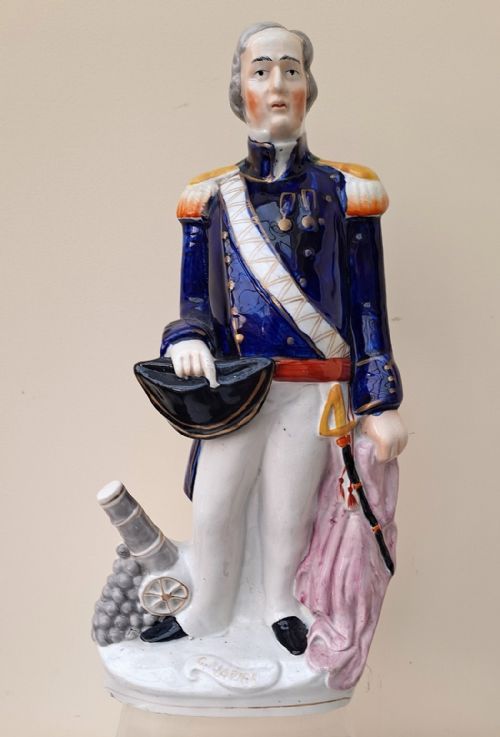
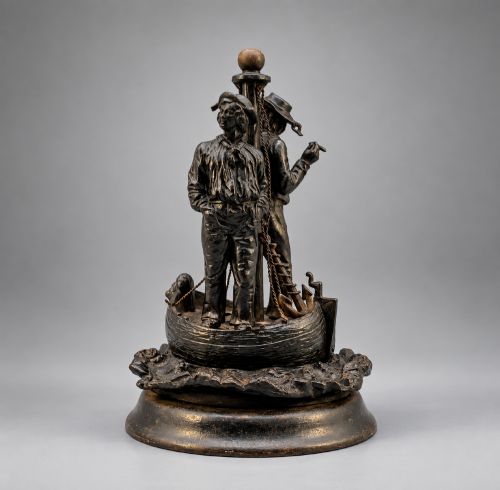
The objects take many forms, from hardwood and bronze carvings to oil paintings, watercolours, and porcelain groups. You meet depictions of fishermen, naval figures like Lord Nelson, and coastal scenes that root the subject firmly in maritime history.
Originating from periods such as the Georgian era, the nineteenth century, and the nineteen-thirties, these pieces range from folk art carvings to academic school paintings. The variety demonstrates how different cultures and makers chose to honour the sea and its people.
Materials and construction methods
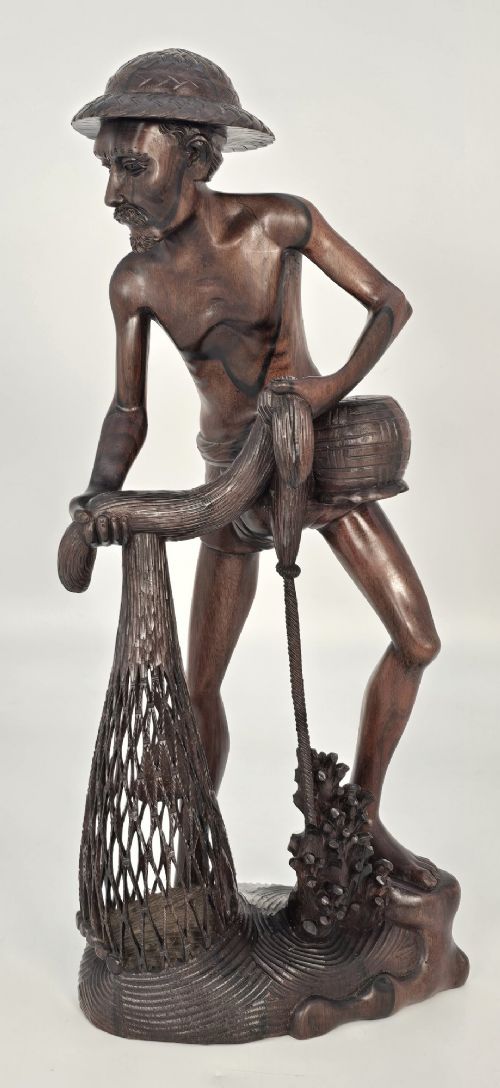
Makers utilised a tangible mix of media, shaping wood, bronze, brass, porcelain, ceramic bisque, whalebone, and plaster into three-dimensional forms. Carvings display the distinct grain of hardwood or the dense texture of bone, while metals like bronze and brass offer durability and fine detail through casting.
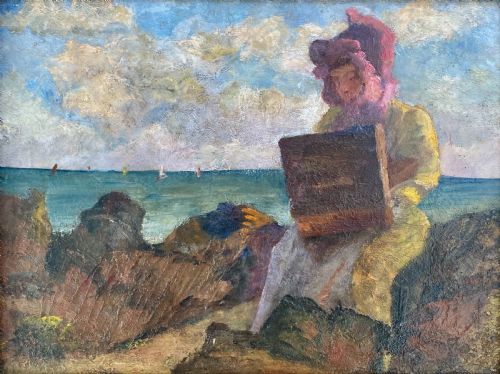
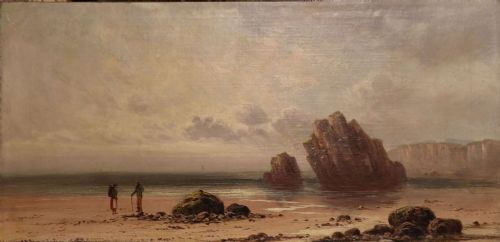
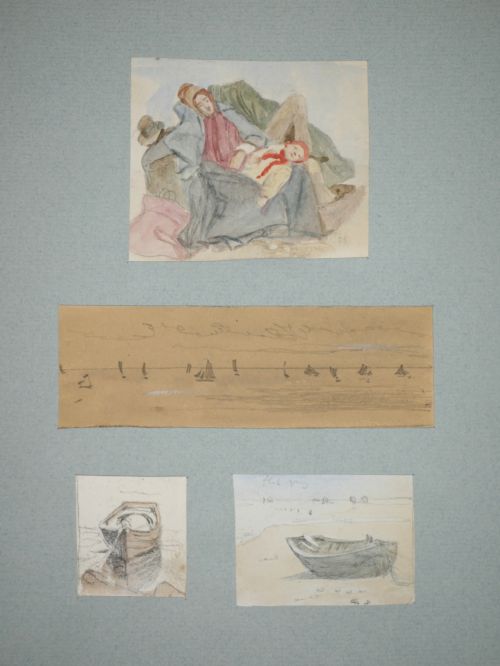
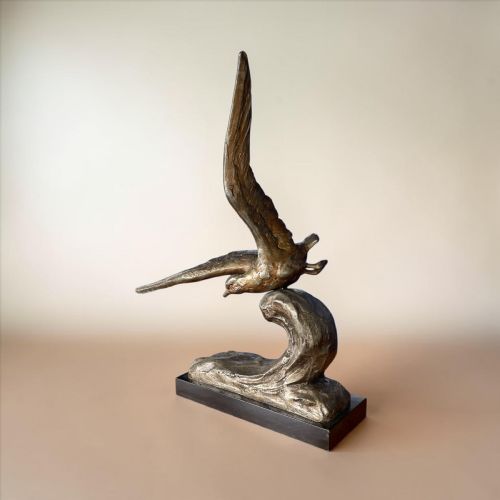
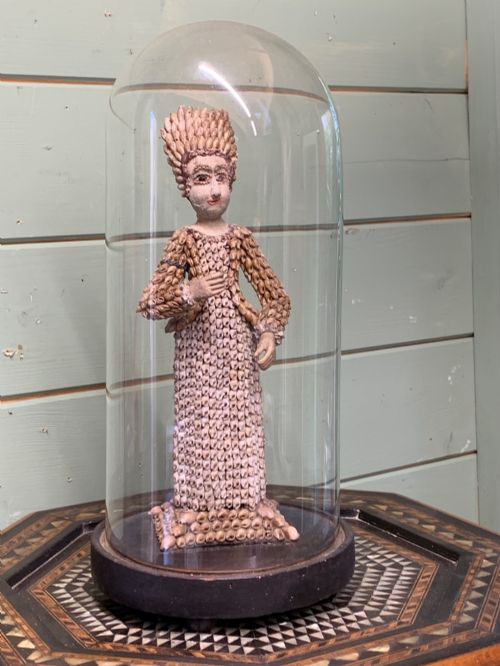
Flat works rely on oil on canvas and watercolour on paper, capturing coastal light and atmospheric sea stacks with pigment. Sculptural pieces often combine materials, mounting bronze birds upon marble plinths or shaping paper and shell into delicate figural constructions.
Antique Maritime Figure Retail Price Guide 2026
Typical asking prices for maritime figure among the pieces listed under this phrase on Sellingantiques today, from the lower quarter to the upper quarter. They describe what is for sale here now, not the wider market.
A lonely albatross wings forever above a crested wave on a heavy black marble plinth.
Distinctions in craftsmanship and execution
Quality rests upon the fidelity of anatomical rendering and the expressive capture of human labour or avian flight. A superior bronze study or a finely carved hardwood fisherman reveals careful attention to posture, clothing, and the textures of sea and rock.
In paintings and works on paper, execution is judged by brushwork control, compositional balance, and the handling of atmospheric light over coastal scenes. The distinction lies in whether the maker achieves a convincing sense of movement and life within the chosen medium.
James Smetham·Ralph Todd·Carleton Grant
The Antique Maritime Figure Glossary
- Bisque
- Unglazed ceramic porcelain that yields a matte, porous surface resembling marble and shows fine sculptural detail without reflective glaze.
- Sea stack
- A geological landform consisting of a steep and often vertical column or columns of rock in the sea, frequently depicted in coastal paintings.
- Hardwood
- Dense timber from broad-leaved trees, chosen by carvers for its strength and ability to hold crisp, enduring maritime details.
- Watercolour
- A painting method in which the paints are made of pigments suspended in a water-based solution, often utilised for marine sketches and coastal scenes.
- Naval
- Relating to a country's navy, appearing in portraits and busts that honour sea-faring commanders and gentlemen.
Antique Maritime Figure: Frequently Asked Questions
What materials were commonly used?
Makers worked in bronze, brass, hardwood, porcelain, ceramic bisque, whalebone, plaster, and paper. These substances were chosen for their durability and suitability for fine carving or moulding.
Flat works relied upon oil paints and watercolours on canvas or paper to capture coastal scenes and maritime portraits.
How do I date these pieces?
Dating relies on stylistic markers associated with periods such as the Georgian era, Victorian times, the nineteenth century, and the nineteen-thirties. Material composition and subject matter also offer clues to the era of creation.
Examining the backing of paintings, framing techniques, and the wear on bronze or wood helps establish chronological context.
Where did these objects originate?
The items originate from various European and international coastal communities, including English, French, and Welsh contexts. Some pieces reflect specific regional folk art traditions.
Others stem from formal academic schools or indigenous carving practices tied directly to maritime life and exploration.
How were doorstops used?
Figural doorstops, such as those depicting naval figures like Lord Nelson in heavy brass, were practical items placed on floors to keep interior doors propped open. Their weight ensured stability against drafts in domestic spaces.
Over time, these functional objects transitioned into collected display pieces appreciated for their robust metalwork.