
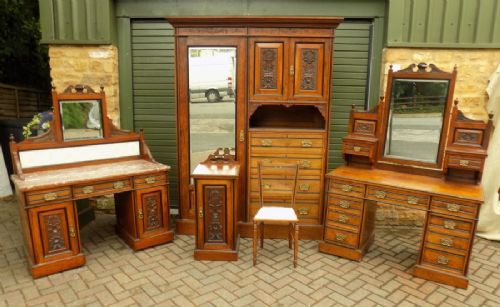
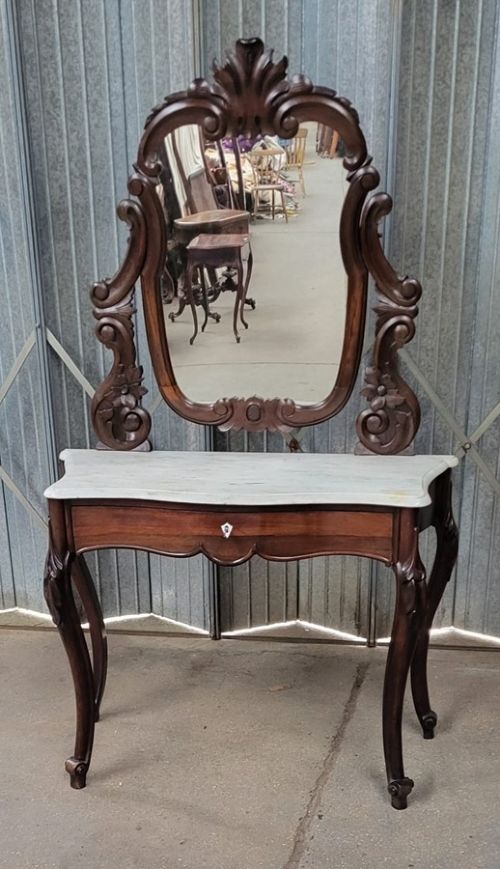
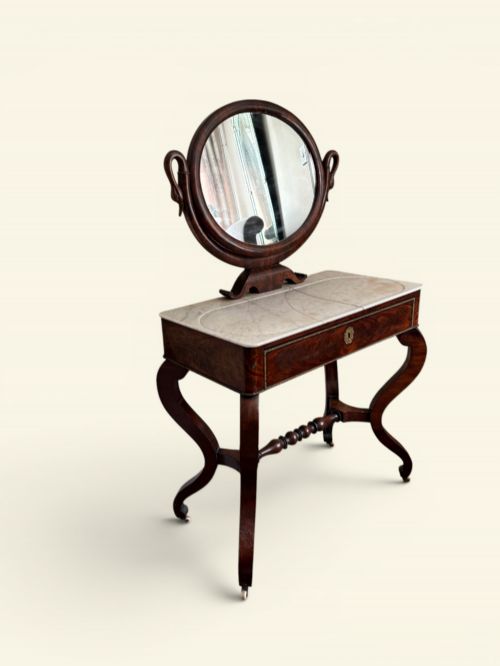
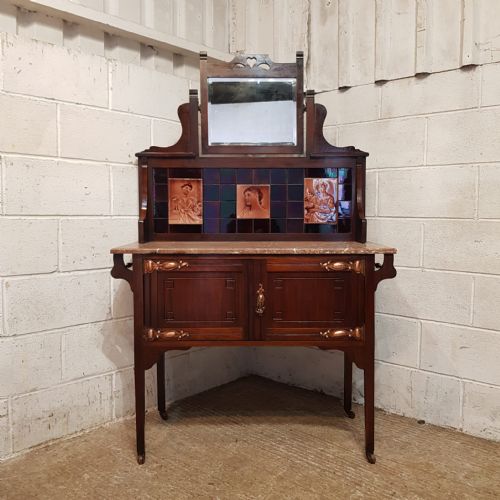



Antique Marble Top Vanity
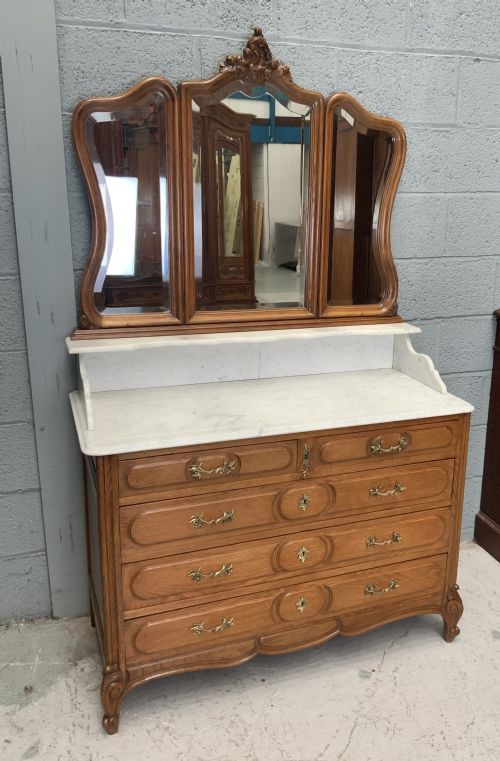
An antique marble top vanity offers a durable stone surface combined with period timber construction for the bedroom.
What These Pieces Are
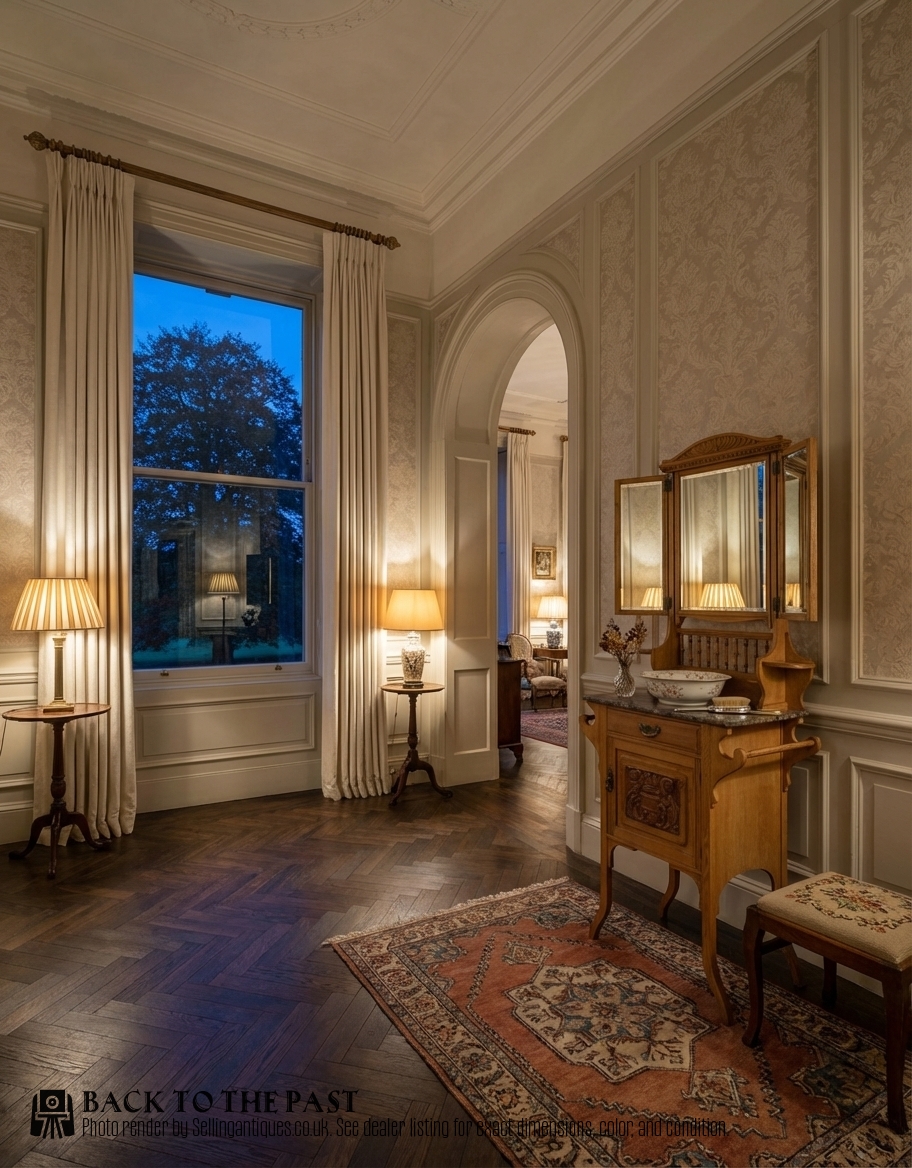
An antique marble top vanity serves as a functional washstand or dressing table, providing a practical stone surface designed to handle daily grooming tasks. These pieces frequently appear as washstands, dressing tables, and dressing stands equipped with stone slabs.
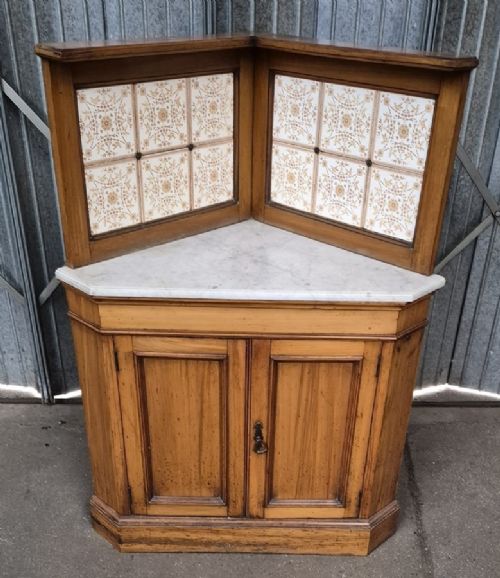
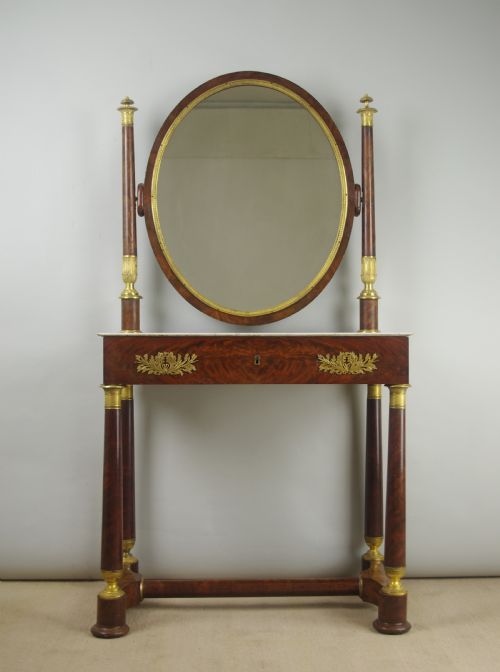
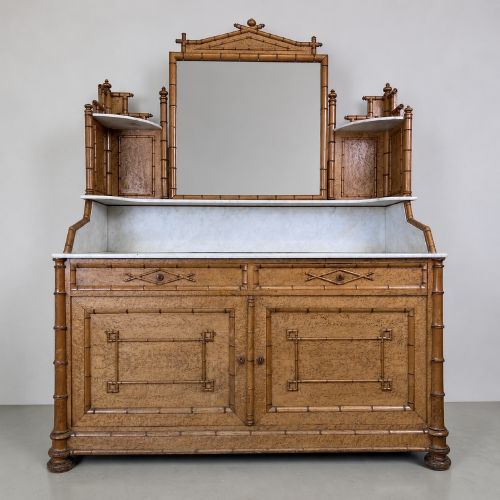
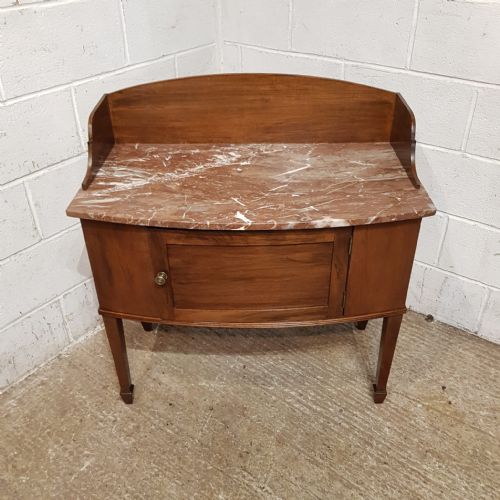
Buyers encounter examples spanning the nineteenth century through the early twentieth century, including Edwardian, 1920, and 1890 periods. Styles represented across these listings include French Empire, Victorian faux bamboo, Edwardian, Art Deco, and Arts and Crafts.
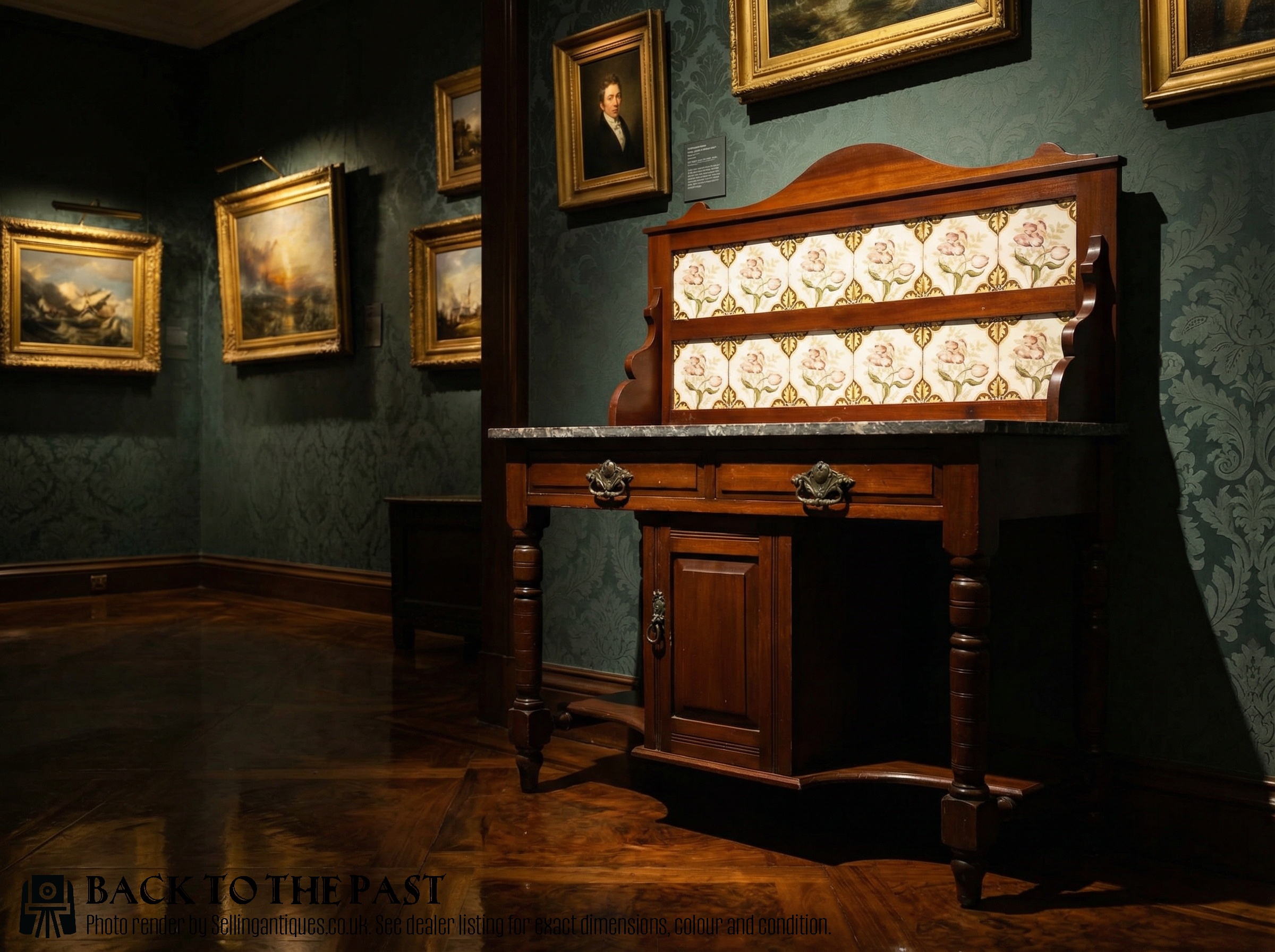
Origins and designs vary from French mahogany and ormolu mounts to English oak, walnut, pine, satinwood, and mahogany washstands. Many configurations incorporate mirror backs, tiled splashbacks, twin drawers, over-shelves, towel rails, or ceramic jugs and bowls.
How They Were Made
Cabinetmakers utilised sturdy timbers such as oak, mahogany, walnut, pine, satinwood, and faux bamboo to construct the frames and drawers of each vanity. These wooden bodies often feature carved details, panelled doors, or bamboo-turned uprights depending on the chosen style.
Heavy marble slabs were fitted to the upper surfaces to provide a water-resistant counter for washing and dressing routines. Additional materials such as brass hardware, ormolu mounts, glass elements, and decorative ceramic tiles completed the assembly.
Retail Price Guide 2026
Typical UK retail prices for marble top vanity, calculated from the Sellingantiques database of over a million retail prices indexed since 2003. This retail price guide relies exclusively on Sellingantiques data; no external sources or auction records are used, so the figures do not describe the wider market.
Some washstands still host their original ceramic jugs and basins, ready for a Victorian wash-down.
What Varies in Quality
The refinement of the timber carving and the sophistication of the joinery set finer pieces apart from simpler utility furniture. Elaborate styling like French Empire ormolu mounts or detailed Arts and Crafts woodwork demonstrates a higher degree of workshop skill.
The Antique Marble Top Vanity Glossary
- Ormolu
- Gilded bronze mounts applied as decorative ornaments to furniture surfaces. This technique is frequently found on French Empire pieces.
- Faux bamboo
- Wood turned and painted to resemble natural bamboo stalks. Victorian makers popularised this whimsical aesthetic for bedroom furniture.
- Splashback
- A raised vertical panel behind the wash surface protecting the wall from water. These are often made of marble, wood, or decorative tiles.
- Satinwood
- A dense exotic hardwood with a lustrous golden sheen. It was often utilised for high-end Edwardian and Victorian dressing furniture.
- Washstand
- A dedicated piece of furniture designed for personal washing. They typically feature stone tops to accommodate basins, jugs, and toiletries.
Frequently Asked Questions
What is an antique marble top vanity used for?
These pieces functioned historically as washstands or dressing tables for morning routines and personal grooming in the bedroom.
Today, buyers utilise them as distinctive washstands in modern bathrooms or as decorative dressing tables in period interiors.
How do I clean an antique marble top?
Stone surfaces require gentle cleaning with warm water and pH-neutral soap to avoid etching the polish.
Harsh chemicals and acidic liquids must be kept away from the marble to preserve the vintage finish.
Can I use a washstand as a bathroom sink?
Many buyers adapt antique washstands into modern bathroom vanities by plumbing a basin through the marble top.
Careful modification of the wooden interior is required to accommodate modern pipes while retaining the antique frame.
What styles are common in these vanities?
The available selection includes French Empire, Victorian faux bamboo, Edwardian, Art Deco, and Arts and Crafts designs.
Each style reflects the distinct aesthetic preferences and cabinetmaking techniques of its specific decade.