




Antique Map Drawers
These antique map drawers, plan chests and collectors cabinets bring generous proportions and rich timber character into a room.
Antique Map Drawers
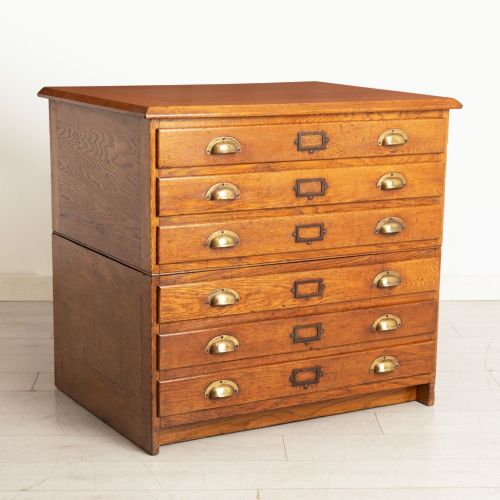
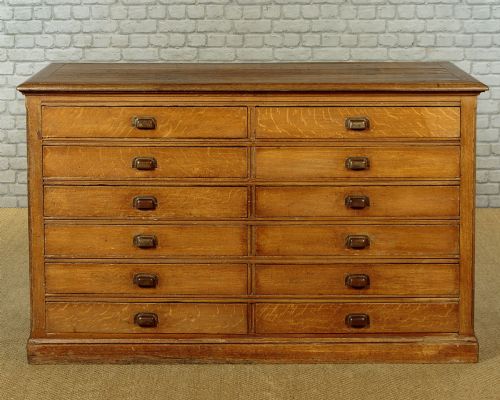
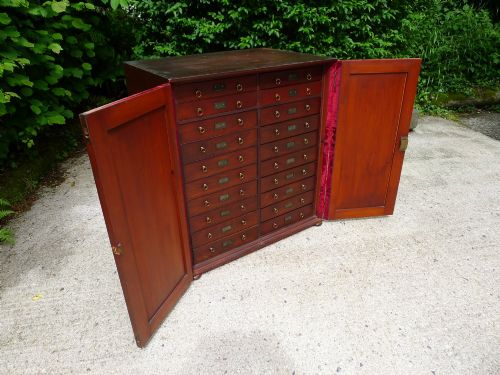
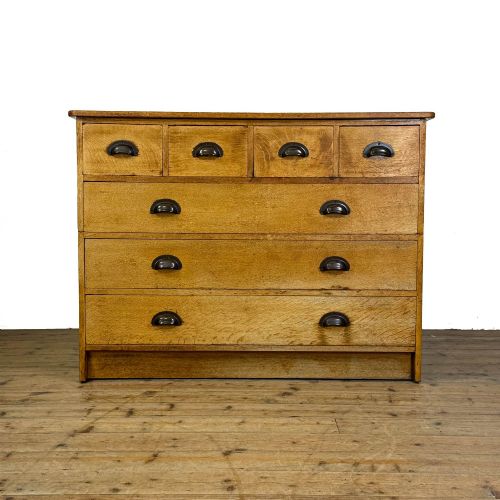
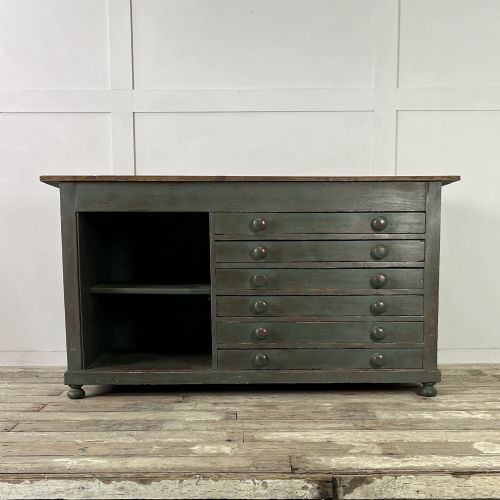
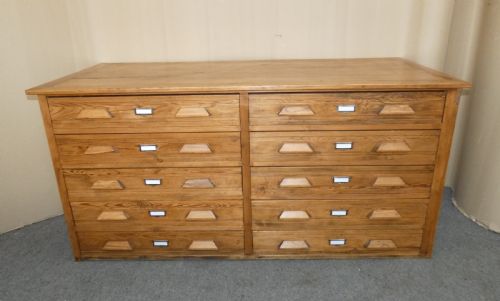
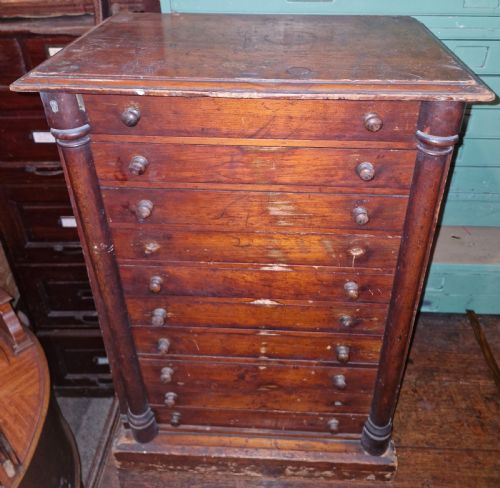
Antique map drawers span large plan chests, banks of drawers and collectors cabinets designed to hold flat documents, specimens or curated objects. The pieces appearing here range from Victorian pine and mahogany formats to Edwardian pitch pine and industrial utility units.
Most examples originate from the nineteenth and early twentieth centuries, encompassing styles from George III to Arts and Crafts and Industrial. Buyers frequently encounter multi-drawer configurations in deal, oak and mahogany built for archival storage.
How they were made
Cabinet makers utilised dense hardwoods like mahogany, burr walnut, satinwood and fruitwood alongside secondary softwoods such as pine, deal and pitch pine. Drawer construction relies on traditional joinery to support the weight of heavy paper, specimens and folios.
Surfaces feature polished timber finishes, applied brass pulls and card holders, with occasional glass elements or velvet linings inside specialised compartments.
Listings feature timbers spanning mahogany, oak, satinwood, pine, deal and velvet across Victorian, Edwardian and George III periods.
What varies in quality
Quality rests in the choice of timber figures, from plain deal and pine to finely figured burr walnut, satinwood and solid mahogany. The scale of the bank and the complexity of the drawer arrangement elevate certain pieces above standard utility furniture.
Maker attribution and period integrity also separate standard workshop output from branded cabinet work, while the preservation of original brass hardware influences the overall character.
Brady of Edmonton·Standish·Maple & Co·Gillows
The Antique Map Drawers Glossary
- Plan chest
- A wide, shallow multi-drawer cabinet designed specifically for storing architectural plans, maps and large format paper. These pieces provide stable, flat storage across numerous slender tiers.
- Collectors cabinet
- A specialised piece of cabinetry housing multiple small drawers for organising natural history specimens, coins or geological samples. They often feature locking doors and tightly fitted internal trays.
- Deal
- A softwood timber derived from pine or fir, commonly utilised for the carcasses and internal drawer components of nineteenth-century utilitarian furniture. It offers a pale, straight-grained surface.
- Specimen chest
- A compact chest housing numerous shallow drawers intended for delicate items and scientific collections. These units frequently employ fine hardwoods like mahogany or satinwood.
- Folio cabinet
- A tall or floor-standing cabinet configured to hold large portfolios, prints and unbound papers upright or flat. They reflect formal archive storage from the eighteenth and nineteenth centuries.
Antique Map Drawers: Frequently Asked Questions
What were antique map drawers originally used for?
These large pieces served offices, architects and institutions for storing oversized documents, charts and fragile paper sheets flat without folding.
Collectors also relied on smaller multi-drawer cabinets to organise botanical specimens, minerals and coins systematically.
How do I style map drawers in a modern home?
A large plan chest works effectively as a central island in a kitchen or study, offering substantial surface space and deep storage.
Smaller banks of drawers or specimen cabinets fit neatly into hallways and living rooms to display objects on top while concealing clutter.
What timbers are most common in these cabinets?
Utility pieces and regional workshop chests frequently employ pine, deal and oak for their robust structural qualities.
Fine collector cabinets and formal folio pieces showcase decorative hardwoods such as mahogany, satinwood, burr walnut and fruitwood.
How can I tell a Victorian chest from an Edwardian one?
Victorian examples often display heavier proportions, darker polished mahogany, cedar or stained deal, reflecting mid-to-late nineteenth-century tastes.
Edwardian pieces frequently incorporate lighter pine, pitch pine or simpler utility lines suited to changing domestic workspaces around nineteen hundred.