


Wooden Plan Drawers
These wooden plan drawers are practical storage solutions built for heavy professional use, prized today for organising drawings and textiles in modern homes.
Wooden Plan Drawers
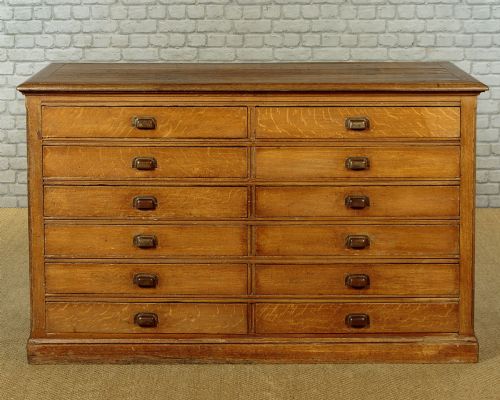
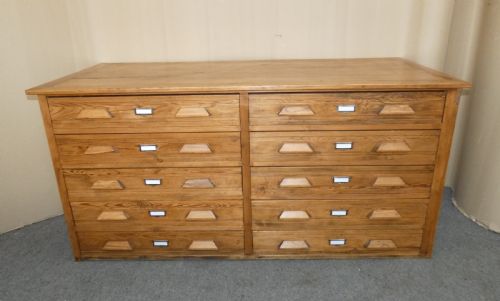
When buyers search for wooden plan drawers, they find functional storage furniture designed to hold large sheets of paper, maps, or architectural plans flat. The pieces seen here span from the mid-nineteenth century through the mid-twentieth century, encompassing Victorian, Edwardian, and industrial utility styles.
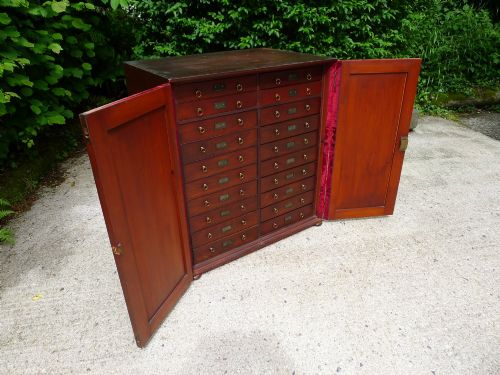
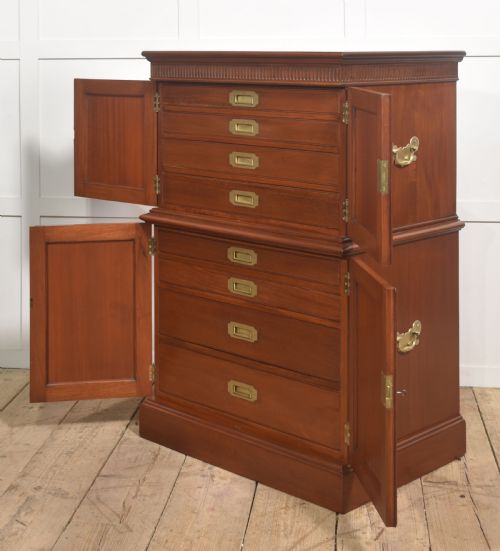
The selection on this page includes banks of drawers, collectors cabinets, office cabinets, and workshop chests. These range from substantial pine pieces and stained deal cabinets to refined mahogany, red walnut, and fruitwood examples.
Most items reflect commercial, studio, or workshop origins, offering deep and wide compartments suited to sorting textiles, artwork, or documents. Buyers encounter forms ranging from compact table-top collectors cabinets to tall banks containing dozens of shallow drawers.
How they were made
Construction relies heavily on durable timbers suited to daily workspace demands, with pine, deal, oak, and mahogany forming the primary carcasses and drawer structures. Makers selected these woods for strength, stability, and straight grain, ensuring drawers slid smoothly within large cabinetry.
Hardware details involve brass handles, pulls, and label holders that helped users identify contents quickly in busy offices or archives. Surfaces often received simple polished finishes, stained treatments, or industrial protective coats to withstand heavy handling.
Listings feature items built from pine, deal, oak, mahogany, and red walnut, spanning the nineteenth and twentieth centuries.
What varies in quality
Quality differences stem from the choice of timber and the complexity of the cabinetry, distinguishing utilitarian workshop pieces from finely polished domestic collectors furniture. Dense hardwoods like mahogany and red walnut indicate higher status and more careful cabinet work than everyday stained deal.
The scale and proportion of the drawer banks also dictate the grade of the piece, with multi-drawer configurations requiring precise joinery to maintain structural integrity. Original brass hardware and intact polishing remain indicators of superior original manufacture.
The Wooden Plan Drawers Glossary
- Plan Chest
- A wide, shallow piece of furniture designed specifically for storing architectural drawings and large maps flat. These chests typically feature multiple stacked drawers.
- Collectors Cabinet
- A specialised cabinet fitted with numerous small drawers, originally used for organising botanical, geological, or entomological specimens. They often utilise fine hardwoods such as mahogany or walnut.
- Deal
- A softwood timber, usually pine or fir, commonly utilised in nineteenth-century utilitarian furniture and workshop cabinetry. It provides a lightweight yet robust structure.
- Industrial Utility
- A style originating from mid-twentieth-century workspaces focusing on straightforward, functional design without decorative embellishment. Pieces from this category prioritise unadorned practicality.
Wooden Plan Drawers: Frequently Asked Questions
What were wooden plan drawers used for?
These cabinets stored large architectural blueprints, engineering drawings, and maps flat to prevent curling or damage in professional offices.
Over time, similar shallow-drawer formats found use in workshops, haberdashers, and collectors studies for sorting small items or flat artworks.
How do I date a piece?
Dating relies on observing construction methods, timber choices, and hardware styles associated with periods like the Victorian era or 1920s industrial production.
Simpler deal and pine workshop pieces often share characteristics with documented items from around nineteen-ten or eighteen-sixty.
Can I use them for modern storage?
The wide, shallow drawers provide ideal organisation for modern art prints, flat textiles, jewellery, and stationery collections.
Their sturdy timber construction allows them to function as practical freestanding statement pieces in contemporary living spaces.
What woods were commonly used?
Cabinet makers utilised domestic and imported timbers including pine, deal, oak, mahogany, and red walnut depending on the intended workspace.
Softer woods suited utilitarian workshop banks, while denser hardwoods appeared more frequently in refined collectors cabinets.