






Antique Mantel Pieces
When you handle antique mantel pieces, you encounter a dense mix of French clock sets, heavy marble garnitures, and broad overmantel mirrors that anchored period rooms.
Antique Mantel Pieces
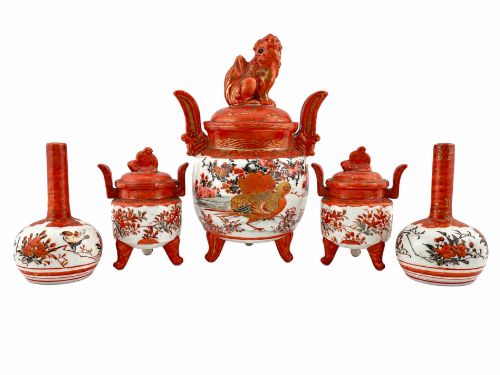
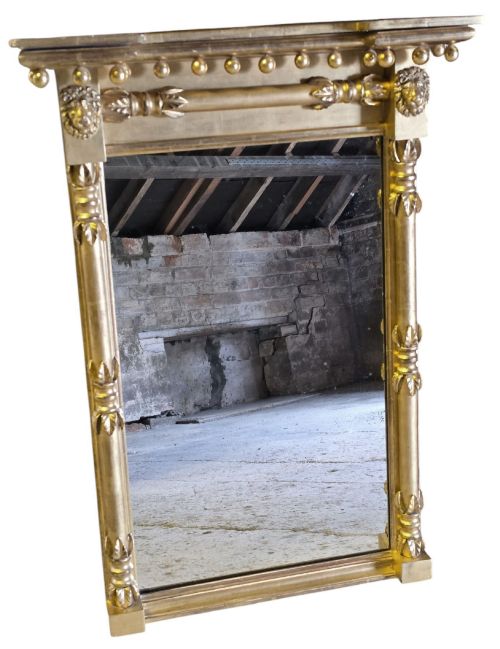
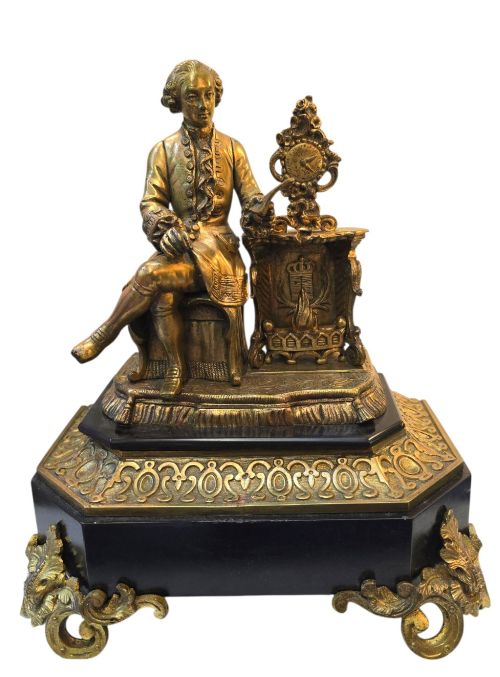
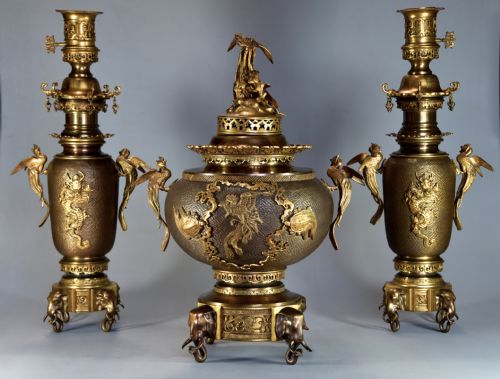
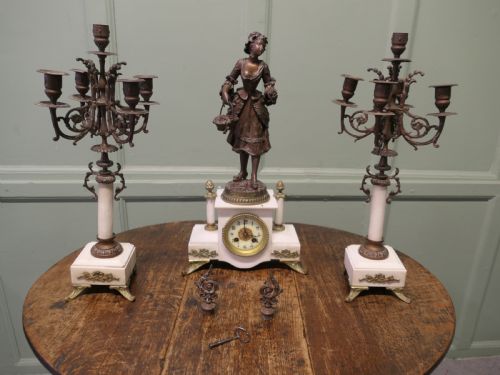
Antique mantel pieces on this page span several distinct domestic forms, with French clock garnitures and large overmantel mirrors appearing most frequently among the listings. These objects include multi-piece marble and bronze clock sets, heavy slate timepieces, and gilt-framed wall mirrors designed to sit above a fireplace.
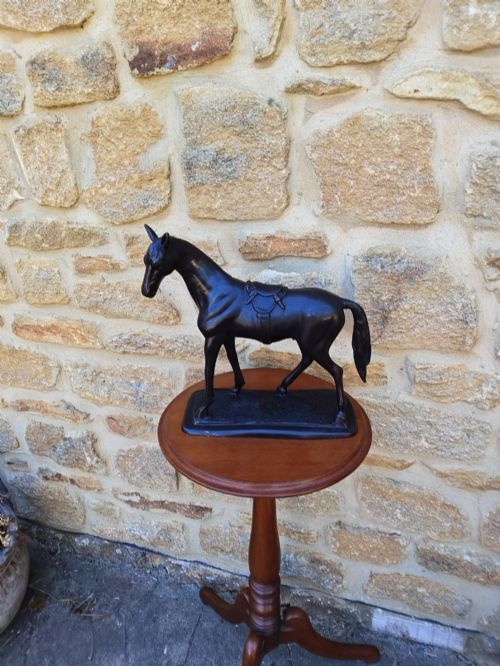
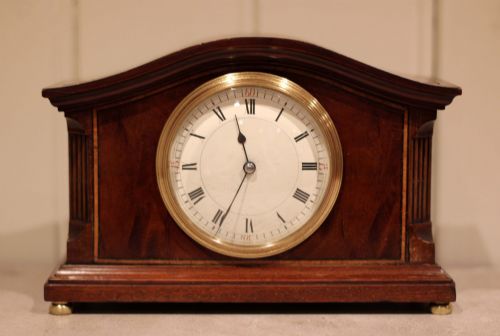
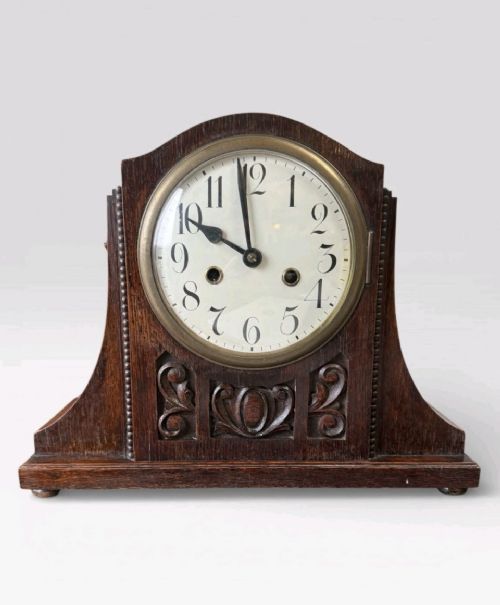
The material record leans heavily toward nineteenth-century production, running from the Victorian era into the Edwardian years and the Art Deco period. You find specific forms such as porcelain garnitures, brass and ormolu mounts, and solid mahogany or oak table clocks alongside sculptural bronze figures and architectural marble bases.
How they were made
Makers utilised a combination of cast metals, natural stone, and carved wood, applying gilt bronze, ormolu, and patinated finishes to marble, slate, and onyx bodies. Clock movements involved intricate mechanical engineering, whilst mirrors combined carved gesso and timber frames finished in gold leaf or paint.
Ceramic elements incorporated hand-painted porcelain and cloisonne enamel, matched with structural elements in mahogany, rosewood, oak, and sycamore. Metalwork techniques brought together cast bronze, spelter, and brass, often mounted directly onto polished stone surfaces.
Antique Mantel Pieces Retail Price Guide 2026
Typical asking prices for mantel pieces among the pieces listed under this phrase on Sellingantiques today, from the lower quarter to the upper quarter. They describe what is for sale here now, not the wider market.
Several Victorian mantel pieces double as architectural models, including a carved sycamore luxury yacht and a miniature Welsh fire surround.
What varies in quality
Quality rests upon the crispness of the bronze casting and the depth of the gilding or patination across the figures and mounts. Finer examples display meticulous hand-chasing on metal elements and superior selection in coloured marbles or exotic timbers.
The distinction between standard production and top tier work shows in the integration of the clock movement with its housing, the weight of the materials, and the precision of carved detail on mirror frames and garniture sets.
Henry Marc·Le Roy et Fils·Payne and Co·Samson of Paris·Isadore Bonheur·Jules Dalou
The Antique Mantel Pieces Glossary
- Garniture set
- A matched group of decorative objects, typically a central clock flanked by two matching vases, urns, or candelabra designed for a mantelpiece.
- Overmantel mirror
- A large wall mirror specifically proportioned to hang on the wall directly above a fireplace mantel.
- Ormolu
- Finely ground high-carat gold applied to a bronze base using a mercury amalgamation technique, common in French decorative arts.
- Spelter
- An alloy of zinc and other metals used as a cheaper substitute for bronze in nineteenth-century sculptural castings.
- Fusee
- A conical pulley used in clock movements to maintain an even pull on the gear train as the mainspring unwinds.
Antique Mantel Pieces: Frequently Asked Questions
What is a clock garniture?
A clock garniture is a decorative set consisting of a central mantel clock accompanied by matching side pieces such as urns, vases, or candelabras.
These sets were designed to sit symmetrically on a fireplace mantel or sideboard as a unified decorative scheme.
How do I date a mantel clock?
Dating relies on the combination of materials, case style, and maker signatures or movement stamps. Victorians favoured heavy marble and slate, while later periods introduced Art Deco geometric onyx and oak cases.
Looking at the backplate of the mechanical movement often reveals maker marks and serial numbers that narrow the decade of production.
Where should an overmantel mirror go?
An overmantel mirror is built to hang directly above a fireplace chimney breast, reflecting light and anchoring the room's proportions.
Because of their substantial weight and size, they require secure wall fixings rather than resting solely on the mantel ledge.
What is the difference between bronze and spelter?
Bronze is a durable copper alloy capable of holding fine, crisp detail and deep patination through centuries of handling. Spelter is a softer, lighter zinc-based metal widely utilised in the nineteenth century for affordable decorative figures and candlesticks.