

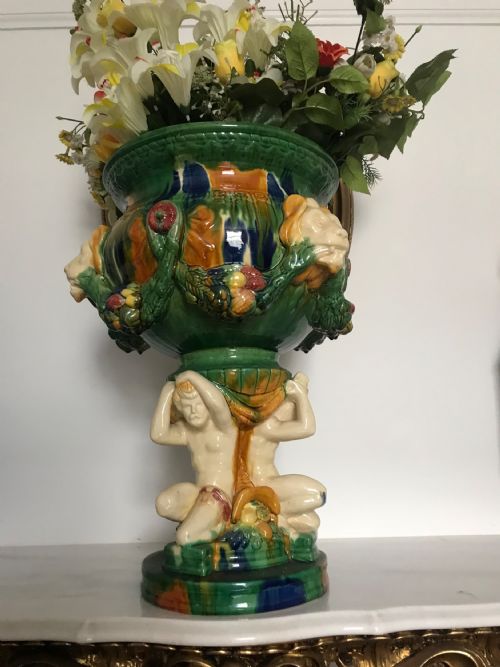


Antique Majolica Urn
An antique majolica urn brings rich polychrome tin-glazed earthenware and robust Victorian revival forms directly into a room.
Antique Majolica Urn
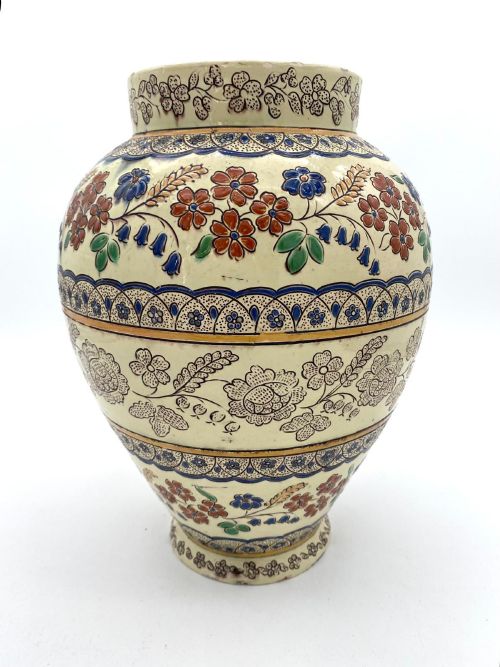
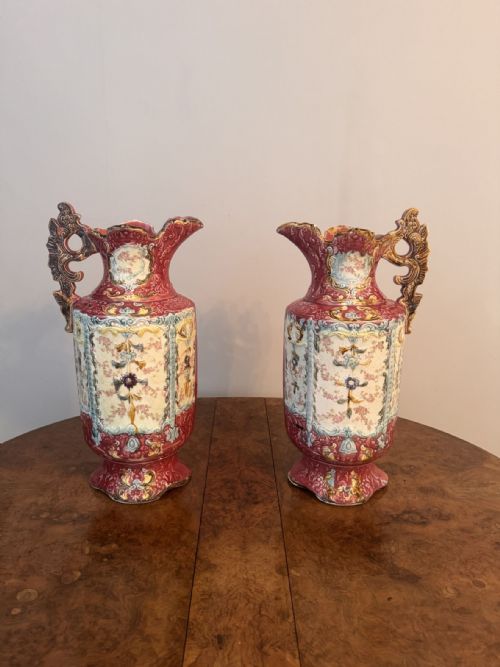
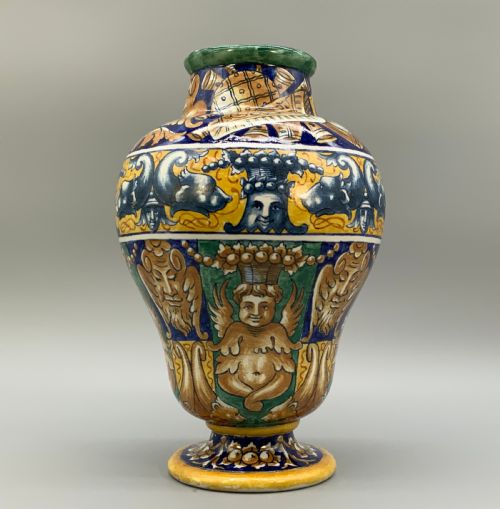
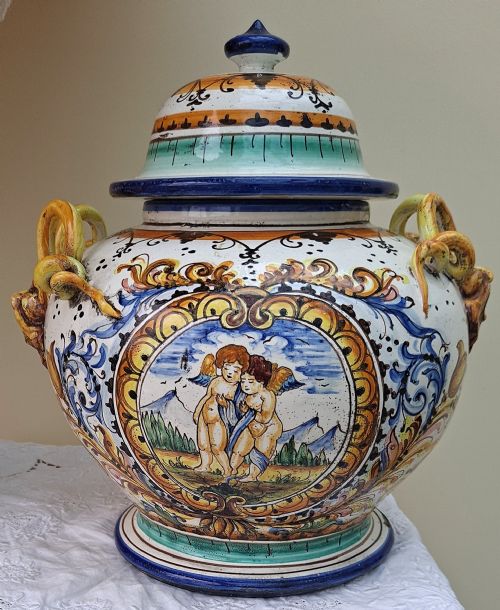
When searching for an antique majolica urn, buyers encounter heavy glazed ceramic vessels shaped as lidded vases, ewers, and garden planters. These pieces span from eighteenth-century Italian workshops to nineteenth-century English and French factories.
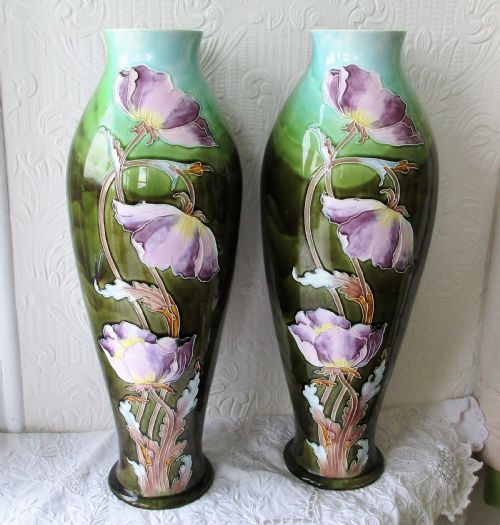
Nineteenth-century revival styles dominate the selection, heavily influenced by Renaissance motifs, Italian baroque designs, and later Art Nouveau curves. Forms range from modest cabinet vases up to monumental pedestals and figural stands.
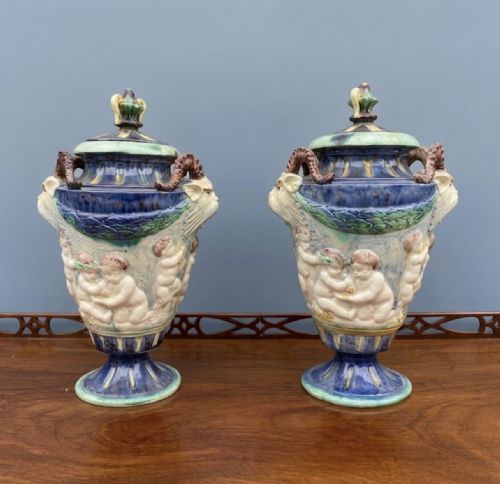
Continental potteries from Italy and France sit alongside prominent English manufacturers like Minton. Many pieces incorporate decorative covers, handles, and figural supports such as lions' heads or griffins.
Materials and construction methods
Potters built these vessels using earthenware and terracotta bodies shaped by hand or moulded in sections. A tin glaze or specialised lustre glaze was then applied as the smooth canvas for detailed painting.
Decoration relied heavily on rich polychrome pigments fired directly into the glaze to create vibrant blues, greens, and yellows. Ornate additions sometimes included cast ormolu mounts fitted to porcelain bodies.
Antique Majolica Urn Retail Price Guide 2026
Typical asking prices for majolica urn among the pieces listed under this phrase on Sellingantiques today, from the lower quarter to the upper quarter. They describe what is for sale here now, not the wider market.
At least one nineteenth-century planter stands supported by an imposing sculptural griffin, ensuring the ferns inside have suitably mythical company.
Quality factors in glazed ceramics
Quality rests upon the crispness of the moulded relief and the precision of the hand-painted details across the body. Superior examples display depth in the polychrome glaze and careful control during the high-temperature kiln firing.
The artistic ambition of the form separates standard production wares from monumental exhibition pieces. Elaborate figural stands, sculptural handles, and well-documented factory marks elevate individual vessels.
Cantagalli·Clement Massier·Julius Dressler·Minton·Albert Carrier
The Antique Majolica Urn Glossary
- Maiolica
- Tin-glazed earthenware originating in Italy, featuring opaque white grounds painted with colourful metallic oxide pigments. The term is often used interchangeably with majolica.
- Jardiniere
- A large decorative ceramic planter designed to hold growing plants or floral arrangements, frequently set upon a matching pedestal base.
- Ewer
- A large jug with a wide spout and a curved handle, historically used for pouring water but often produced purely for display.
- Faience
- European tin-glazed earthenware produced primarily in France and other continental regions, following traditional ceramic techniques.
- Lustre glaze
- A metallic film applied over the fired ceramic surface to produce an iridescent, glowing sheen under changing light.
Antique Majolica Urn: Frequently Asked Questions
How do I clean an antique majolica urn?
Dust the glazed ceramic surface gently with a soft, dry cloth to prevent any accumulation of dirt within the recessed moulded details.
Avoid using liquid cleaners, abrasive pads, or chemical solvents, as these can easily damage the historic tin glaze and delicate polychrome pigments.
Were these urns used outdoors?
Most large jardiniere and planter forms served decorative interior roles in nineteenth-century drawing rooms and conservatories rather than garden use.
Porosity in older earthenware bodies means freezing temperatures can cause moisture trapped within the fabric to expand and crack the glaze.
How do I distinguish Italian majolica from French faience?
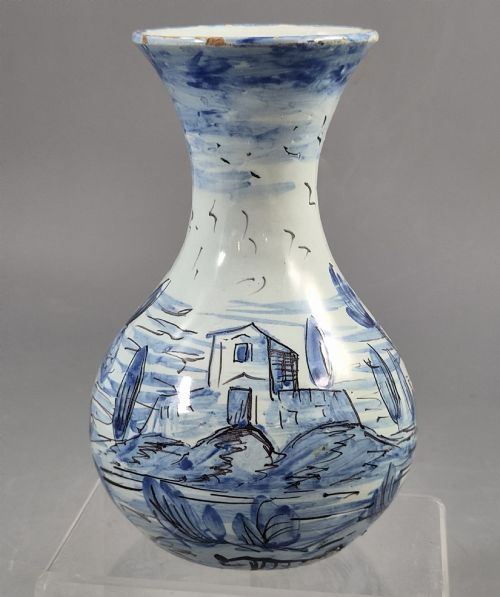
Italian pieces frequently lean towards Renaissance revival styles, Renaissance motifs, and traditional blue-and-white palettes or rich polychrome historical scenes.
French faience from the same eras often incorporates softer pastel tones, floral arrangements, or flowing Art Nouveau lines.
What is a pilgrim flask?
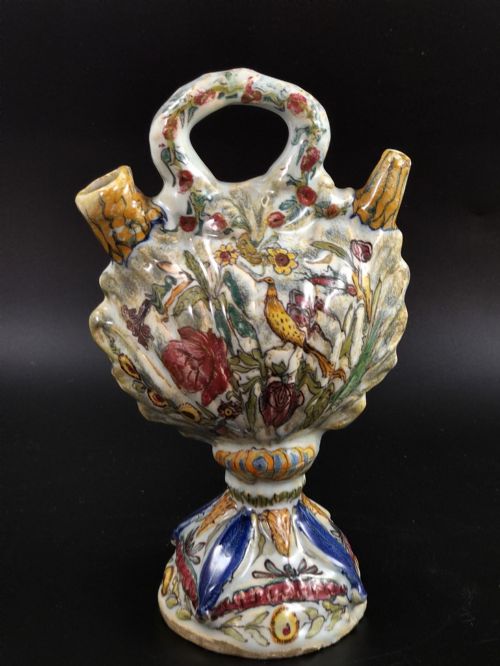
A pilgrim flask is a flattened circular vessel featuring small loop handles on the shoulders, historically designed for travellers to carry liquids.
Decorative antique examples prioritized elaborate pictorial scenes and sculptural shell motifs over practical travel use.