



Antique Majolica Style
These antique majolica style pieces bring bold colour and rich tin-glazed earthenware to your rooms, echoing centuries of European pottery traditions.
Antique Majolica Style
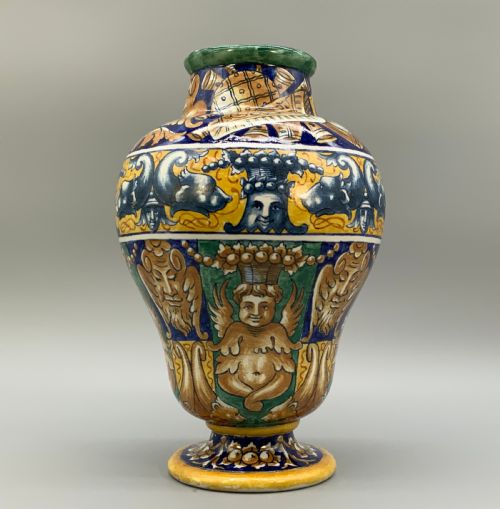
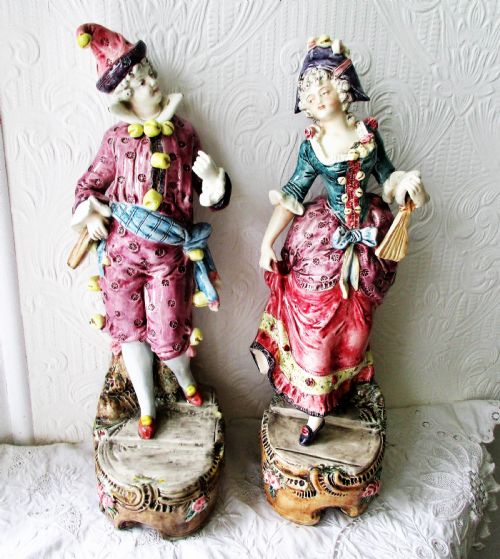
When you search for antique majolica style, you encounter a vibrant group of tin-glazed earthenware vessels, chargers, and figures that draw upon historic Italian, French, and Continental traditions. The selection on this page ranges widely across the nineteenth century, featuring nineteenth-century revivals alongside earlier forms.
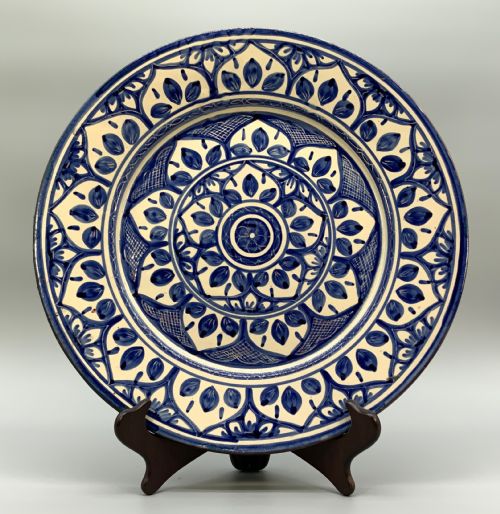
You will most frequently meet nineteenth-century chargers, vases, and drug jars produced in imitation of Renaissance and Moorish styles. These pieces mirror the heavy ornamentation and rich palettes of earlier centuries while maintaining their own distinct Victorian or Continental character.
The offerings span large jardinières, decorative platters, and cabinet vases created by European potteries during the 1800s and into the early twentieth century. Makers of this era looked back to Urbino, Savona, and Delft to inspire their colourful, pigment-rich earthenwares.
Materials and methods
Potters built these items using earthenware bodies coated in opaque tin glazes to create a smooth, pale surface suitable for painting. Artisans then applied metal oxide pigments directly onto the unfired or biscuit-fired glaze, allowing the colours to fuse during the kiln firing.
Many works incorporate hand-painted polychrome or blue and white designs, often depicting historical scenes, floral motifs, or intricate Moorish patterns. Selected pieces integrate metal mounts such as ormolu alongside the ceramic body to elevate the finished object.
Antique Majolica Style Retail Price Guide 2026
Typical asking prices for majolica style among the pieces listed under this phrase on Sellingantiques today, from the lower quarter to the upper quarter. They describe what is for sale here now, not the wider market.
Pharmacists kept their remedies in cylindrical jars shaped so they would not slip from greasy fingers during frantic medicinal mixing.
Assessing quality
Quality rests in the crispness of the hand-painted brushwork and the complexity of the pigment application across the glaze. Superior examples display precise control in detailed historical scenes and floral motifs rather than loose or hasty brushstrokes.
The depth and brilliance of the tin glaze itself distinguish finer pieces, along with the weight and structural stability of the earthenware form. Pieces that retain their original colour saturation and show careful handling without heavy restoration stand at the upper end of the range.
Cantagalli·Minton·Gien
The Antique Majolica Style Glossary
- Maiolica
- Tin-glazed earthenware of Italian origin, typically decorated with colourful pigments over an opaque white glaze.
- Charger
- A large decorative plate designed to be displayed on a wall or dresser rather than used for dining.
- Albarello
- A cylindrical earthenware jar used by pharmacies and apothecaries to store dry drugs and herbal remedies.
- Istoriato
- A style of ceramic decoration featuring painted historical, mythological, or biblical narratives that cover the entire surface.
- Jardiniere
- An ornamental ceramic pot or stand designed to hold live plants and floral arrangements inside a home.
Antique Majolica Style: Frequently Asked Questions
How do I display a large majolica charger?
These large ceramic plates suit wall mounting using specialised wire hangers or placement on sturdy plate stands. Their vibrant glazes draw the eye when positioned above a mantelpiece or on a dedicated sideboard.
Ensure the hanging hardware or display stand securely supports the substantial weight of the earthenware body. Keep them out of direct sunlight to protect the rich pigments from fading over time.
What is an albarello used for?
An albarello is a distinct cylindrical jar historically used by apothecaries and pharmacists to hold dry drugs, ointments, and spices. Their indented waists allowed pharmacists to grip them easily while stacked on shelves.
Today, these jars serve as decorative accents on bookshelves or side tables. They bring a touch of historic Continental interior design to living spaces.
Are nineteenth-century majolica pieces waterproof?
Many nineteenth-century jardinières and vases were designed to hold plants or cut flowers, featuring interior tin glazes that resist moisture. However, older or restored pieces can develop hairline fractures that permit water seepage.
Protect your furniture by placing a discreet plastic liner or saucer inside the vessel if you intend to use it with fresh water and plants. Inspect the interior beforehand to ensure the glaze remains intact.