
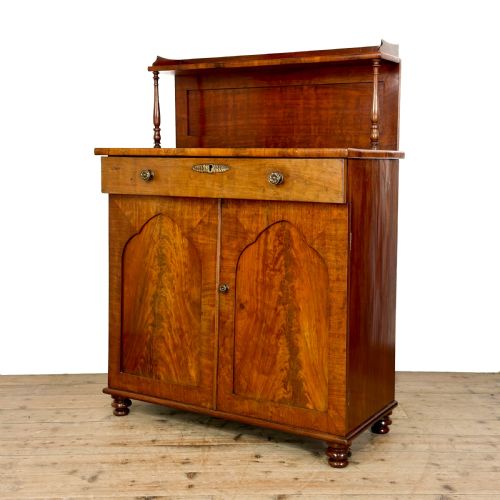


Antique Mahogany Servery Cabinet
An antique mahogany servery cabinet brings deep timber grain and practical surface space into a dining room.
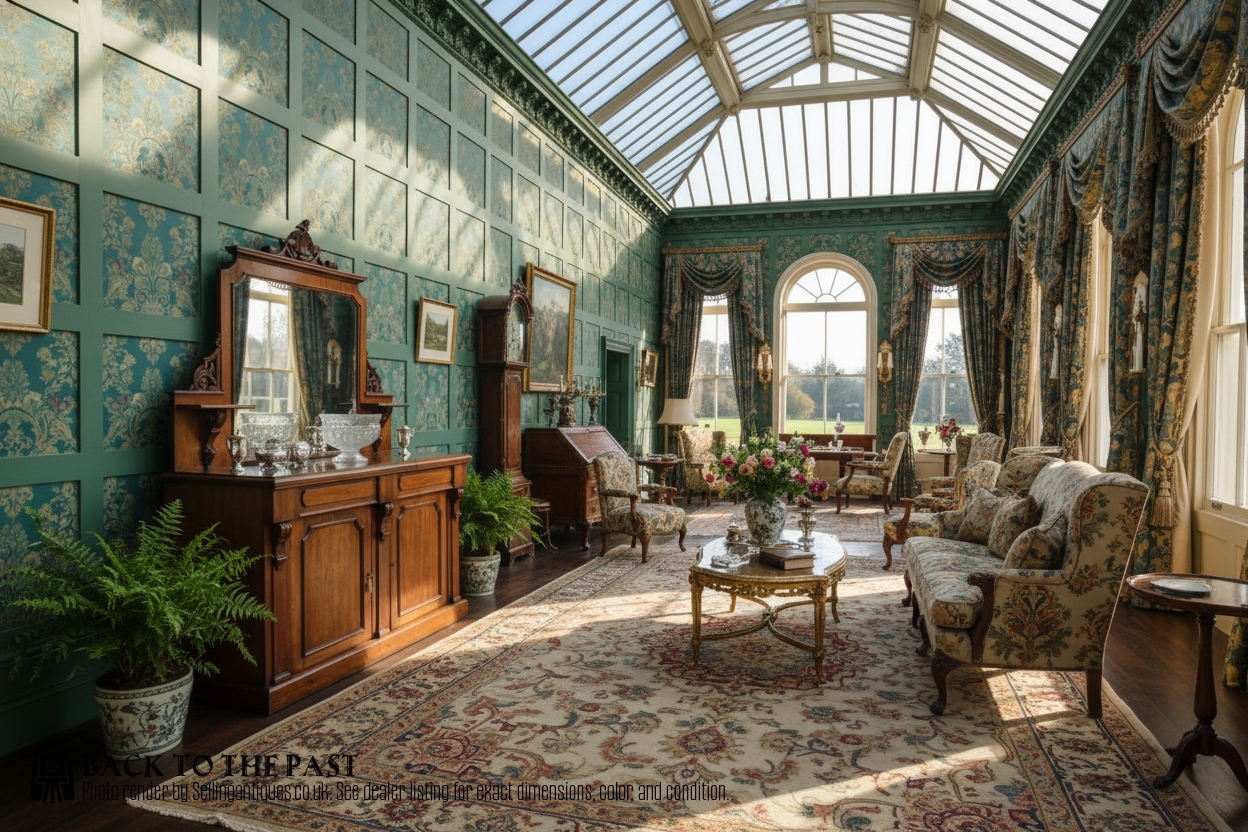
Antique Mahogany Servery Cabinet
When you search for an antique mahogany servery cabinet, you encounter large dining room storage pieces spanning the Georgian, Victorian, and Edwardian eras. These items appear under various designations such as sideboards, chiffoniers, buffets, and servers.
The Victorian examples frequently feature mirror backs, two-door cupboards, and combination timber builds like mahogany and walnut. Georgian iterations tend towards bowfront shapes and classic proportions.
Edwardian and later pieces draw on Sheraton Revival styles, offering smaller proportions whilst retaining the core mahogany construction. You meet sideboards and cabinets ranging from mid-nineteenth century mirrorback servers to eighteenth century formal sideboards.
How they were made
Cabinetmakers utilised solid mahogany alongside flame mahogany veneer and curl mahogany to build these serving pieces, often incorporating contrasting satinwood inlay for decorative detail.
Structural hardware relied on brass fittings, whilst glazed elements introduced glass into upper sections on mirrorback chiffoniers and cabinets.
Makers thoughtfully added mirrors to nineteenth-century sideboards so diners could admire the room's reflection whilst passing the port.
What varies in quality
The distinction between standard examples and superior pieces rests in timber selection, such as the use of highly figured curl or flame mahogany veneer rather than plain boards.
Refinement in secondary woods, crispness of wood inlay, and the integration of original brass hardware elevate a cabinet from utilitarian dining furniture to high-grade cabinetwork.
James Shoolbred & Co
The Antique Mahogany Servery Cabinet Glossary
- Bowfront
- A cabinet front that curves outward in a convex sweep. This shape gained popularity during the Georgian period.
- Chiffonier
- A low sideboard or cabinet, typically featuring enclosed shelving below and sometimes a mirror or raised back above.
- Flame mahogany
- A veneer cut from the fork of a mahogany tree where the branches join the trunk. This creates a distinctive, flickering flame pattern.
- Mirrorback
- A sideboard or servery featuring an upright wooden frame holding a mirror behind the upper surface. This style became prominent in Victorian interiors.
- Sheraton Revival
- A late nineteenth and early twentieth century style inspired by the neoclassical designs of Thomas Sheraton. It often incorporates delicate inlay and lighter proportions.
Antique Mahogany Servery Cabinet: Frequently Asked Questions
How do I date a mahogany sideboard?
Dating relies on stylistic clues, construction methods, and timber choices visible in the piece. Georgian items lean toward clean lines and bowfronts, whereas Victorian pieces frequently include mirror backs and walnut elements.
Edwardian furniture often displays Sheraton Revival influences with lighter inlay work and smaller proportions.
Where were servery cabinets used?
Households placed these cabinets in dining rooms and parlours to assist with serving meals and displaying fine tableware. The flat top surface held dishes before they reached the dining table.
Cupboards and drawers below stored linens, cutlery, and serving vessels.
How do I care for mahogany furniture?
Maintain antique mahogany by keeping it away from direct sunlight and sudden temperature shifts that can split timber and veneer. Dust regularly with a soft, dry cloth.
Apply quality beeswax sparingly to nourish the wood and preserve the finish without building up a heavy residue.