
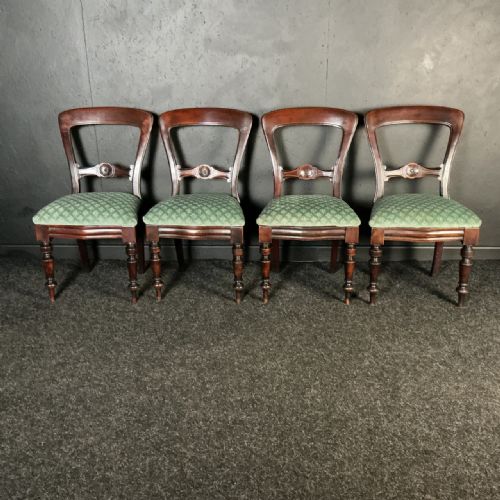
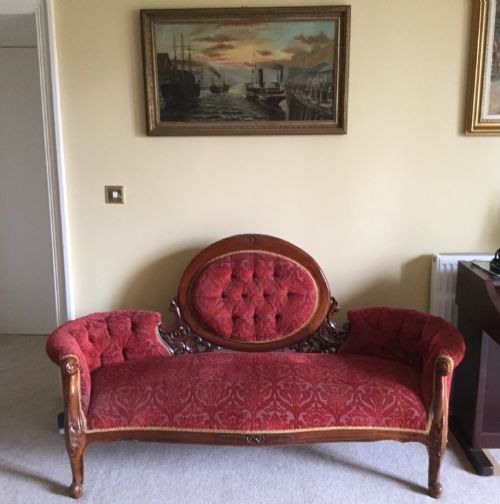
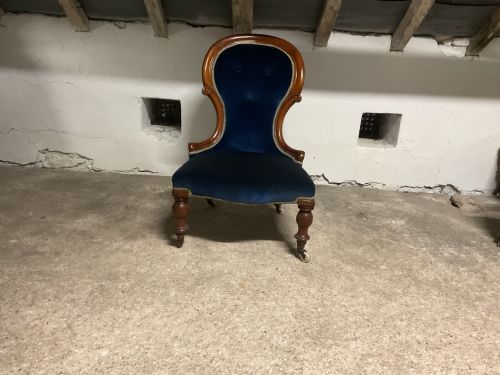
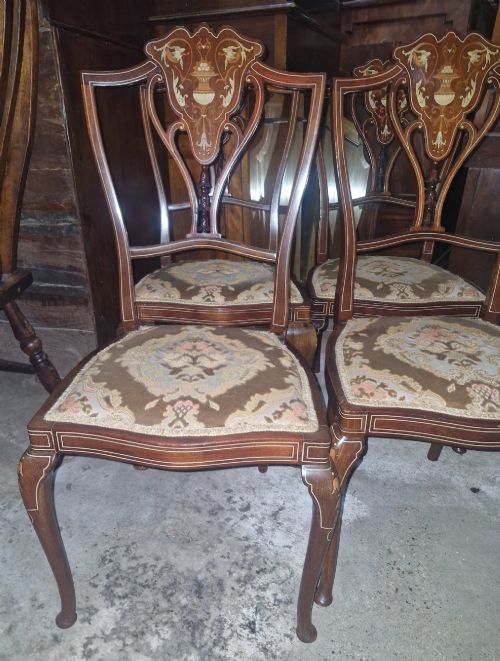
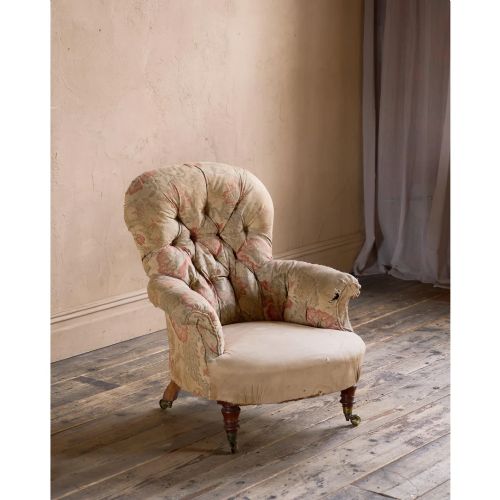
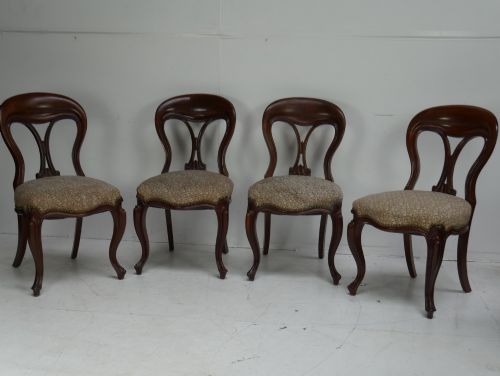
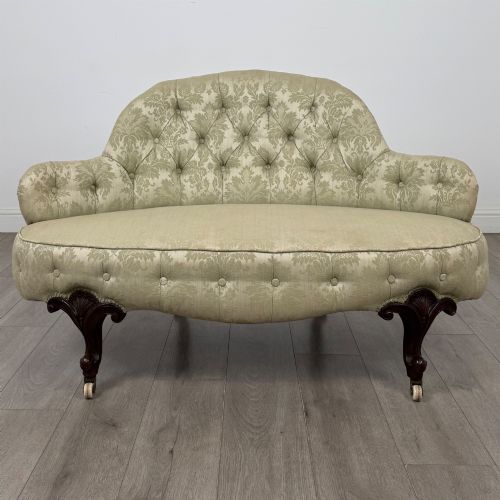
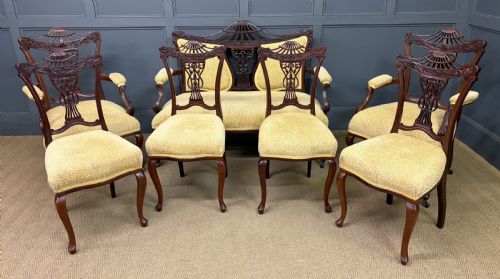
Antique Mahogany Salon Chairs
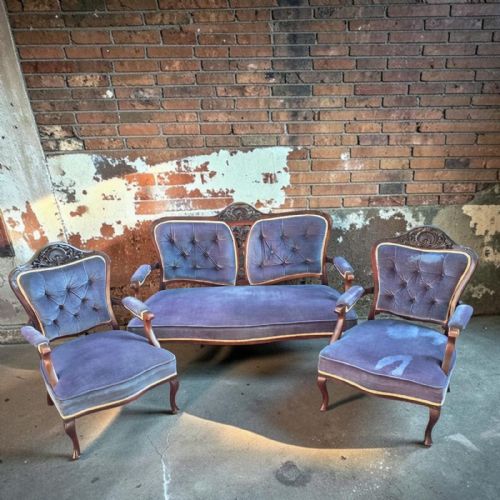
These antique mahogany salon chairs bring refined timber and structured seating from Georgian, Victorian and Edwardian sitting rooms straight to modern interiors.
Identifying antique mahogany salon chairs
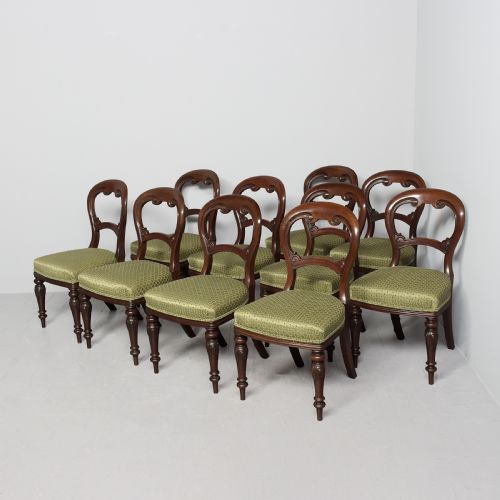
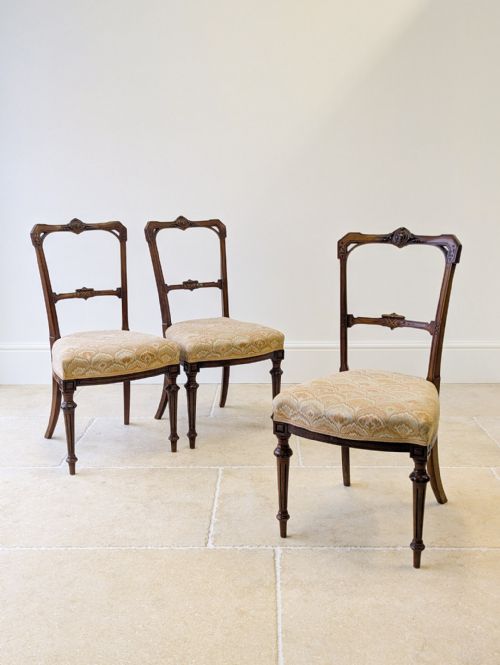
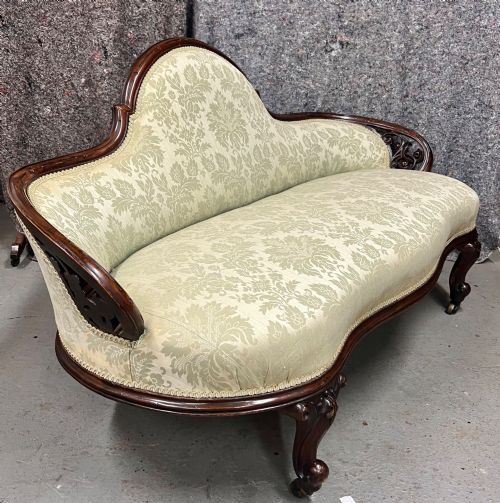
When buyers search for antique mahogany salon chairs, they encounter seating designed for formal reception rooms spanning the Georgian, Regency, Victorian and Edwardian eras. These pieces bridge the gap between sturdy dining furniture and decorative parlour seating, often appearing in matched pairs or larger sets alongside complementary settees.
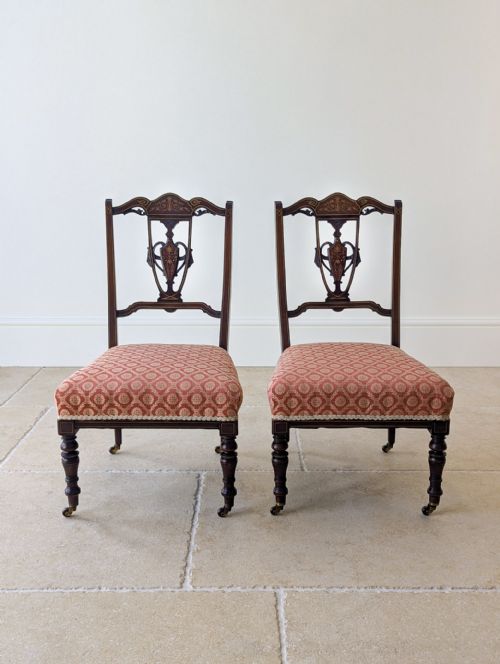
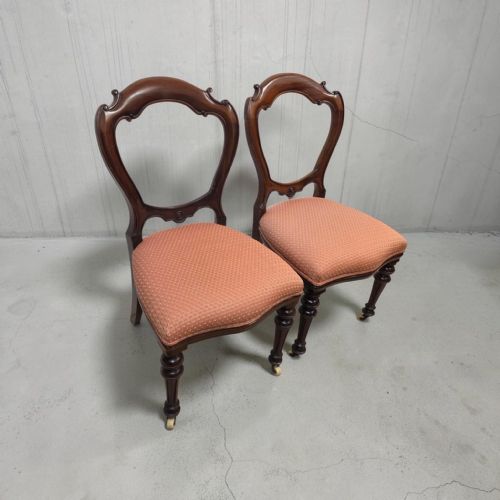
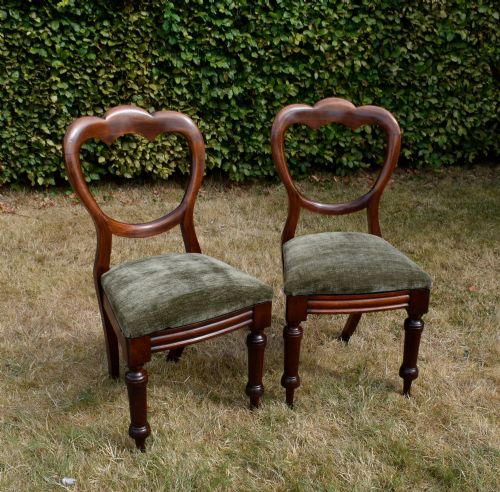
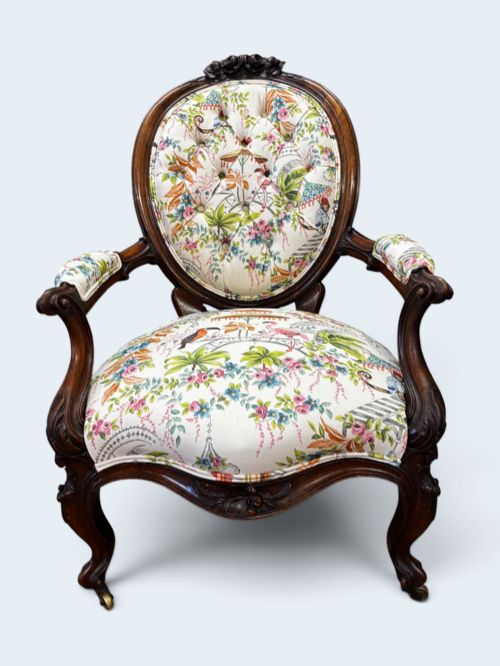
The most common forms on this page include balloon backs, tub chairs, armchairs and occasional side chairs. Many incorporate inlaid satinwood or marquetry details, reflecting the stylistic shifts from neoclassical geometry through to Edwardian art nouveau curves.
Materials and construction
Makers utilised solid mahogany, frequently augmented by contrasting satinwood inlay, marquetry, and occasional sections of rosewood or wood inlay to create decorative surface patterns. Structural framing relied on traditional joinery methods suited to the demands of domestic seating.
Upholstery elements historically incorporated fabric upholstery, leather, velvet, red damask, and woven cane bergere panels, sometimes accented with brass fixings.
Retail Price Guide 2026
Typical UK retail prices for mahogany salon chairs, calculated from the Sellingantiques database of over a million retail prices indexed since 2003. This retail price guide relies exclusively on Sellingantiques data; no external sources or auction records are used, so the figures do not describe the wider market.
Listings feature mahogany, satinwood inlay, and brass elements across Victorian and Edwardian periods.
Assessing quality and craftsmanship
Superior examples demonstrate precision in their timber selection, displaying rich grain depth and crisp execution of inlaid satinwood or marquetry motifs. The refinement of carved details, such as crown backs or neoclassical framing, separates standard production from exceptional workshop output.
Structural integrity rests on the tightness of joints and the retention of original timber components across the frame, arms, and legs. Upholstery standard and the preservation of secondary woods further distinguish finer pieces in the range.
John Linnell
The Antique Mahogany Salon Chairs Glossary
- Balloon back
- A rounded, oval-shaped chair back popular during the Victorian period. This profile offers comfortable lumbar support.
- Marquetry
- Decorative patterns formed by fitting together thin veneers of different coloured woods. Craftsmen apply this technique to chair splats and rails.
- Bergere
- An enclosed upholstered armchair with a wooden frame and cane panels. The sides and back use woven cane work.
- Satinwood
- A durable, yellowish timber native to India and Ceylon, used extensively for contrasting inlay work. It highlights central motifs on chair backs.
Frequently Asked Questions
How do I date an antique salon chair?
Dating relies on identifying stylistic markers, timber choice, and construction techniques associated with periods like the Georgian era, Victorian reign, or Edwardian decades. Specific back shapes and inlay motifs help narrow down the decade of production.
Examining the underside and joinery yields additional clues regarding the manufacturing methods used during different centuries.
Were these chairs used for dining?
While many salon chairs served reception and parlour functions, lighter occasional chairs frequently crossed over into dining use depending on household needs. Their proportions suited formal entertaining and sitting rooms alike.
Heavier library armchairs remained designated for studies and reading rooms rather than dining tables.
What is the difference between an armchair and a salon chair?
Salon chairs encompass a broader category of decorative seating designed for entertaining guests in a parlour or drawing room, including side chairs and tub seats. Armchairs specifically incorporate arm rests for increased comfort.
Many matching suites included both armchairs and side chairs for uniform arrangement.
How should I care for mahogany frames?
Maintain the timber by dusting regularly with a soft, dry cloth and avoiding direct sunlight to prevent fading. Natural waxes help nourish the polished mahogany surface over time.
Keep upholstery clean according to its specific fabric or leather composition.