
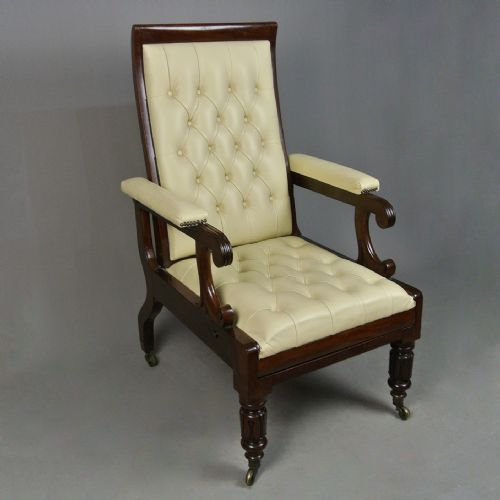



Antique Mahogany Recliner
An antique mahogany recliner brings mechanical ingenuity and rich timber together for effortless nineteenth-century comfort.
Antique Mahogany Recliner
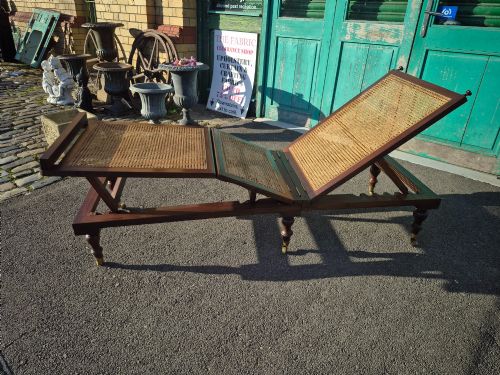
An antique mahogany recliner spans several nineteenth-century periods, taking the form of library armchairs, reading chairs, and day beds designed for ease. These pieces range from Regency designs and William IV library models to Victorian mechanical chairs and Edwardian folding campaign backrests.
Makers and inventors patented various mechanical systems to alter the angle of the back and seat, producing versatile seating for the library, study, or drawing room. Buyers encounter both utilitarian campaign pieces and luxurious upholstered library seating.
Materials and Construction
Solid and veneered mahogany forms the structural framework of these chairs and day beds, providing a dark, dense grain that supports complex mechanical actions. Cabinetmakers shaped the timber into scroll arms, reeded legs, and adjustable backframes.
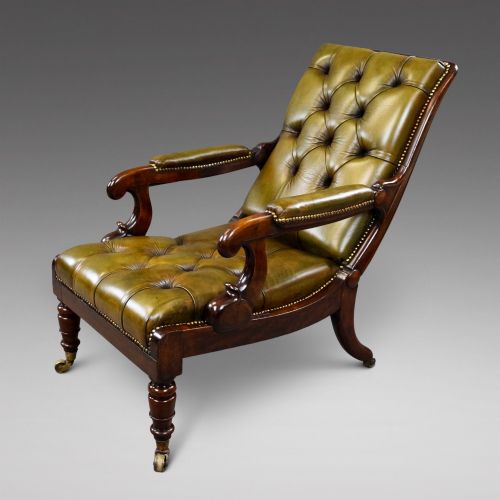
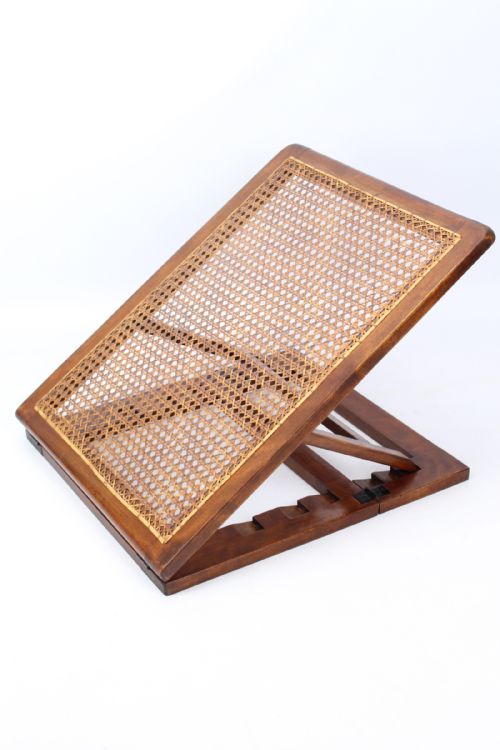
Upholstery materials include buttoned leather, brown or oxblood hide, velvet, fabric, damask, and supportive cane panels. Brass castors, hinges, and ratchets facilitate the movement of sliding seats and reclining backs.
Some nineteenth-century readers apparently required a writing slope attached directly to their reclining armchair.
Judging Quality and Execution
The sophistication of the mechanical patent dictates the standing of a reclining chair, with complex ratchets, sliding frames, and stamped maker signatures setting finer examples apart. Patented designs by known makers command attention for their intricate brass hardware and smooth operation.
The selection of timber grain, the depth of the hand-carved mahogany details, and the integrity of the original leather or cane work determine the overall refinement of the piece. Well-preserved upholstery and robust frame construction reflect superior original manufacture.
Leveson and Sons·Minter·Jas Shoolbred·J Foot and Son·Howard and Sons·Robert Daws·John Ward·Hampton and Sons
The Antique Mahogany Recliner Glossary
- Bergère
- An enclosed armchair with a wooden frame where the sides and back are filled with woven cane. This style appears frequently in Regency library seating.
- Chaise Longue
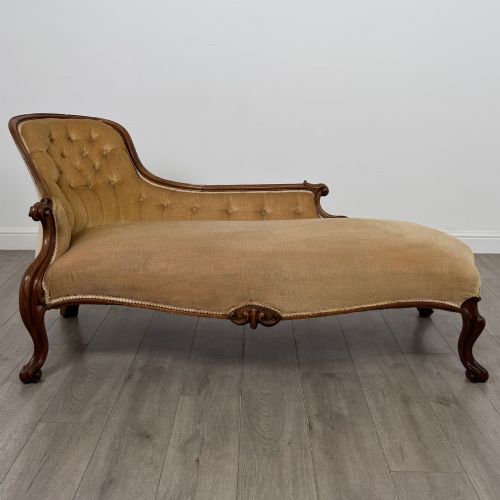
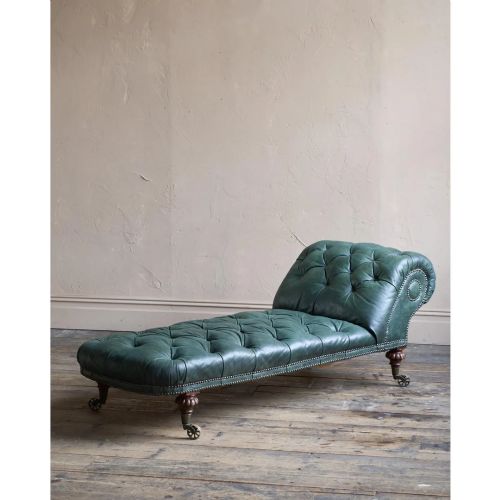
- An upholstered long chair or day bed designed for reclining with legs fully supported. Variations include Victorian and colonial styles.
- Campaign Furniture
- Portable furnishings designed for travel, featuring folding frames and brass fittings. These pieces offer adjustable backrests for military or colonial use.
- Metamorphic
- Describing furniture that transforms from one form into another, such as an armchair converting into a lounge or bed. These pieces rely on hidden mechanical ratchets.
Antique Mahogany Recliner: Frequently Asked Questions
How do these reclining mechanisms work?
Many chairs utilise rack-and-pinion actions, sliding seats, or brass ratchets concealed within the mahogany frame to alter the angle of the back. Users adjust the position by releasing a catch or shifting the weight against the upholstered backrest.
Patented designs by makers such as Daws or Foot and Son often incorporate extending footstools and mechanical supports operated via handles or side levers.
What is the difference between a library chair and a day bed?
A library chair is built for upright reading and writing, though adjustable models allow the user to recline the back or extend a footrest for resting. These pieces feature robust mahogany frames and leather upholstery suited to study environments.
By contrast, a day bed or chaise longue is constructed specifically for full recumbency, featuring an elongated seat and a raised headrest for daytime lounging.
How do I identify a Regency reclining chair?
Regency pieces typically display classical proportions, solid mahogany frames, reeded or sabre legs, and brass castors. The woodwork often exhibits clean architectural lines characteristic of the early nineteenth century.
Look for mechanical patents from this era, such as those associated with Daws, which introduced adjustable backrests to library armchairs.
Where were these chairs used historically?
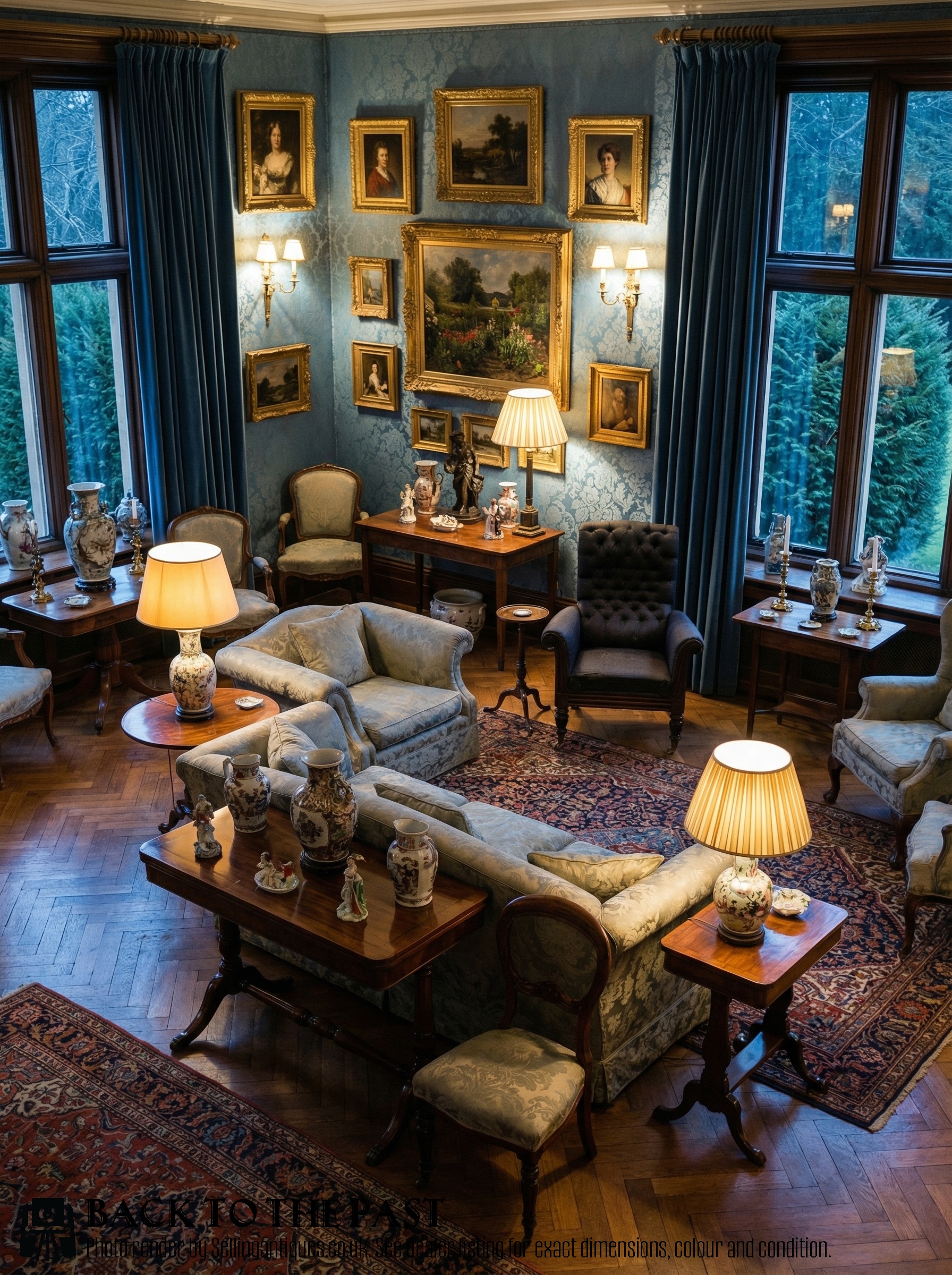
These pieces populated the private libraries, studies, and drawing rooms of grand nineteenth-century houses where gentlemen spent hours reading or writing. Convalescing invalids also utilised adjustable chairs and wheeled invalid carriages for comfort.
Campaign variations travelled abroad with officers and travellers, offering portable relaxation in remote postings.