


Antique Mahogany Rail
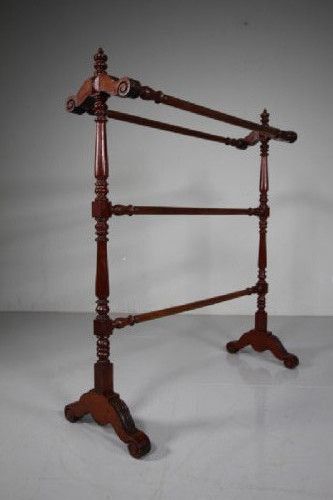
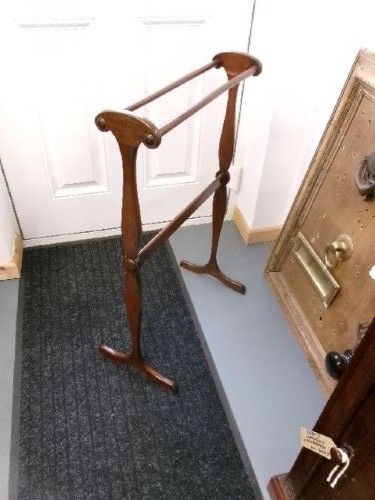
An antique mahogany rail brings useful timber warmth to a room, offering sturdy hanging space for towels or coats.
Antique Mahogany Rail
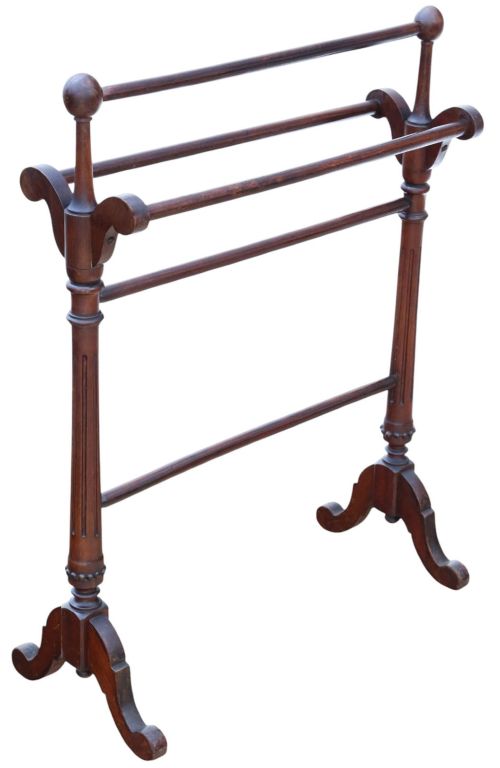
When searching for an antique mahogany rail, buyers encounter several distinct domestic forms designed for utility and display. The most common examples on this page are towel rails and coat racks, originating from periods spanning the Georgian era through to Edwardian times.
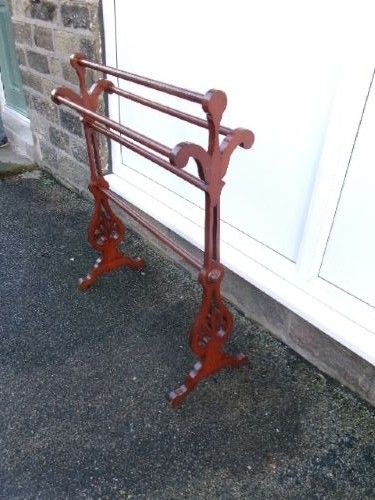
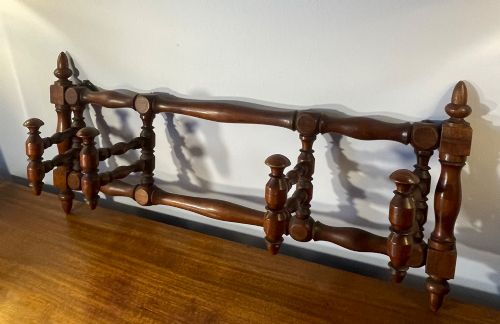
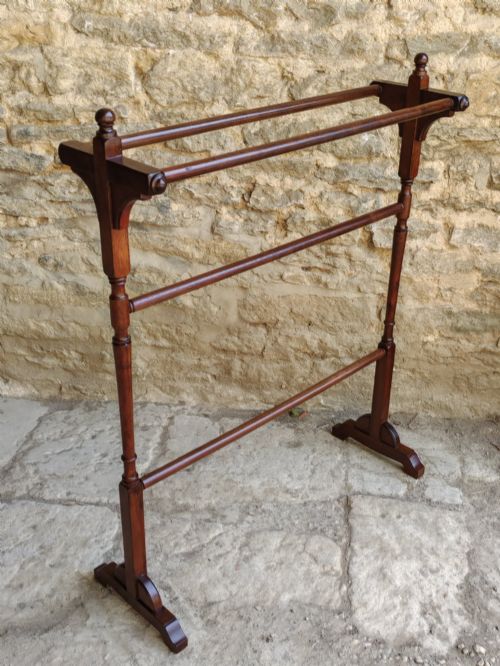
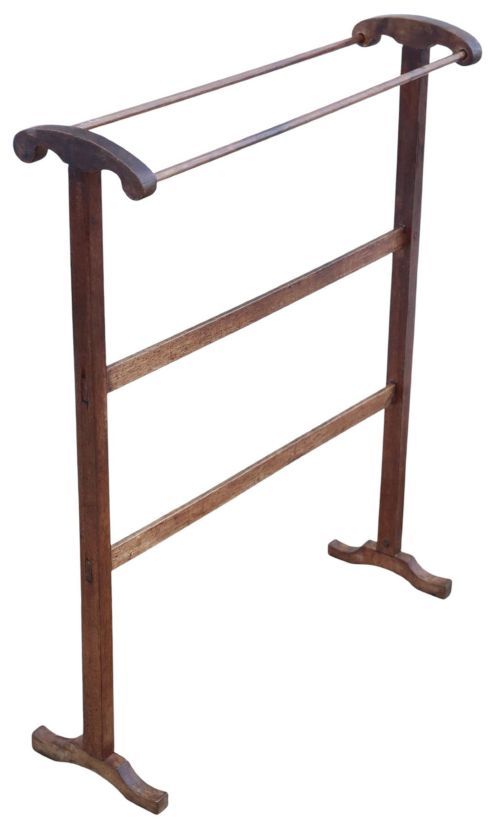
Towel rails appear as folding cheval pieces, double rails, or simple standing frames made from rich timber. Coat racks utilise wall-mounted boards fitted with brass or ceramic hooks to handle garments in hallways and cloakrooms.
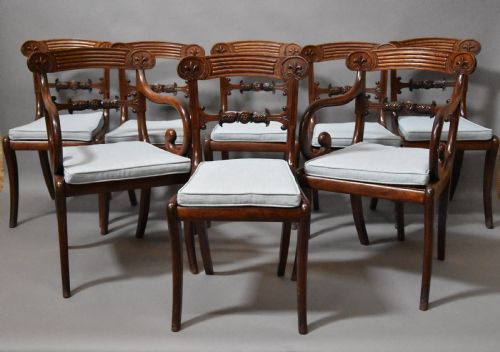
Originating predominantly from the nineteenth and early twentieth centuries, these items reflect the domestic habits of Victorian, Edwardian, and Regency households. Their survival relies on the inherent durability of mahogany combined with secondary materials like brass, oak, and fabric.
Materials and construction methods
Makers utilised solid mahogany and mahogany veneers, valuing the timber for its deep reddish-brown grain and structural stability. Secondary supports and framing often incorporated oak, whilst contrasting details occasionally featured satinwood inlay.
Hardware elements such as coat hooks and mounting plates relied on cast brass or ceramic inserts, screwed securely to the wooden backboards. Folding towel rails depended on simple pivot joints and turned wooden bars to allow movement without compromising strength.
Antique Mahogany Rail Retail Price Guide 2026
Typical asking prices for mahogany rail among the pieces listed under this phrase on Sellingantiques today, from the lower quarter to the upper quarter. They describe what is for sale here now, not the wider market.
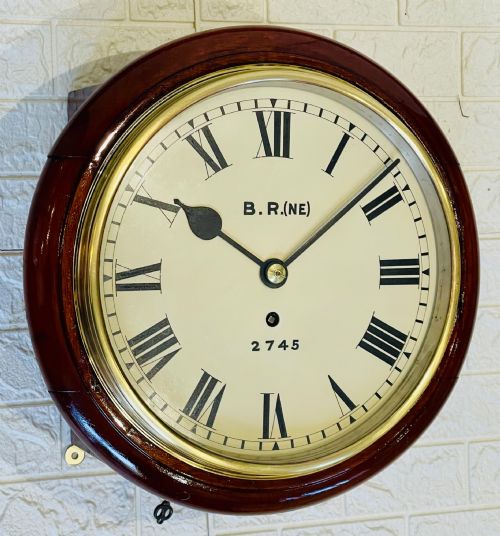
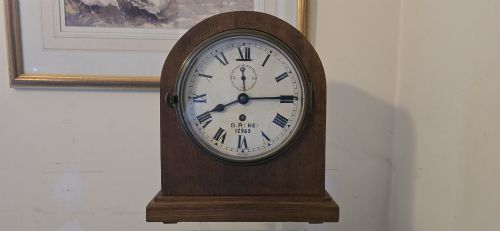
Railway clocks keep watch over the towel rails, proving that nineteenth-century timetables waited for no man or his damp linens.
Distinguishing quality in timber rails
The distinction between standard utility items and superior examples lies in the selection of the timber and the refinement of the turned or carved details. Better pieces display carefully matched grain patterns and substantial weight rather than thin, mass-produced framing.
Hardware also defines the tier of quality, with heavy cast brass mounting plates and well-turned wooden stretchers indicating superior craftsmanship. Simpler folding rails or plain wall boards represent straightforward functional production from the period.
The Antique Mahogany Rail Glossary
- Cheval rail
- A standing double-sided mirror or drying frame mounted on vertical pivots within a supporting floor stand. This format allows the rails to swing freely during use.
- Fusee
- A conical pulley mechanism inside clock movements that equalises the driving force of the mainspring as it unwinds. It appears on railway clocks listed alongside the timber rails.
- Demi-lune
- A half-moon shape used for console tables and small furniture pieces. The flat edge sits against the wall whilst the curved front projects into the room.
- Portmanteau
- A heavy framework designed for holding coats, hats, and luggage in a hallway. These pieces often combine brass hooks with sturdy timber structures.
- Klismos
- An ancient Greek chair style with concave curved legs and a sweeping backrest. Revival versions feature carved mahogany frames adapted for nineteenth-century interiors.
Antique Mahogany Rail: Frequently Asked Questions
How do I clean a mahogany rail?
Dust the timber regularly with a dry, soft cloth to prevent dirt accumulation on the polished surface. Avoid harsh chemical cleaners that strip the historic finish.
Apply a traditional beeswax polish occasionally to nourish the mahogany and maintain its natural lustre. Buff gently with a clean cloth after application to bring up a soft shine.
Can I use an antique towel rail daily?
Most antique towel rails remain structurally sound for everyday domestic use in bathrooms or bedrooms. Ensure you check the joints for stability before placing heavy wet linens on them.
Folding cheval rails require careful handling at the pivot points to prevent strain on the wooden frame. Lighter use preserves the historical timber and original fixings over time.
What is the difference between Georgian and Victorian rails?
Georgian rails, dating from the eighteenth and early nineteenth centuries, generally feature restrained classical proportions and fine timber selection. They reflect earlier cabinet-making traditions focused on understated elegance.
Victorian rails often display heavier proportions, turned legs, and more robust construction to suit busy nineteenth-century households. Brass fittings and folding mechanisms became increasingly standardised during this later period.
How do I mount a wall coat rack safely?
Locate solid wall studs or use appropriate wall anchors that match the weight of the mahogany board and its brass hooks. Secure the rack through existing screw holes to distribute the load evenly.
Ensure the mounting height suits the intended use for coats or hats without placing excessive leverage on the upper fixings. Check the screws periodically to maintain a tight grip against the wall.