

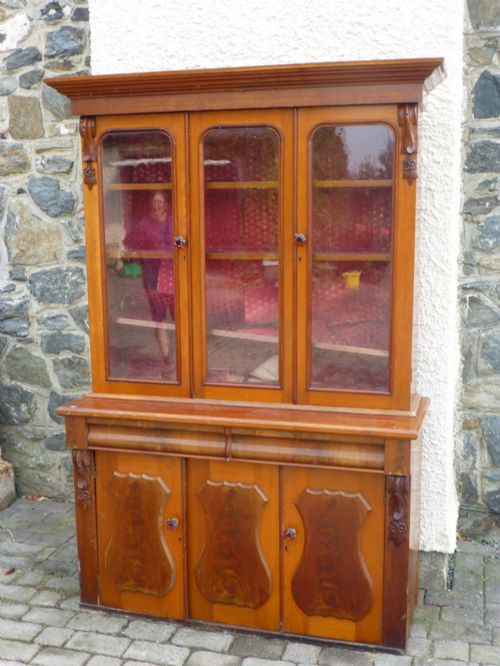
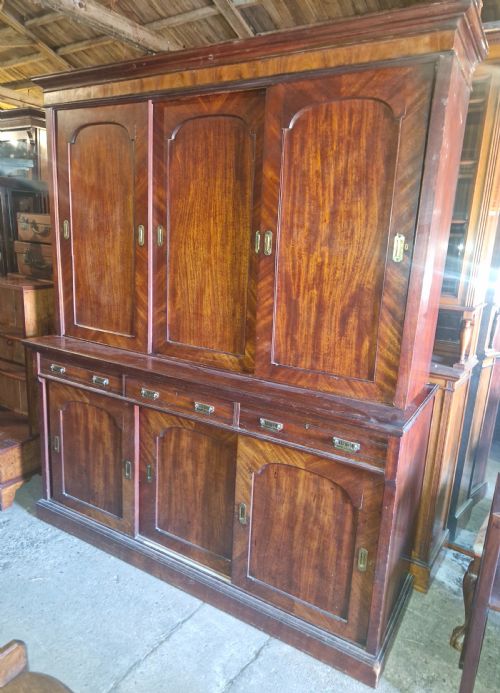


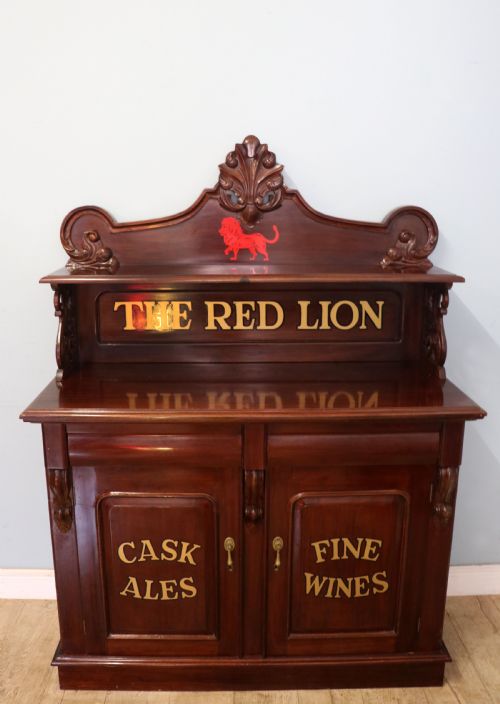


Antique Mahogany House Cupboard
An antique mahogany house cupboard brings substantial timber presence into a room, offering deep storage built to endure centuries.
Antique Mahogany House Cupboard
When you search for an antique mahogany house cupboard, you encounter substantial storage furniture designed for domestic service, most frequently represented here by corner cabinets, linen presses, and larger upright cupboards. These pieces originate across the Georgian and Victorian eras, carrying the formal lines of the eighteenth century or the heavier proportions typical of nineteenth-century country houses.
You are most likely to meet corner cabinets and two-door cupboards on this page, often built from solid mahogany or enhanced with flame mahogany veneers. Alongside these, occasional regional forms appear, including Welsh dressers and chiffoniers, reflecting the diverse utility demanded of timber storage in historic properties.
Materials and construction methods
Cabinetmakers utilised dense tropical mahogany, frequently selecting figured flame mahogany for primary surfaces to create striking visual movement across doors and panels. Secondary woods such as oak appear in internal framing and drawer linings, ensuring structural stability for heavy domestic use.
Construction relies on traditional joinery, incorporating brass hardware for hinges and escutcheons, alongside glass panels in glazed display sections. Surface finishes range from polished timber to occasional decorative applications such as lacquer and paint.
Antique Mahogany House Cupboard Retail Price Guide 2026
Typical asking prices for mahogany house cupboard among the pieces listed under this phrase on Sellingantiques today, from the lower quarter to the upper quarter. They describe what is for sale here now, not the wider market.
Listings span the Georgian and Victorian periods, featuring mahogany alongside oak, brass, glass, and lacquer.
Judging quality in mahogany cupboards
Quality rests primarily on the selection of timber and the sophistication of the joinery, distinguishing utilitarian storage from pieces intended for principal rooms. Superior examples display carefully matched grain patterns, particularly in flame mahogany veneers, and retain original brass fittings.
Proportion and execution define the hierarchy among these pieces, where refined corner mouldings, well-fitted doors, and sound internal shelving separate master-built furniture from simpler regional workshop output.
The Antique Mahogany House Cupboard Glossary
- Flame mahogany
- A veneer cut from timber where the branch meets the trunk, producing a distinctive flickering flame pattern. This decorative figuring was prized for principal doors and drawer fronts.
- Linen press
- A tall storage piece combining sliding trays for textiles in the upper section with deeper drawers below. These items formed an essential part of historic household management.
- Corner cabinet
- A storage unit specifically constructed to fit into ninety-degree room angles. These pieces maximise domestic floor space while displaying collections or storing provisions.
- Chiffonier
- A low sideboard developed during the nineteenth century, typically featuring enclosed cupboard space beneath a tiered superstructure. They served dining and living rooms for serving and storage.
- Chinoiserie
- A European decorative style imitating Chinese artistic traditions, involving painted or lacquered motifs applied to furniture surfaces. It appears on selected twentieth-century pieces.
Antique Mahogany House Cupboard: Frequently Asked Questions
What is a house cupboard?
A house cupboard is a large storage furniture piece designed for domestic service, holding provisions, textiles, or household goods in historic properties.
These pieces range from corner units to substantial two-door wardrobes and linen presses built from mahogany.
How do I date an antique mahogany cupboard?
Dating relies on architectural proportions, secondary timbers, hardware types, and distinct stylistic markers from the Georgian or Victorian periods.
Earlier pieces often show refined Georgian proportions, while Victorian examples lean towards heavier framing and varied internal configurations.
Where were corner cupboards placed?
Corner cupboards were designed to utilise awkward angles in dining rooms, parlours, or reception spaces.
They provided accessible display or concealed storage without cluttering the main floor area of a room.