
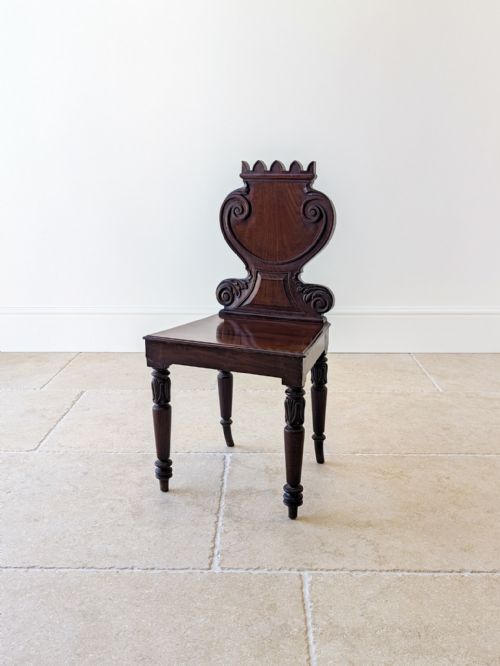


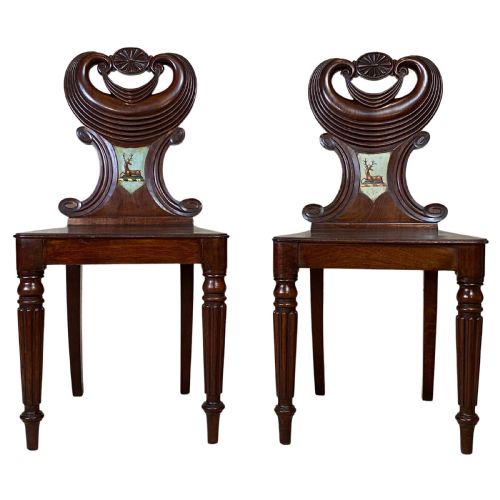


Antique Mahogany Corridor Seating
Antique mahogany corridor seating brings formal grandeur to narrow spaces, offering sturdy wooden hall chairs and benches crafted during past centuries.
Antique Mahogany Corridor Seating
When you search for antique mahogany corridor seating, you find solid wood pieces designed for entrance halls and passages. The forms span from single hall chairs to matched pairs and occasional benches.
Most examples appearing on this page date from the Georgian, Regency, and Victorian eras. These items served a practical function in large homes while displaying the owner's taste to arriving visitors.
How they were made
Cabinetmakers built these items primarily using solid mahogany, often selecting timber with deep grain patterns. Workshops utilised traditional joinery methods to ensure the rigid construction required for hallway furniture.
Carving and inlay work frequently ornamented the backs and panels of the chairs and benches. Artisans shaped shields, crests, and classical motifs directly into the timber.
What varies in quality
Depth and crispness of the carved detail separate standard production from finer workshop output. Crisp armorial crests and intricate pierced splats indicate higher skill in the maker.
The choice of mahogany grain and the preservation of the original timber surface influence the character of each piece. Heavier stock and balanced proportions distinguish superior seating from simpler designs.
Gillows·Richard Bridgens
The Antique Mahogany Corridor Seating Glossary
- Hall chair
- A rigid wooden seat intended for an entrance hall rather than daily lounging. These items often feature solid wood seats and carved backrests.
- Shield back
- A chair back shaped in the outline of a heraldic shield. This style gained popularity during the Georgian period.
- Armorial
- Bearing a family coat of arms or heraldic crest. Such motifs appear carved or painted on high-status seating.
- Inlay
- A technique where pieces of contrasting material are inserted into the wood surface to form patterns. This decorative method highlights the skill of the artisan.
Antique Mahogany Corridor Seating: Frequently Asked Questions
Where should I place a hall chair?
These chairs suit narrow hallways, landings, or entrance passages where depth is limited. Their upright posture makes them ideal for transitional spaces rather than living areas.
Because they were built to be sturdy, they withstand frequent passing use while adding architectural interest to empty walls.
How do I identify a Regency hall chair?
Regency pieces often display classical influences, drawing inspiration from ancient Greek and Roman designs. Look for clean architectural lines and carved motifs like leaves or scrolls.
Mahogany from this period typically exhibits a rich, dark tone and smooth polished finish.
Are these seats comfortable?
Hall seating was designed for brief waiting rather than long sitting. The wooden seats lack upholstery, featuring carved contours instead.
Their primary purpose was visual impact and durability in high-traffic corridors.
What is the difference between Georgian and Victorian styles?
Georgian pieces generally show restraint and classical elegance, with balanced proportions and refined carving. Victorian examples often feature bolder ornamentation and heavier proportions.
Both eras utilise solid mahogany, but the decorative detailing reflects the changing tastes of each century.