



Antique Lyre Stand
An antique lyre stand brings classical proportion into a room, holding sheet music or books with graceful symmetry.
Antique Lyre Stand
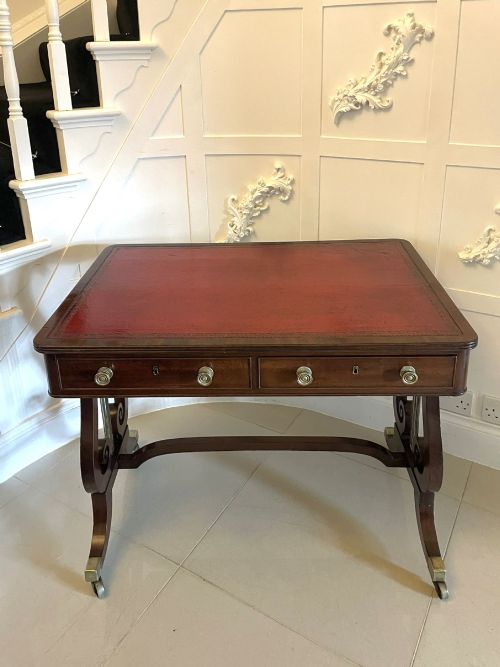
An antique lyre stand draws its form from the ancient Greek instrument, translating musical motifs into functional furniture for the parlour and drawing room. Buyers searching this phrase encounter dedicated music stands alongside unexpected forms like canterburys, teapoys, and writing tables that incorporate the lyre shape into their structure.
The pieces on this page span the Regency, William IV, and Victorian periods, with Edwardian interpretations appearing alongside Georgian examples. Music stands dominate the selection, built as single stands or wider duet versions designed for two players.
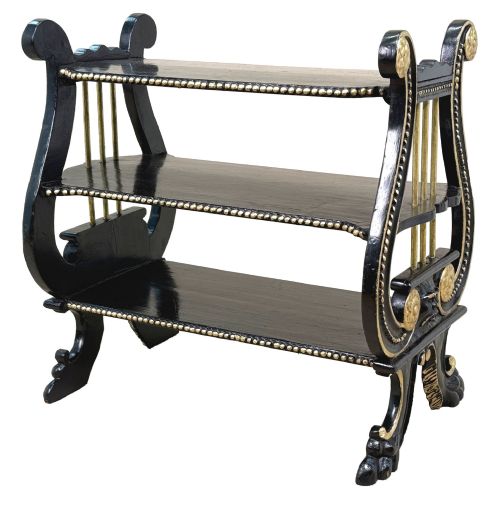
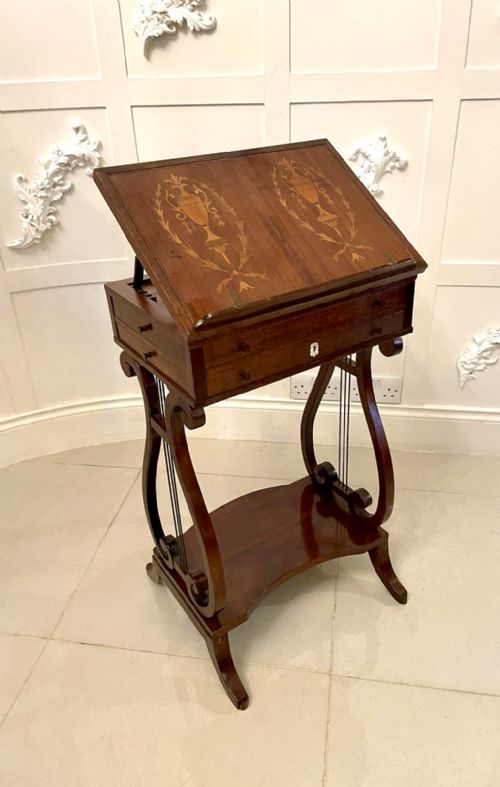
Makers utilised the distinctive open-work frame in mahogany, walnut, rosewood, and ebonised wood, sometimes embellishing the timber with brass inlay or boxwood stringing. Most examples survive from the nineteenth century, reflecting the era's dedication to domestic musical performance.
Materials and construction
Cabinetmakers constructed these stands using dense native and imported timbers, favouring mahogany and rosewood for their strength and rich grain. Walnut and ebonised wood also appear, providing darker tones that suited Victorian interiors.
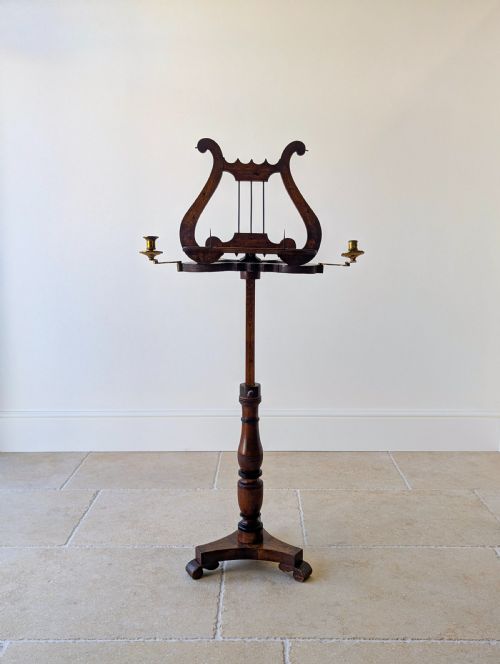
Brass formed an integral part of the construction, appearing as adjustable rods, candle arms, and intricate inlay set flush into the timber. Craftsmen shaped the lyre motif through careful fretwork and carving, creating open frames that remained rigid enough to support heavy bound scores.
Object types include music stands, canterburys, teapoys, writing desks, and étagères.
Judging the execution
Quality in an antique lyre stand rests on the crispness of the carved or pierced wood forming the central motif. Superior pieces display finely detailed scrolling and balanced proportions rather than flat, heavy outlines.
The mechanism of adjustment distinguishes standard production from better work. Examples with smoothly operating brass screws, secure ratchets, and well-fitted reading desks demonstrate superior workshop practice.
The Antique Lyre Stand Glossary
- Lyre-form
- A shape resembling the ancient stringed instrument, used as a central support or decorative motif in furniture design. It appears frequently in nineteenth-century music stands and table pedestals.
- Duet stand
- A music stand wide enough to accommodate two musicians reading from the same open score. These larger versions often feature dual adjustable ledges or candle sconces.
- Ebonised
- Timber treated to resemble ebony, usually through staining and polishing. This finish gained popularity during the Victorian period for its striking contrast with gilt or brass details.
- Canterbury
- A low stand fitted with partitions for holding sheet music, folios, or periodicals. Some examples incorporate lyre-shaped divisions within their design.
- Teapoy
- A small pedestal table originally designed to hold containers of tea. Regency versions occasionally utilise a lyre pillar for the central support.
Antique Lyre Stand: Frequently Asked Questions
What is an antique lyre stand used for?
These pieces held sheet music and scores for musicians playing instruments in the home during the nineteenth century. The adjustable ledges allowed players to angle the music for comfortable reading while seated or standing.
Today, collectors use them as decorative accents or alternative book stands to display open volumes in a study or living room.
How do I date an antique lyre stand?
Dating relies on timber choice, construction methods, and stylistic cues from the periods represented in the design. Regency and William IV pieces often feature rosewood or mahogany with brass inlay, while Victorian examples frequently show carved walnut or ebonised surfaces.
Patination on the metal adjustments and the wear patterns on the timber also help establish the approximate age of the piece.
Are all lyre stands adjustable?
Many music stands feature brass thumbscrews or ratchets that allow the height and angle of the reading desk to be altered. This adjustability was essential for practical use during musical recitals.
Some decorative forms or related furniture items like canterburys and teapoys do not include moving parts, serving purely as static stands.
What is the difference between a single and a duet stand?
A single stand provides a compact reading surface sized for one person playing from a single score or book. These typically balance on a central turned pillar and tripod base.
A duet stand offers a wider desk surface intended for two musicians sharing music. They often require sturdier bracing and sometimes incorporate double candle arms for illumination.